Quick Answer
Pick semi gloss for interior doors when you want maximum durability and easy cleaning. Pick satin when you want a softer modern finish that hides brush marks and minor dents.
Most painters still default to semi gloss on doors and trim, but satin has become more popular in modern and minimalist interiors over the past decade.
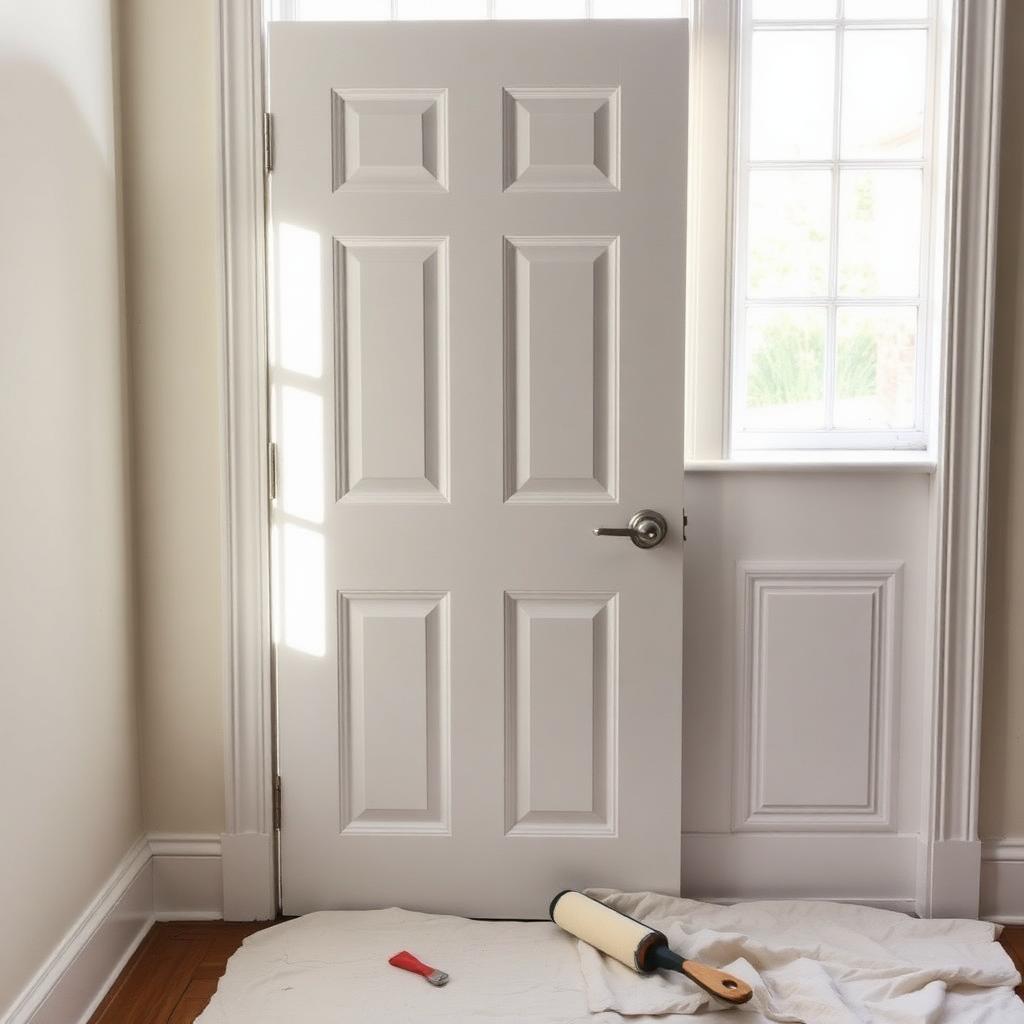
Semi Gloss
Semi gloss has a sheen rating around 35 to 70 on the 60 degree gloss meter used by Sherwin-Williams and Benjamin Moore. That reflective surface forms a tighter film that resists fingerprints, scuffs from shoes, and the inevitable smudges around a knob. It also wipes clean with a damp cloth, so it is the standard choice in homes with kids, pets or rental turnover.
The downside is honesty. Semi gloss reflects so much light that every brush stroke, drip, nailhead and small dent shows up under direct sunlight. You only get a clean finish if the surface prep is right, with a quick sand and a coat of bonding primer before color.
Satin
Satin sheen lands around 15 to 35 on the same scale. It still cleans reasonably well, but the lower reflectivity hides surface imperfections and gives the door a softer, more matte look that pairs well with flat walls. Most major designer paint lines, including Farrow and Ball, now recommend satin or eggshell for interior doors as part of their signature look.
The compromise is durability. Satin scuffs more easily than semi gloss and shows wear faster around hardware. Plan to touch up high traffic doors yearly.
Match the Trim
Whatever sheen you pick for the door, match it on the trim and casing in the same room. Mixing sheens on adjacent millwork creates visible bands of reflection that look inconsistent under angled light.
Prep Matters More Than Sheen
A poorly prepped satin door looks worse than a well prepped semi gloss door, and vice versa. Always sand the door lightly, fill any dents with a flexible filler, prime stains and patches, then apply two thin coats with a foam roller and a high quality brush for the edges.
Bottom Line
Use semi gloss in busy or family heavy homes where the door will get touched constantly. Use satin in modern or design forward rooms where you want the door to recede visually. Either way, lock in the same sheen for door, frame and trim, and prep the surface before you open the paint can.
More Practical Notes on Should Doors Be Semi Gloss or Satin
Beyond the headline rule, the real question of should doors be semi gloss or satin usually comes down to the specific room, climate and how the household actually uses the doorway. A guidance that works perfectly in a tight Victorian terrace can backfire in a draughty 1970s build or in a humid coastal home, so treat the answer here as a starting point rather than a final verdict.
If you are renovating, walk the space at different times of day before you commit. Lighting, foot traffic patterns and even the way furniture pushes against the wall all change the calculation. Builders and trim carpenters routinely see homeowners reverse a decision a week after moving in, simply because real life did not match the original sketch.
Common Mistakes Homeowners Make
The most frequent mistake on questions about should doors be semi gloss or satin is treating one online answer as universal. Codes, climates and finish trends drift, and what looked correct five years ago may already feel dated. Always cross check at least one manufacturer page and one current trade source such as Family Handyman or This Old House before you spend money.
The second mistake is ignoring what the rest of the house already looks like. Consistency across rooms almost always beats a single bold flourish, especially in resale photography. If every other doorway in the home follows one rule, breaking that rule in a single room reads as a mistake rather than an intentional design choice.
Quick Recap
To summarise the practical takeaway on should doors be semi gloss or satin: lead with the standard convention, check it against your specific room and climate, and only deviate when you have a clear reason and a sample to test. That keeps you safe on resale value and on day to day livability.
More Practical Notes (Part 2) on Should Doors Be Semi Gloss or Satin
Beyond the headline rule, the real question of should doors be semi gloss or satin usually comes down to the specific room, climate and how the household actually uses the doorway. A guidance that works perfectly in a tight Victorian terrace can backfire in a draughty 1970s build or in a humid coastal home, so treat the answer here as a starting point rather than a final verdict.
If you are renovating, walk the space at different times of day before you commit. Lighting, foot traffic patterns and even the way furniture pushes against the wall all change the calculation. Builders and trim carpenters routinely see homeowners reverse a decision a week after moving in, simply because real life did not match the original sketch.
Common Mistakes (Part 2)
The most frequent mistake on questions about should doors be semi gloss or satin is treating one online answer as universal. Codes, climates and finish trends drift, and what looked correct five years ago may already feel dated. Always cross check at least one manufacturer page and one current trade source such as Family Handyman or This Old House before you spend money.
The second mistake is ignoring what the rest of the house already looks like. Consistency across rooms almost always beats a single bold flourish, especially in resale photography. If every other doorway in the home follows one rule, breaking that rule in a single room reads as a mistake rather than an intentional design choice.
Quick Recap (Part 2)
To summarise the practical takeaway on should doors be semi gloss or satin: lead with the standard convention, check it against your specific room and climate, and only deviate when you have a clear reason and a sample to test. That keeps you safe on resale value and on day to day livability.