Quick Answer
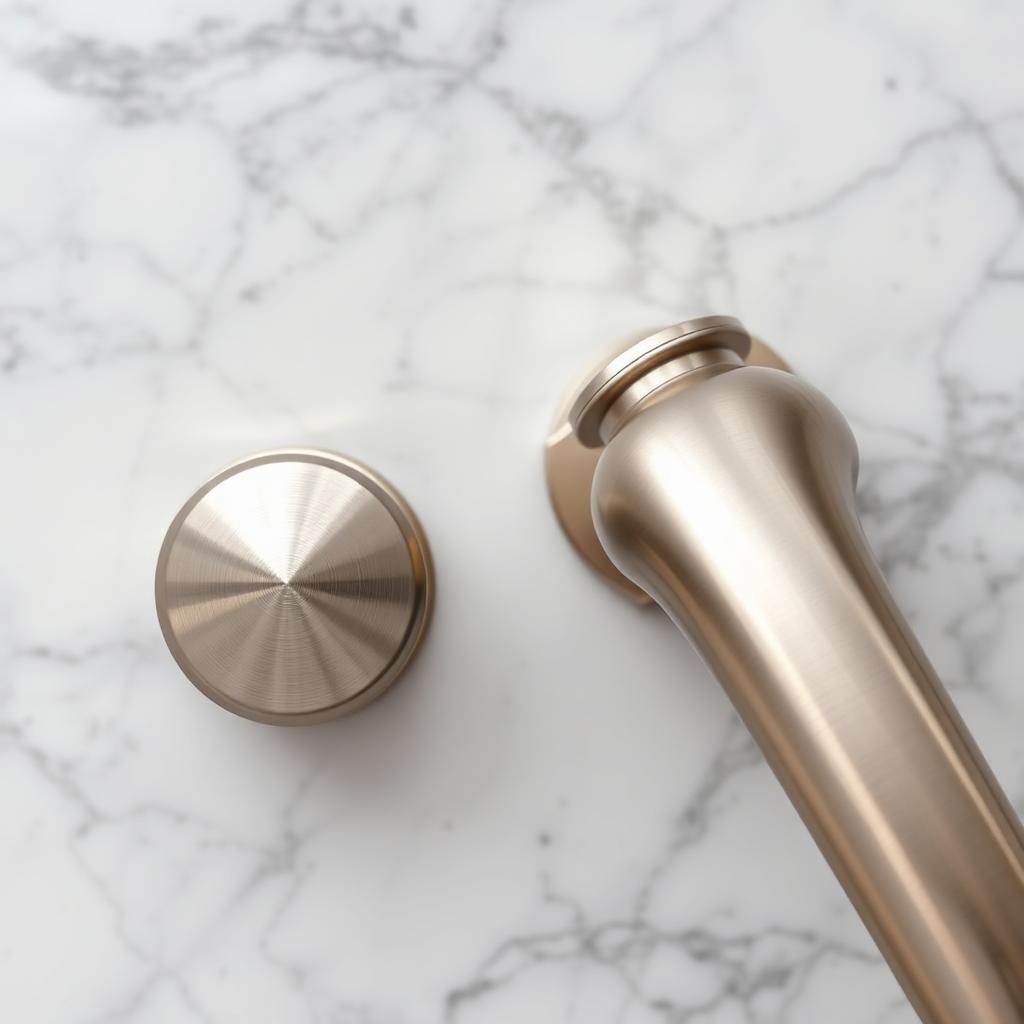
Door knobs and faucets do not have to be identical, but they should share a finish family. Warm metals (brass, bronze, gold) pair together. Cool metals (chrome, brushed nickel, stainless) pair together. Mixing finishes intentionally works, but mixing them randomly looks unplanned.
Designers generally recommend matching all hardware within the same line of sight (bathroom faucet, towel bar, door knob, light fixture) and allowing mild contrast across rooms.
The matching rule
Inside one room, hardware should look coordinated. A polished chrome faucet next to a polished chrome door knob looks intentional. A polished chrome faucet next to an oil-rubbed bronze door knob in the same bathroom looks like a mistake unless the rest of the room repeats both finishes.
How to mix finishes correctly
The trick is repetition. Pick two finishes (say brushed nickel and matte black) and repeat each at least twice in the same room: black faucet plus black towel bar, nickel knob plus nickel light fixture. The pattern makes the mix look planned, not random.
Finish families
Warm: polished brass, antique brass, satin brass, oil-rubbed bronze, copper, gold. Cool: polished chrome, brushed nickel, satin nickel, stainless steel. Neutral: matte black, matte white. Pair within a family safely, or mix one warm with one cool for designer contrast.
Across rooms
You do not have to use the same finish throughout the entire house. A common approach is satin nickel in bathrooms, oil-rubbed bronze on exterior hardware, and matte black on interior doors. Transitions between rooms hide the changes.
When matching matters most
Bathrooms benefit most from matching because faucet, knob, towel bars, and light fixtures are all visible at the same time. Open-plan kitchens with adjacent dining/hallway hardware also benefit from coordinated finishes.
When matching matters least
Closet door knobs, basement utility doors, and back-of-house spaces can get cheap basic hardware without affecting the design. Save the budget for the visible rooms.
Resale and trends
As of 2026, matte black and warm brass are the dominant choices in new builds. Brushed nickel remains the safe default for resale. Polished chrome is making a comeback in maximalist designs. Whatever you pick, document the finish (brand, model, finish name) so future replacements can match.
How to test before buying
Hardware stores allow returns within 30 days. Buy one knob and one faucet sample, hold them together in the actual room under actual lighting, and look at them at different times of day. Showroom lighting can drastically change how a finish reads.
Common mistakes
Buying chrome faucets and bronze knobs on impulse, then trying to "make it work" later. Forgetting that hinges, screws, and switch plates count as hardware too. Mixing too many finishes (three or more) without a clear pattern.
Door knobs should match faucets in finish family at minimum. Identical finish is safest; intentional mixing looks great when done with repetition.
How showrooms trick you
Showroom lighting is typically much warmer or much cooler than home lighting. Chrome under halogen looks blue; the same chrome under LED looks neutral. Always take samples home and view them in actual light before committing to a finish across multiple rooms.
Maintenance differences by finish
Polished chrome and polished brass show fingerprints fastest. Brushed nickel, satin brass, and matte black hide fingerprints best. Oil-rubbed bronze develops a beautiful patina over time but can wear off in high-traffic spots. Choose finishes by both look and lifestyle.
Hidden hardware to match
Do not forget hinges, door stops, switch plates, register vents, and curtain rods. Even a perfectly matched faucet and knob can look off if the hinges are still builder-grade brass. Plan the whole hardware story, not just the headline pieces.
The 60-30-10 rule for finishes
Designers often use a 60-30-10 split: 60 percent of the room's hardware in the dominant finish, 30 percent in a secondary finish, 10 percent as accent. Applied to a bathroom: 60 percent brushed nickel (faucets, knob, light fixture), 30 percent matte black (towel bar, shower frame), 10 percent gold accent (drawer pulls).
Renovation order tips
Pick the faucet first. Faucets have more limited finish options and tend to dictate the rest. Once the faucet is selected, find door knobs that match or complement it. Add lighting and accessories last.
Where to buy matching hardware
Manufacturers like Kohler, Moen, and Delta sell coordinated faucet plus knob plus accessory collections in the same finish line. Buying within one collection guarantees finish match without showroom comparison.
Budget vs investment knobs
Cheap door knobs ($10 to $25 each) tarnish, loosen, and fail in 2 to 5 years. Mid-tier knobs ($35 to $80) last 10 to 20 years. Premium knobs ($100+) last decades and rarely need replacement. Spending more on visible main-floor knobs makes sense; cheap is fine for closet doors.
Final rule of thumb
Match the finish family inside one line of sight. Vary slightly across the home if you want, but never randomly. The eye picks up unplanned mismatches even when the brain cannot name the problem.
Bottom line
Coordinate finishes within line of sight, repeat any contrasting finish at least twice, and document your choices for future replacements.