Quick Answer
Hinges and door knobs do not have to match, but matching them is the safest and most pulled together choice. They sit on the same door, only a few feet apart, so the eye reads any clash quickly.
If you do mix metals, do it on purpose. Pair finishes that share a tone family, like satin nickel knobs with chrome hinges, rather than warm brass against cool polished chrome.
Why Matching Looks Right
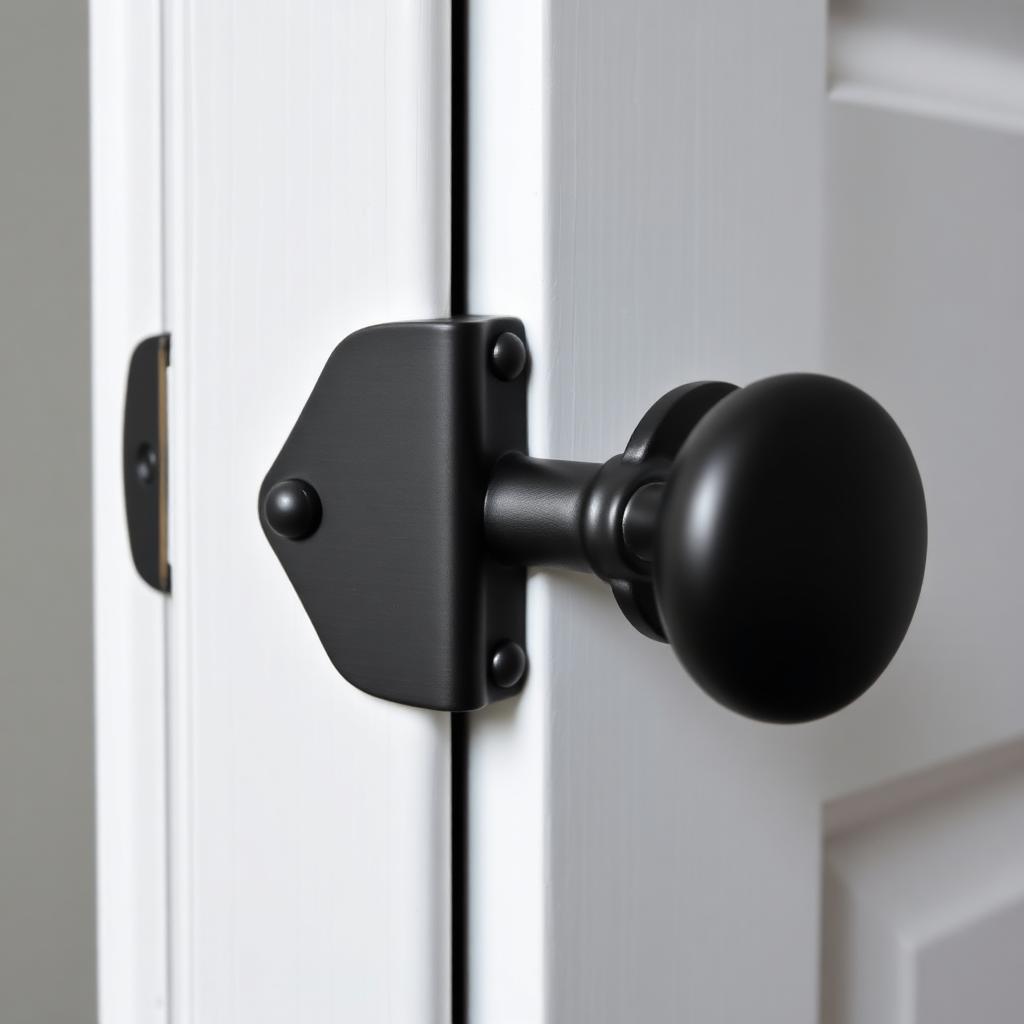
Hinges and knobs are both functional metal hardware on the same plane of view. When they share a finish, the door reads as a single coordinated piece. When they clash, the eye treats the hinges as a mistake, especially on a door painted a contrasting color where the metal stands out.
Designers at firms like Emily Henderson Design and Studio McGee almost always spec matching hinges and knobs in their published room reveals. It is the path of least resistance and adds nothing to the cost.
When Mixing Works
Mixed metal hardware is a deliberate look. The pairings that work best either share an undertone or sit far enough apart in finish that they read as separate design layers. Common successful pairs include matte black hinges with brushed brass knobs, oil rubbed bronze hinges with antique brass knobs, and satin nickel hinges with polished chrome knobs.
What does not work is a near miss. Polished brass next to satin brass on the same door looks like the homeowner ran out of one and topped up with the other.
What About the Rest of the Room
Coordinate the door hardware with the largest visible metal in the room, usually faucet, light fixture or cabinet pulls. You do not need every metal in a house to match, but every metal on a single door should at least feel related.
Cost and Practicality
Matching hinges are cheap to spec at the build stage. A pack of three new interior hinges in any finish costs about ten to fifteen dollars at a home center. If you are replacing knobs on an existing door, popping the pins and swapping hinges is a fifteen minute job. Most installers recommend doing both at once so you do not look at the door six months later and wish you had.
Bottom Line
Match them by default. Mix them only when the contrast is strong and intentional. Either way, line up the door hardware so the room looks composed instead of accidental.
More Practical Notes on Should Door Hinges Match Door Knobs
Beyond the headline rule, the real question of should door hinges match door knobs usually comes down to the specific room, climate and how the household actually uses the doorway. A guidance that works perfectly in a tight Victorian terrace can backfire in a draughty 1970s build or in a humid coastal home, so treat the answer here as a starting point rather than a final verdict.
If you are renovating, walk the space at different times of day before you commit. Lighting, foot traffic patterns and even the way furniture pushes against the wall all change the calculation. Builders and trim carpenters routinely see homeowners reverse a decision a week after moving in, simply because real life did not match the original sketch.
Common Mistakes Homeowners Make
The most frequent mistake on questions about should door hinges match door knobs is treating one online answer as universal. Codes, climates and finish trends drift, and what looked correct five years ago may already feel dated. Always cross check at least one manufacturer page and one current trade source such as Family Handyman or This Old House before you spend money.
The second mistake is ignoring what the rest of the house already looks like. Consistency across rooms almost always beats a single bold flourish, especially in resale photography. If every other doorway in the home follows one rule, breaking that rule in a single room reads as a mistake rather than an intentional design choice.
Quick Recap
To summarise the practical takeaway on should door hinges match door knobs: lead with the standard convention, check it against your specific room and climate, and only deviate when you have a clear reason and a sample to test. That keeps you safe on resale value and on day to day livability.
More Practical Notes (Part 2) on Should Door Hinges Match Door Knobs
Beyond the headline rule, the real question of should door hinges match door knobs usually comes down to the specific room, climate and how the household actually uses the doorway. A guidance that works perfectly in a tight Victorian terrace can backfire in a draughty 1970s build or in a humid coastal home, so treat the answer here as a starting point rather than a final verdict.
If you are renovating, walk the space at different times of day before you commit. Lighting, foot traffic patterns and even the way furniture pushes against the wall all change the calculation. Builders and trim carpenters routinely see homeowners reverse a decision a week after moving in, simply because real life did not match the original sketch.
Common Mistakes (Part 2)
The most frequent mistake on questions about should door hinges match door knobs is treating one online answer as universal. Codes, climates and finish trends drift, and what looked correct five years ago may already feel dated. Always cross check at least one manufacturer page and one current trade source such as Family Handyman or This Old House before you spend money.
The second mistake is ignoring what the rest of the house already looks like. Consistency across rooms almost always beats a single bold flourish, especially in resale photography. If every other doorway in the home follows one rule, breaking that rule in a single room reads as a mistake rather than an intentional design choice.
Quick Recap (Part 2)
To summarise the practical takeaway on should door hinges match door knobs: lead with the standard convention, check it against your specific room and climate, and only deviate when you have a clear reason and a sample to test. That keeps you safe on resale value and on day to day livability.