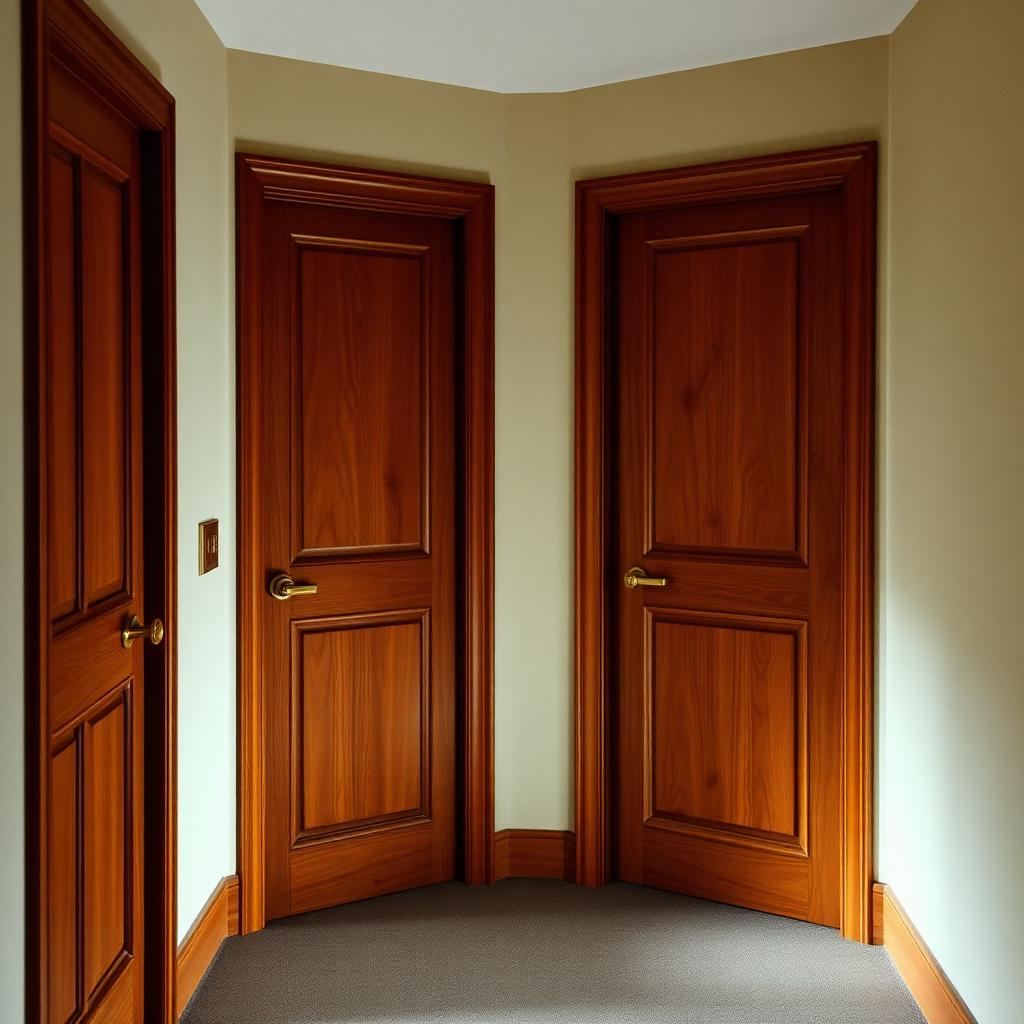
Quick Answer
Door handles should always be on the side opposite the hinges. Which side that ends up being (left or right) depends on door swing direction, room layout, traffic flow, and dominant hand convention in your region.
In the United States most interior doors swing into the room with the handle on the right as you face the door from outside. In Europe and the UK, doors more often swing left. There is no universal rule; consistency within your home matters more.
The first rule: opposite the hinges
Door handles always go on the long edge of the door opposite the hinges. The hinges are the pivot; the handle gives you leverage at the far end. Putting a handle on the hinge side would defeat the lever action and look wrong.
How to determine left or right swing
Stand outside the room facing the door. If the hinges are on the left and the door swings away from you, the handle is on the right and it is a right-hand door. If the hinges are on the right, it is a left-hand door. Manufacturers and locksmiths use this convention universally.
Door swing direction priorities
Choose swing direction based on these factors, in order: doors should swing into the room, not into a hallway; doors should swing toward a blank wall rather than blocking light switches or outlets; doors should swing away from the entry side so a person entering is not hit by it; bathrooms and small rooms should swing into the room only if there is space.
Right-handed vs left-handed users
For 90 percent of the population (right-handed), a handle on the right-hand side as you approach the door is slightly more natural. But this only matters for entry doors you use frequently. Interior doors should be planned around room layout, not handedness.
When handle position matters most
Front entry doors: place the handle on the side you naturally reach with your dominant hand while holding bags or keys. Bedroom doors: place the handle so the door opens against the wall not into the bed. Bathroom doors: handle opposite the toilet so you can leave easily.
Lever vs knob
Levers are easier to operate with full hands, elbows, or for people with arthritis. Lever handles are also ADA-compliant. Knobs are more traditional and offer slightly better security against curious children. Whichever you choose, install all door handles in the home at the same height (typically 36 inches from the floor in the US) for visual consistency.
Pocket and barn doors
Pocket doors use flush pulls on both sides because there is no traditional handle side. Barn doors typically have a horizontal bar pull. Both bypass the left vs right question.
What pros recommend
Architects and interior designers usually prioritize traffic flow and sight lines over handedness. Walk through the room in your normal pattern and pick the swing direction that feels least obstructive. Then install the handle on the natural side.
Code and building rules
Commercial doors must comply with ADA requirements (lever handles, specific heights, force limits). Residential doors have far fewer rules but should still meet local fire egress codes (bedroom doors must swing inward in most jurisdictions).
Door handles should be on the left or right based on swing direction and room layout, not a universal rule. Plan the swing first, then the handle naturally follows.
The standard handle height
US convention places door handle centers at 36 inches above the finished floor. ADA-compliant commercial doors require 34 to 48 inches. Keep all doors in the same home at the same height for visual consistency, regardless of side.
Common door-handing mistakes
Ordering a left-hand door when you need right-hand is one of the most common return reasons at big-box stores. Always double-check handing before ordering: stand outside the room, identify the hinge side, and use the opposite for the handle.
Reversible vs non-reversible
Most interior knobs and levers are reversible (can swap left or right after installation). Most exterior locksets are non-reversible because of the keyway orientation. Check the package for "reversible" or "field-reversible" before assuming.
Multi-point lock systems
Some European-style exterior doors use multi-point locks with the handle's vertical lift engaging bolts at top, middle, and bottom. Handing on these doors is critical and almost never field-reversible. Order extra carefully.
Privacy lock placement
Bathroom privacy levers should be on the side opposite the toilet so a user can naturally reach the door to leave. Bedroom privacy locks should be on the side that does not blockade the bed in case of emergency exit.
Building code highlights
Most jurisdictions require lever handles (not knobs) on accessible bathroom and bedroom doors. Egress doors must be operable from inside without a key. Hardware on fire-rated doors must be matched to the fire rating to maintain certification.
Aging-in-place considerations
If you plan to age in your home, install lever handles at consistent heights, choose handles you can operate with a closed fist, and avoid keyed locks on interior bathroom doors. Small choices made now save expensive retrofits later.
Bottom line
Hinge on one side, handle on the other. Pick the swing direction first; the handle side follows naturally.