Quick Answer
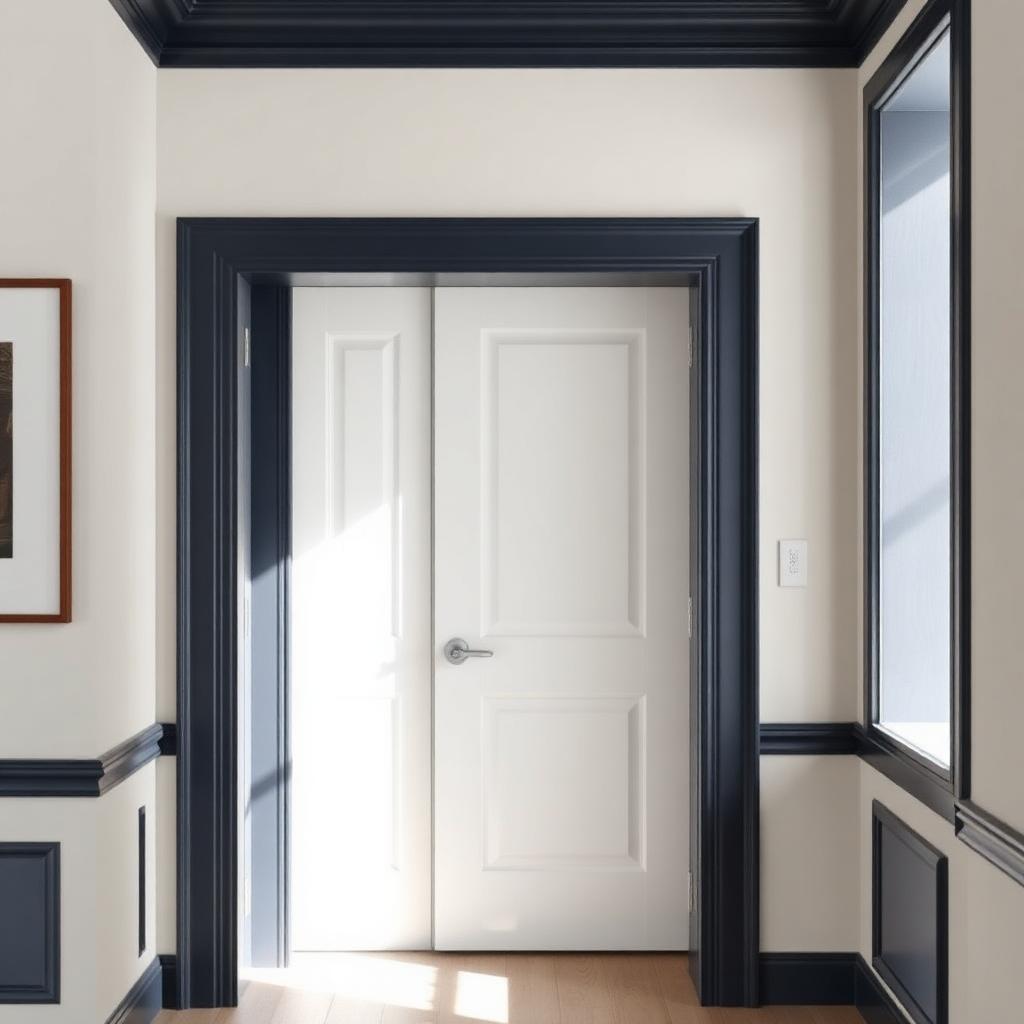
Door frames and doors do not need to be the same color. Matching the door and frame creates a clean, modern look. Contrasting them (dark door with white frame, or vice versa) adds visual interest and is increasingly popular in 2026.
The safest options are: (1) door, frame, and trim all the same neutral; (2) painted door with white frame and trim; or (3) bold door with the frame matching the door for full contrast against the wall.
Option 1: match door and frame to the trim
The traditional approach is to paint the door, frame, and baseboards the same color, usually a soft white or warm white. This creates a clean envelope around the wall color and is forgiving over time. Best for traditional, transitional, and farmhouse interiors.
Option 2: contrasting door, matching frame
Paint the door a bold color (matte black, navy, forest green) while keeping the frame the same color as the wall trim (usually white). This is the most common modern approach: the door becomes a feature, the frame stays quiet. Works in 90 percent of homes.
Option 3: matching door and frame, contrasting wall
Paint both the door and the frame the same bold color while the wall stays neutral. This treats the door and frame as a single architectural element. Best in modern, Scandinavian, and Japandi interiors with clean lines.
Option 4: all-black or all-dark
Doors, frames, and trim all painted in a single deep color (charcoal, black, deep navy) is a high-impact 2025 to 2026 trend. It requires confident styling: minimal pattern, restrained accessories, good natural light.
What to avoid
Avoid painting only half the frame (just the visible front, leaving the inside edge unpainted). Avoid using glossy paint on the frame and matte on the door (the sheen mismatch looks unfinished). Avoid combining warm-white frame with cool-white door; the difference shows up in photos.
Practical considerations
Frames take more abuse than doors (shoes, vacuum cleaners, pets). Use a satin or semi-gloss enamel paint on frames for cleanability. Doors can be matte for a softer modern look or semi-gloss for traditional polish. Whichever you pick, use the same brand and product across all trim for consistent sheen.
Resale value
Neutral matching (white door, white frame, white trim) is the safest for resale because it appeals to the widest audience. Bold contrast is fine if you plan to live in the home for at least five years; otherwise you may need to repaint before selling.
How to test before committing
Paint a 12x12 inch sample directly on the door and the frame. Look at it in morning light, afternoon light, and artificial light over 48 hours. Colors shift dramatically across light conditions, especially deeper hues like navy and forest green.
Hardware integration
Pick door knob finishes that work with both door and frame colors. Brass and warm-tone hardware pop on dark doors. Matte black hardware works on almost everything. Chrome and brushed nickel suit lighter, cooler palettes.
The door frame and door color do not need to match. Match for calm, contrast for drama. The wall color decides which works better in your specific room.
Sheen pairing rules
Matte paint hides imperfections best on doors and frames. Satin and semi-gloss are easier to clean but show every brush mark and ding. A common pro approach is matte on the door face and satin on the frame and trim for durability without too much shine.
Dark doors with light frames
The contrast trend (black or navy door with crisp white frame) reads modern and feels intentional. It works best when the surrounding wall is a quiet neutral. In rooms with strong wall color, the door becomes a busy element rather than a focal point.
Light doors with dark frames
Less common but striking: white door framed by a dark navy or black frame. The frame becomes the visual line, almost like a picture frame around the door. Use in modern interiors with high ceilings and minimal furniture.
How paint type affects color match
Even the exact same color name reads differently in matte vs satin vs gloss. Use the same paint product and sheen on the door and the frame for the best match. Switching brands or sheens mid-project introduces subtle mismatches that show in daylight.
Touch-up planning
Save labeled paint cans (door, frame, trim) for future touch-ups. Note the brand, color code, sheen, and store. Touch-ups within 6 months blend invisibly; touch-ups after years often look mismatched and require repainting the full surface.
Designer takeaway
If you are unsure, default to: door, frame, and trim all in the same off-white. It is the lowest-risk choice, photographs well, and works in 95 percent of rooms. Save bolder choices for rooms you live in long enough to enjoy them.
Photography tip for resale
Real estate photographers prefer doors and frames that contrast cleanly with the wall, because the contrast pulls the eye and makes spaces look intentional. If you plan to list within two years, lean toward white frame plus light door, or matching frame and door in a quiet neutral.