Quick Answer
Vinyl siding is a DIY project for a small shed, a garage wall, or a single accent gable. Whole-house siding is technically possible for a determined homeowner but it is a 2 to 4 week project at weekends, involves ladder work the whole way, and one wrong nailing pattern voids the warranty on a 12,000 dollar product.
For most people, DIY vinyl siding is the right call only when the area is small and reachable from a 6 foot ladder.
What Makes Vinyl Siding "DIYable"
- Light (about 1/2 pound per square foot, vs. 4 pounds for fiber cement).
- Standard sizes and starter strips.
- Cuts with tin snips or a circular saw run backwards.
- No painting, no caulking joints.
What Makes It Hard
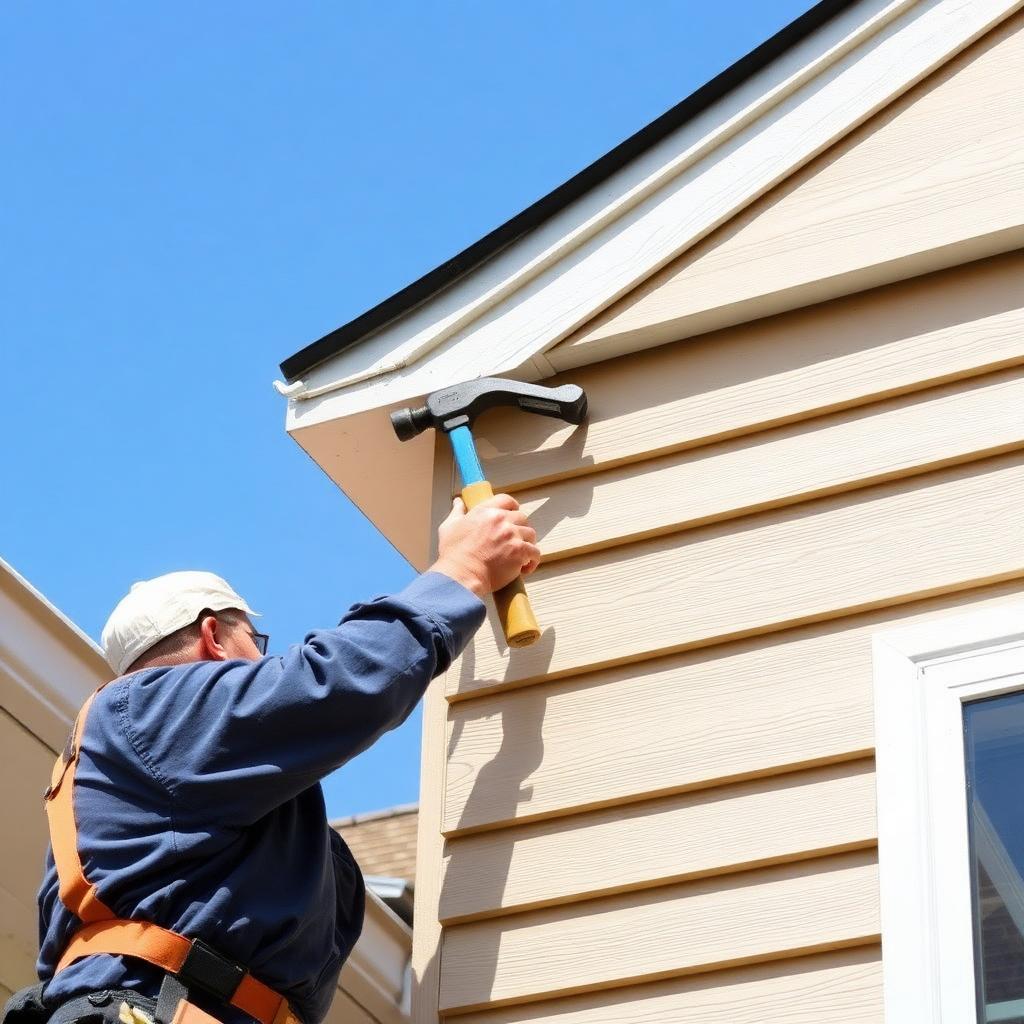
- The nailing pattern. Vinyl expands and contracts 1/2 inch over a 12 foot panel between summer and winter. You must nail in the center of the slot, never tight, never angled. Tight nails make the siding buckle in July.
- The flashing and J-channels around every window and door.
- The ladder work. A two-story home means a 24 to 32 foot ladder.
- The tear-off, which often reveals damaged sheathing.
Tools You Need
- Tin snips and a utility knife.
- Siding zip tool (10 dollars, undoes the locks for repairs).
- Snap-lock punch tool for the cut edges at the top of walls.
- Chalk line, level, tape measure.
- Hammer or nail gun set to barely-snug, never sunk.
- Ladders, scaffold for high work.
The Underlayment Decision
Modern code (IRC R703.2) requires a water-resistive barrier behind siding, almost always house wrap (Tyvek, Typar). If you are residing over old siding without removing it, you cannot inspect for rot, and most manufacturers void the warranty. Tear off, repair sheathing, wrap, then side.
Installation Order
- Snap a level chalk line for the starter strip, get this perfect, everything stacks on top.
- Install corner posts, J-channel around windows and doors.
- Snap the first panel into the starter, nail loose in the center of slots.
- Overlap each panel by at least 1 inch, stagger seams between courses, never line up two seams within 24 inches vertically.
- Cut the top course to height with a snap-lock punch and fit into the undersill trim.
- Finish soffits and fascia.
The 1/32 Inch Rule
Every nail leaves about a quarter to a nickel's thickness of slack between the nail head and the nailing flange. This is what allows expansion. Hammering tight is the number one rookie mistake and the warranty exclusion most cited by manufacturers like Mastic and CertainTeed.
Cost and Time
Materials in 2026 cost 4 to 8 dollars per square foot for builder-grade vinyl, 8 to 14 dollars for insulated. Pro installation adds 4 to 10 dollars per square foot. A 1,500 square foot wall area saves roughly 6,000 to 15,000 dollars in labor if DIY succeeds, but expect 80 to 120 hours of work.
When To Hire
- Two-story or higher walls without a stable scaffold setup.
- Houses with a lot of trim, dormers, bays, or cut-up rooflines.
- Hardie or fiber cement equivalents (different tools, different skill, almost never DIY).
Bottom Line
Vinyl siding is doable on a small or single-story area, and a worthwhile DIY project for sheds, garages and accent walls. Whole-house siding is a savings of thousands but a commitment of hundreds of hours, and the nail-tight mistake is unforgiving. Practice on the back wall first.
Common Questions About DIY Vinyl Siding
Can I install vinyl siding over old wood siding?
Most manufacturers permit it if the existing siding is flat, solid, and you add foam-board sheathing or fan-fold underlayment to create a flat nail base. Inspection of the substrate is impossible afterwards, so any rot is locked in.
How much should I add for waste?
Order 10 percent waste for straight walls, 15 percent for cut-up walls with multiple gables and corners.
What is the right nail?
Roofing nails or siding nails with a 3/8 inch head, long enough to penetrate the nail base 1-1/4 inch. Aluminum or hot-dip galvanized only, regular steel rusts and bleeds through.
Why does my old vinyl siding warp?
Heat. Black grills, reflective windows from neighbors, dark roofs nearby and tight nailing all cause warping. Modern siding has higher heat ratings; the latest CertainTeed Mainstreet line is rated to 165 F.
Do I need a permit?
Most jurisdictions exempt re-siding when the new material matches in flammability rating. Whole-house siding usually still needs a permit. Check before ordering material.
Can vinyl siding be painted?
Yes, with vinyl-safe acrylic paint matched to a lighter color than the original (darker absorbs heat and warps the panel). Sherwin-Williams VinylSafe is the most common product line.
Final Tip
If this is your first siding project, start at the back of the house or in a low-visibility gable. The first 10 panels are practice. By the time you reach the front elevation, your nailing pattern, overlap technique and J-channel cuts will be consistent enough for the project to look professionally installed.