Quick Answer
Spray foam insulation is a DIY project only for very small jobs: rim joists, gaps around penetrations, small attic hatches, the underside of a few floor joists. Whole-attic or whole-wall spray foam is not a homeowner project. Professional rigs apply at the right temperature, pressure and mix ratio. DIY kits cannot match that.
The bigger issue is health. Improperly mixed spray foam off-gases for years. The EPA explicitly warns against large DIY spray foam projects without trained ventilation.
What DIY Kits Can Cover
Two-component kits from Touch 'n Foam, Foam It Green and Tiger Foam cover 200, 400 or 600 board feet (a board foot equals 1 square foot at 1 inch thick). A 600 board foot kit costs 700 to 1,000 dollars in 2026. That is enough for:
- Sealing rim joists in a basement.
- Insulating a 100 to 200 square foot attic hatch and access area.
- Air-sealing top plates, can-light boxes and wiring penetrations.
- Sealing the underside of a small bonus room floor.
What DIY Kits Cannot Cover
- A whole attic (a 1,500 square foot attic at 5 inches of closed cell is ~7,500 board feet, more than 12 kits).
- Walls of a new construction or full retrofit.
- Crawl spaces where ventilation is poor.
- Cathedral ceilings where mix ratio errors create permanent off-gassing trapped behind drywall.
The Safety Reality
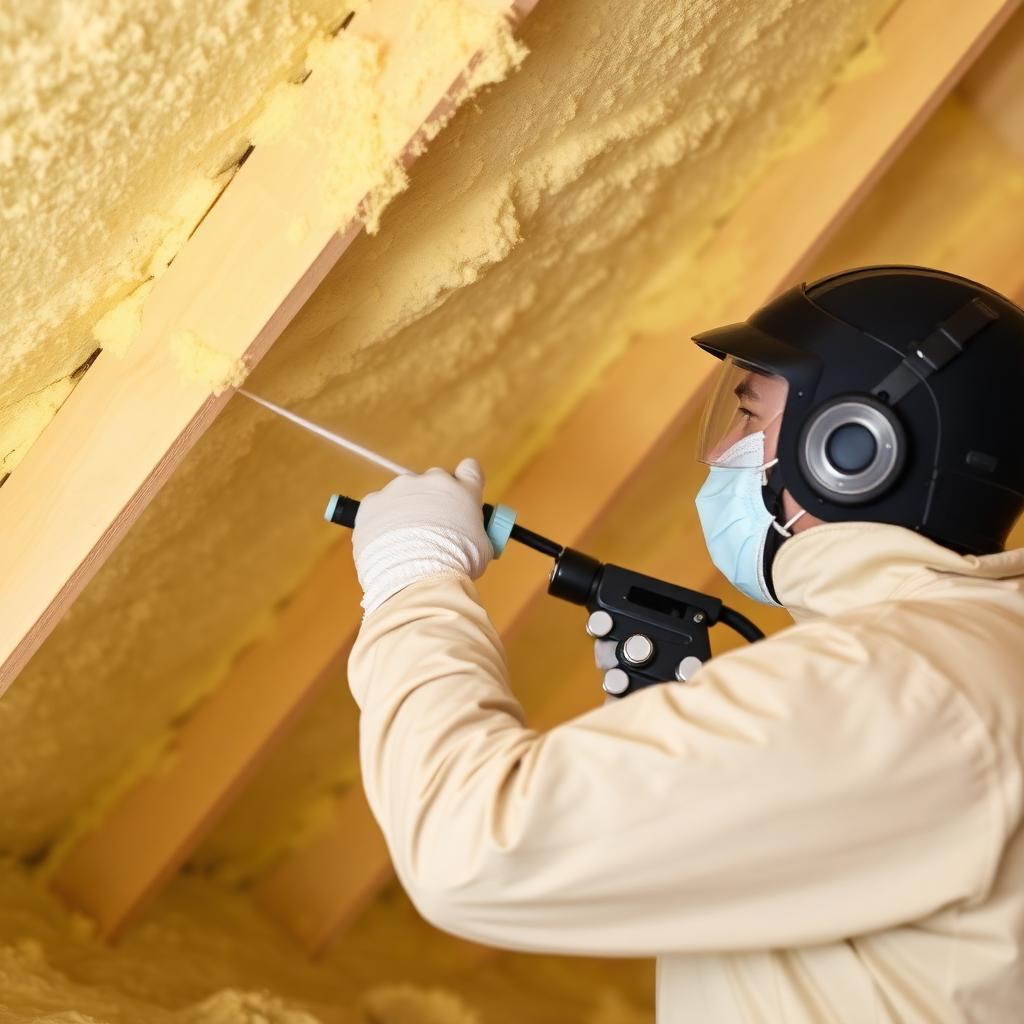
EPA isocyanate guidance and OSHA's 2024 SPF bulletin both require:
- Full-face supplied-air respirator (a paint mask is not enough).
- Tyvek suit, nitrile gloves taped to sleeves.
- Forced ventilation during application.
- 24 to 72 hour re-occupancy window depending on the product.
Off-the-shelf DIY kits hand you a basic respirator and goggles. That is fine for a 30 minute rim joist job. It is not enough for whole-attic work.
Temperature Matters
Spray foam mixes at the nozzle. Both A and B sides need to be 75 to 85 F. Below 60 F, the foam fails to expand and the closed-cell value drops to roughly half. The tanks must sit in a warm room for 24 hours before use.
This is why pros use heated rigs. DIY kits cannot heat the chemicals, only the room they sit in.
Open vs Closed Cell
- Open-cell (3.5 R per inch, soft, vapor-permeable, cheaper). Best for interior walls and sound dampening. Most DIY kits are open-cell.
- Closed-cell (6 to 7 R per inch, rigid, vapor barrier, more expensive). Best for rim joists, basement walls, and any flood-prone area.
Cost Comparison
Professional spray foam in 2026 averages 1.50 to 3.50 dollars per board foot for open-cell, 2 to 5 dollars for closed-cell. DIY kits work out to 1.00 to 1.80 dollars per board foot but you assume all the labor, equipment risk and disposal.
When the Math Works for DIY
- Small targeted air sealing where a pro will not bid the small job.
- One-time rim joist insulation in a basement.
- Sealing penetrations you find during another renovation.
Bottom Line
Spray foam is a DIY project only at small scale. Buy a single kit, use it the same week your basement remodel exposes the rim joists, and treat the off-gassing window as mandatory. Whole-house foam is a pro job in 2026, full stop.
Common Questions About DIY Spray Foam
Can I just buy cans of Great Stuff for a big job?
No. Aerosol cans are for gap filling, not insulation. Hundreds of cans cost more than a 600 board foot kit and the result is uneven.
How do I dispose of leftover spray foam product?
Trigger the lock back, store tanks upright, and dispose at a household hazardous waste site. Tanks contain residual pressure even when "empty".
Can I spray foam an existing exterior wall?
Only by drilling holes and pumping in slow-rise foam. Most DIY kits cannot do this. Hire a pro with retrofit equipment.
How long before I can re-enter the space?
24 hours for tack-free and habitable per most kit manufacturers. 72 hours for full cure before drywall goes back up.
Will spray foam rot my roof?
Open-cell foam in an unvented attic can trap moisture against the roof deck in cold climates. Climate zones 5 and above usually need a vapor retarder or closed-cell foam specifically rated for the assembly.
Is spray foam better than fiberglass?
For air sealing, yes by a wide margin. For raw R-value per dollar, fiberglass batts still win. Best practice in cold climates is closed-cell foam at the rim joist and air-sealing penetrations, then fiberglass or cellulose for the bulk insulation.
Final Tip
Plan your foam path before you pull the trigger. Spray foam expands fast, sticks instantly, and is permanent. Mark the boundaries with painter's tape on adjacent surfaces, spray test passes against scrap cardboard to confirm the mix, and work in short bursts rather than long continuous beads. Stop the moment the chemicals feel cool to the touch; warm them up before resuming.