Quick Answer
Replacing a single insert ("pocket") window in an existing frame is a 2 to 3 hour DIY project. Replacing the full window unit including the frame ("full frame replacement") is a 4 to 6 hour project per window with significant trim and flashing work.
Whole-house replacement is one of the worst DIY value propositions because most ENERGY STAR rebates and manufacturer warranties require installation by a certified installer.
Insert vs Full-Frame
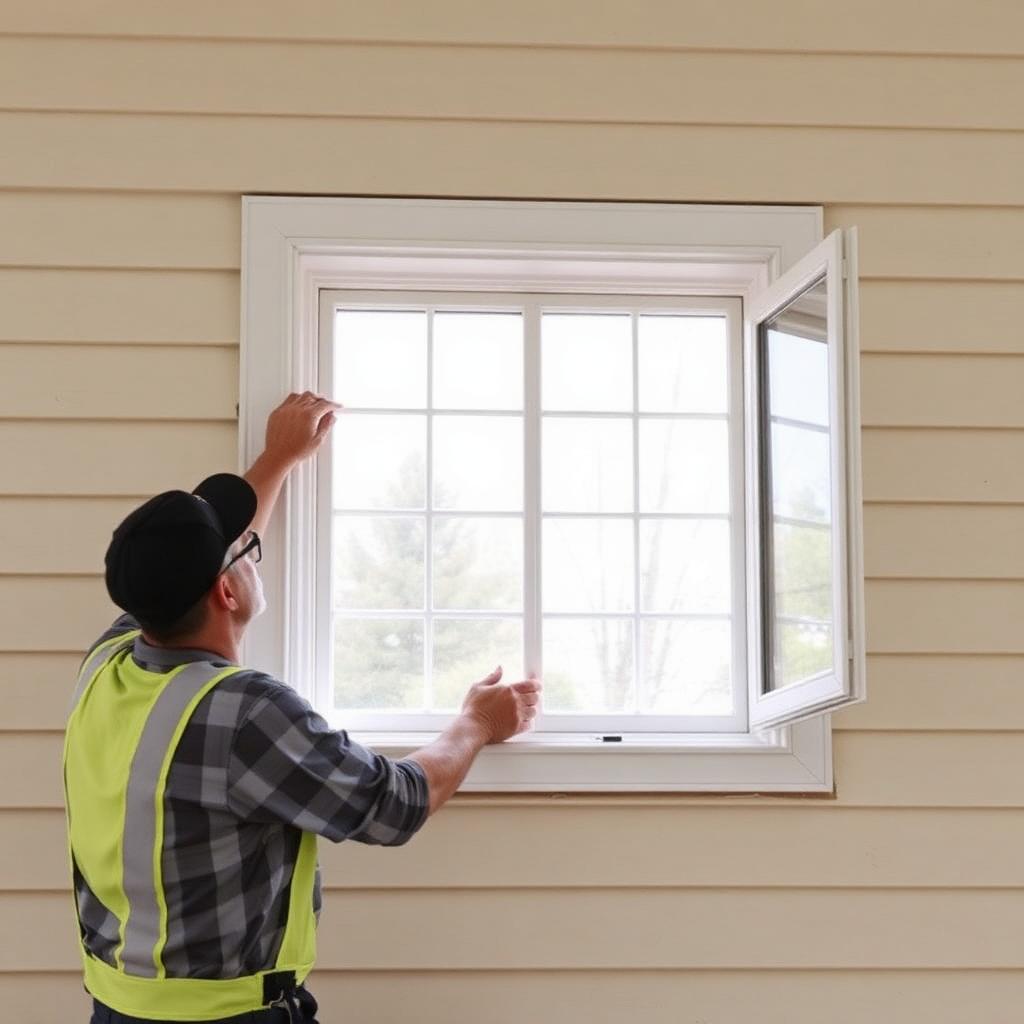
- Insert replacement: the new window slides into the existing frame. Quick, no exterior trim disturbed. Best when the existing frame is sound. Loses about 1 inch of glass area on each side.
- Full-frame replacement: removes the entire window and frame down to the rough opening. Requires removing exterior siding and interior trim. Best when frames are rotten or you want to change window size.
When DIY Makes Sense
- A single damaged window in an existing sound frame.
- Ground-floor windows reachable from a 6 foot ladder.
- You are comfortable with caulking, shims, and flashing tape.
- The new window matches the rough opening within 1/4 inch.
When to Hire
- Whole-house replacement (warranty and rebate constraints).
- Second-story windows.
- Bay windows, bow windows, large picture windows.
- Anywhere siding work is needed simultaneously.
- Stucco exterior (every cut risks cracking).
Tools and Materials
- New window with the same rough opening measurement.
- Shims (cedar wedges or composite).
- Flashing tape (Vycor, Grace, or Zip System).
- Low-expansion window and door foam (regular foam will bow the frame).
- Backer rod and exterior caulk.
- Pry bar, oscillating multi-tool, level, drill, utility knife.
- Insulation gloves and safety glasses.
Insert Replacement Steps
- Remove window stops on the interior. Lift out the bottom sash, then the top sash.
- Remove the parting bead.
- Vacuum out the old sash weights or jamb liners.
- Test-fit the new insert. It should drop in with 1/8 to 1/4 inch clearance on each side.
- Apply caulk to the exterior blind stop where the new flange will sit.
- Set the new window in place. Shim under the sill until perfectly level.
- Drive screws through the side jambs into the existing frame, not over-tight.
- Spray low-expansion foam into all four sides of the gap.
- Replace the interior stops with finish nails or brads.
Full-Frame Replacement Steps
Same as above but starts with removing exterior trim, cutting siding around the opening, removing the old frame and rough sill, inspecting and repairing any rotten framing, installing flashing tape (sill first, then jambs, then head), nailing in the new flanged window, then re-flashing and re-siding. Each step is a 30 to 90 minute job on its own.
Energy Code in 2026
Most U.S. zones now require U-factor of 0.30 or less and SHGC of 0.40 or less for replacement windows to qualify for tax credits. The 25C residential energy credit was extended through 2032 and covers 30 percent of cost up to 600 dollars per year for ENERGY STAR Most Efficient windows.
Cost
- Vinyl insert window 250 to 600 dollars per unit, installed 500 to 1,200 dollars.
- Wood-clad insert 700 to 1,800 dollars per unit, installed 1,200 to 3,000 dollars.
- Full-frame replacement adds 200 to 600 dollars per window in labor and trim.
Bottom Line
Replacing one or two windows is a worthy DIY project that builds skills you can use elsewhere. Whole-house window replacement is rarely worth the DIY savings because warranty and rebate paperwork usually requires a certified installer. Get the flashing right, foam matters less than tape, and check level twice before driving the second screw.
Common Questions About DIY Window Replacement
How do I measure for a replacement window?
For inserts: measure the existing frame opening width and height in 3 places (top, middle, bottom for width and left, middle, right for height), order to the smallest measurement minus 1/4 inch. For full-frame: measure the rough opening to stud.
Do I have to match the existing window style?
No. You can switch from double-hung to casement, slider to fixed picture, as long as the egress requirements in bedrooms are met (24 inch min height, 20 inch min width, 5.7 sq ft min clear opening, 44 inch max sill height per IRC R310).
What does U-factor and SHGC mean?
U-factor is heat loss (lower is better). SHGC is solar heat gain (lower for cooling climates, higher for heating climates). ENERGY STAR specifies different targets by climate zone.
Should I get triple-pane glass?
Worth it in climate zones 6 and above. Below that, the cost premium often pays back over a 25 year life but the gap is narrow.
Vinyl, fiberglass or wood?
Vinyl is cheapest, 25 year life. Fiberglass is most stable across temperature swings, 40 to 50 year life, mid-priced. Wood is most expensive, requires periodic exterior painting unless clad in aluminum.
How much air sealing matters?
A poorly air-sealed window leaks more energy than a low-end window installed correctly. Foam, flash, tape and caulk are at least half the energy savings.