Quick Answer
Refinishing hardwood floors is a DIY project, but it is the hardest "doable" one in a typical house. You can save 60 percent of the 3 to 8 dollars per square foot a pro charges. You can also gouge a 6,000 dollar floor in 30 seconds with a drum sander you have never used.
Small rooms, simple square layouts, solid 3/4 inch oak: DIY makes sense. Large open floor plans, engineered wood, parquet patterns or wood that has been sanded twice already: hire a pro.
Can Your Floor Be Refinished?
You need at least 1/8 inch of wood above the tongue. Slip a dime into a heat register and look at the side of the plank. If 3/16 inch or more remains, you have one full refinish left. Engineered floors have a much thinner wear layer, often only 1 to 2 mm, and most cannot be sanded with a drum sander at all.
The National Wood Flooring Association lists 3 to 5 refinishes as typical for solid 3/4 inch oak over its lifetime.
Tools You Will Rent
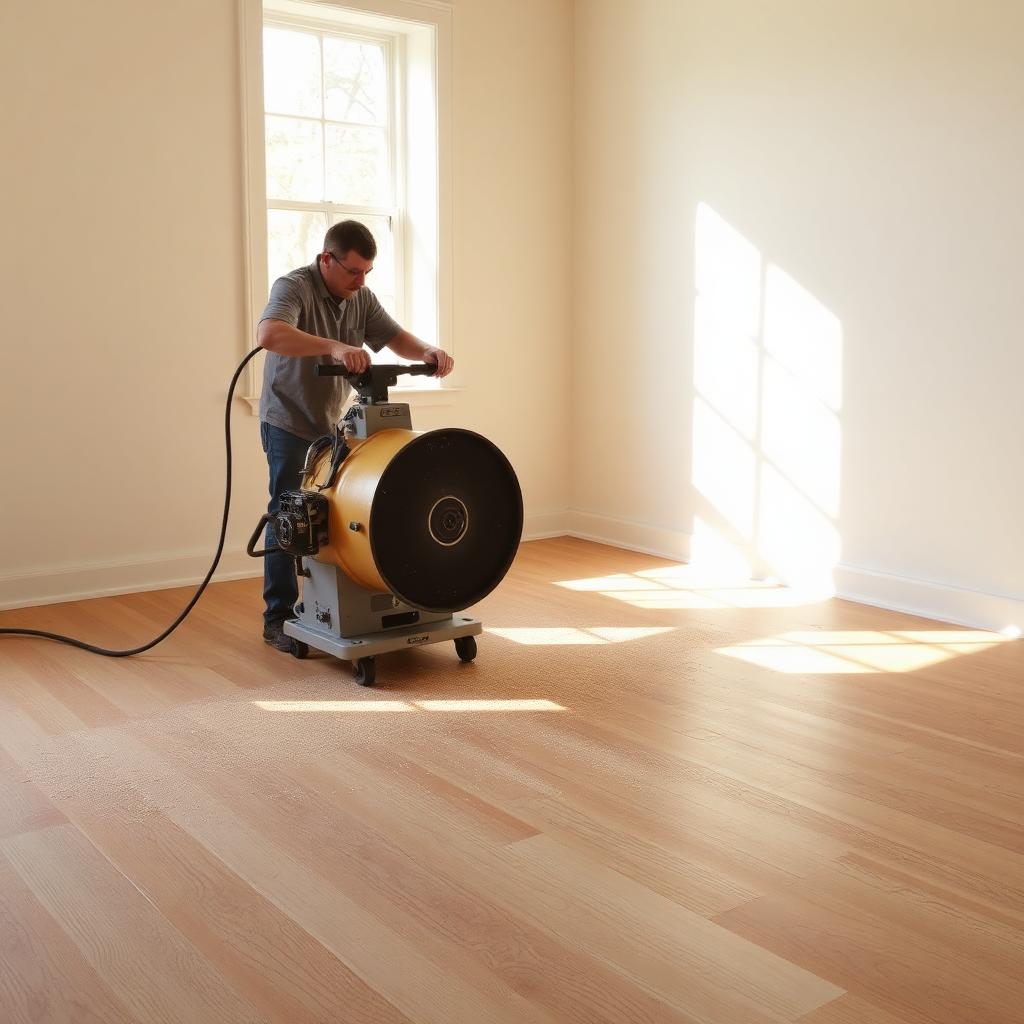
- Drum sander (80 to 110 dollars/day). The aggressive tool that does the open field.
- Edger (50 to 70 dollars/day). For edges and around obstacles.
- Buffer/polisher (40 dollars/day). For the final pass to remove sanding marks.
- Shop vac with HEPA filter and abundant filter bags.
- Knee pads, respirator (N95 minimum), ear protection.
Abrasives
Three grits, in order: 36 or 40 grit to remove finish, 60 to 80 grit to remove the scratches from the first pass, 100 to 120 grit for the final smoothing. Skip a grit and the final coat will show the scratch pattern of the coarse grit.
The Sanding Sequence
- Remove base shoe (the quarter-round at the floor). Hammer protruding nails below the surface.
- Drum sand the field with 36 grit, moving with the grain, lifting and lowering the drum smoothly so you do not gouge a stop mark.
- Edge the perimeter with the same grit, swinging the edger in small overlapping arcs.
- Vacuum thoroughly. Sawdust contaminates the next finer pass.
- Repeat with 60 to 80 grit, then 100 to 120 grit.
- Buff the entire floor with a 120 grit screen on the polisher to blend edge and field.
The Drum Sander Rule
Never let the drum touch the floor while standing still. Always be moving when the drum is down. The drum spins at high speed, and 3 seconds of stop equals a permanent dish in the floor that will telegraph through every finish layer.
Finishing
Three options in 2026:
- Oil-modified polyurethane: warm amber, durable, slow dry (8 to 12 hours), VOCs.
- Water-based polyurethane (Bona Traffic HD, Pallmann Pall-X 96): clear, low odor, dries in 2 to 4 hours, can do 3 coats in a day.
- Hardwax oil (Rubio Monocoat, Osmo Polyx): matte natural look, spot-repairable, easier for DIY.
Apply with a T-bar applicator (water-based) or lambswool (oil), with the grain, edges first with a brush, then field. Sand lightly between coats with a 220 grit screen.
Time and Cost
500 square feet, first-time DIY: 8 to 10 hours of sanding day one, 4 to 6 hours of finishing day two, plus dry time. Rentals plus abrasives plus finish: 300 to 500 dollars. Pro cost: 1,500 to 4,000 dollars.
Where DIY Goes Wrong
- Drum dishes from stopping while sanding.
- Crossing the grain on the field passes (visible swirl marks).
- Skipping grits.
- Lap marks in the finish from working too slow with water-based poly that flashes.
- Dust in the final coat.
Bottom Line
Refinishing hardwood is a DIY project for a small, square room. Practice in a closet first if you have never run a drum sander. Use three grits, keep the drum moving, and accept that the first room you do will be the worst one you ever own.
Common Questions About DIY Hardwood Refinishing
How many times can a hardwood floor be refinished?
Solid 3/4 inch oak can usually take 3 to 5 full sandings. Engineered wood depends entirely on wear layer thickness, often only one light buff-and-recoat.
Can I screen and recoat instead of full sand?
Yes, if the existing finish is intact and you just want to refresh. A 120 grit screen on a buffer plus one coat of poly takes a day and avoids the dust storm.
Oil or water-based polyurethane?
Water-based dries faster, has lower VOCs, and stays clearer over time. Oil-based gives a warm amber tone many people prefer for traditional oak floors and is slightly more durable.
How many coats?
3 coats of water-based or 2 coats of oil-based on residential floors. High traffic areas (entryways, kitchens) benefit from an extra coat.
How long until I can walk on it?
24 hours for socks-only, 48 hours for shoes, 7 days before placing rugs or heavy furniture (so the finish fully cures).
Can I change the stain color?
Yes; after full sanding to 100 to 120 grit, water-pop the floor by lightly misting with water (helps stain absorb evenly), apply oil-based stain with a lambswool applicator, wipe off excess after 5 minutes, let dry 24 hours, then poly.