Quick Answer
Pouring a small concrete pad (under 100 square feet, like an AC pad or a shed slab) is a fair DIY project. Pouring a 200 to 400 square foot patio is technically DIY but realistically requires 4 to 6 people because concrete sets in 60 to 90 minutes regardless of how slowly you work.
The forming and prep are forgiving. The pour and finish window is not.
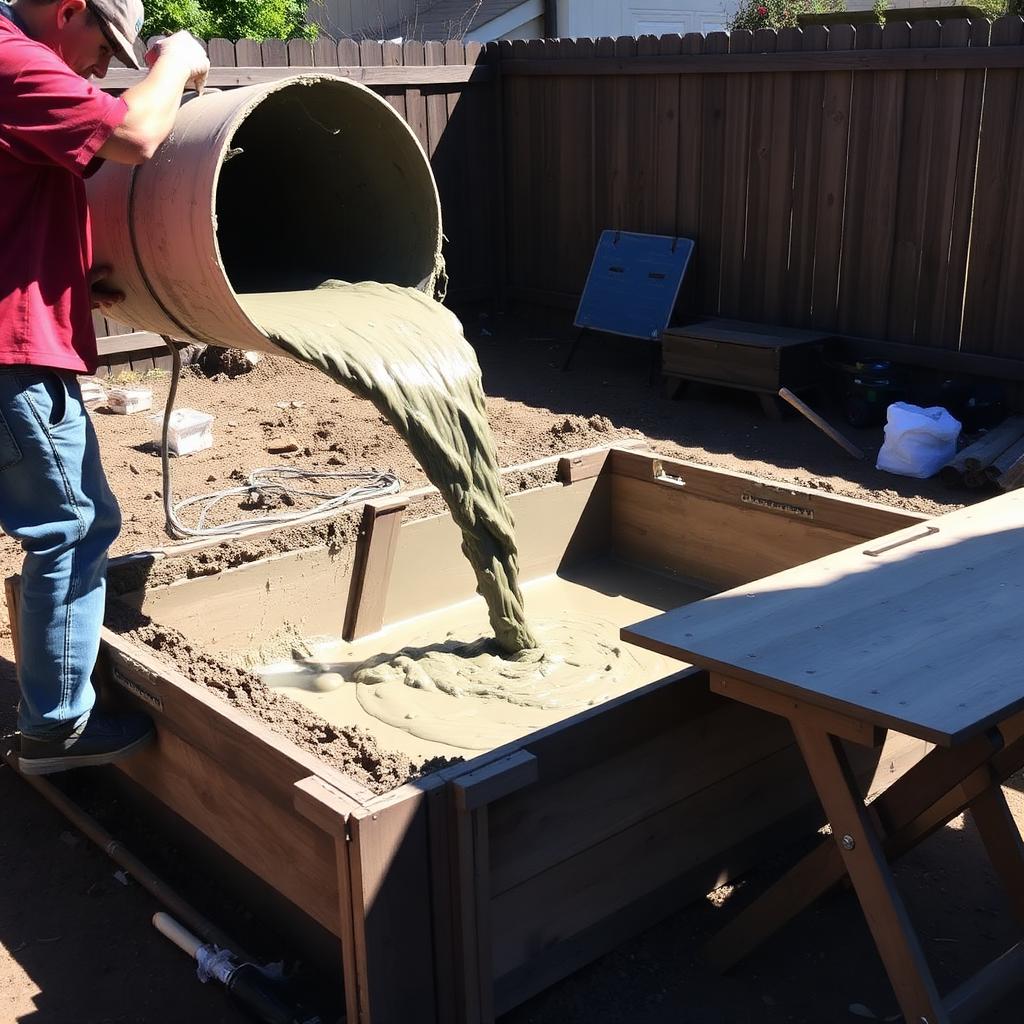
The Time Pressure Nobody Talks About
Once the truck dumps the load, you have:
- 10 to 15 minutes to spread it evenly.
- 20 to 30 minutes to screed level.
- 30 to 45 minutes to float the surface.
- 45 to 75 minutes total before final finishing is too late.
Three people can handle 4 cubic yards (one 12 by 24 patio at 4 inches). One person cannot, the surface flash-sets while you are still placing.
What You Can DIY Solo
- 2 by 2 ft AC condenser pad (3 bags of mixed concrete).
- 4 by 4 ft shed corner pier (6 to 8 bags).
- 3 by 5 ft mailbox or grill pad.
- Stepping stones, paver edges, fence post footings.
For these, you can mix concrete from bags one batch at a time and work at your own pace.
What Needs a Crew
- Any patio over 100 square feet.
- Driveways.
- Stamped, colored or exposed-aggregate finishes.
- Anywhere a ready-mix truck delivers.
Slab Prep (The Part That Lasts 30 Years)
- Excavate 6 inches below the desired top of slab.
- Compact a 4 inch base of crushed gravel or road base, screed flat, slope 1/4 inch per foot away from the house.
- Build 2x4 forms, stake every 3 feet, double-check that diagonals are equal.
- Lay 6 by 6 inch welded wire mesh on chairs in the middle of the slab (NOT on the bottom).
- For larger pads, add #4 rebar in a 2 foot grid.
- Wet the base just before the pour so it does not pull water from the concrete.
Mix and Pour
For DIY-scale pours, use bagged 4,000 PSI concrete mix. Mix in a wheelbarrow or rented mixer to a thick oatmeal consistency. Pour into the form, work it with a shovel to eliminate voids, then strike off with a screed board (a straight 2x4 longer than the form is wide).
For larger pads, order ready-mix. The minimum truck delivery is usually 1 yard (with short-load fee) up to a full 10 yard truck. A 12 by 16 patio at 4 inches needs about 2.4 cubic yards.
Finishing
- Bull float the surface to bring up cream and embed the aggregate.
- Wait for the bleed water to disappear (the surface stops glistening).
- Edge the perimeter for a clean rounded edge.
- Cut control joints 1/4 of the slab depth, at a max spacing of 24 inches per inch of thickness (for a 4 inch slab, joints every 8 to 10 feet).
- Float with a magnesium float for a smooth surface.
- Broom finish at right angles to traffic for slip resistance.
Curing
Cover with plastic sheeting or wet burlap and keep moist for 7 days. Curing compound spray is an alternative. Skipping curing reduces final strength by up to 30 percent.
Cost
- DIY 12 by 16 patio: 350 to 600 dollars in materials.
- Pro install same patio: 1,400 to 3,000 dollars.
- Stamped concrete pro: 12 to 20 dollars per square foot.
Bottom Line
Pour the small pad yourself, hire the patio. The savings on a big pour are real but the crew size and finishing window make first-timer failures very visible. Slope 1/4 inch per foot, cure for a week, and never skip the control joints, they decide where the slab will crack.
Common Questions About DIY Concrete Patio
How thick does a residential patio need to be?
4 inches for foot traffic. 6 inches if you plan to drive over it (driveway extension, hot tub pad).
Do I need rebar or mesh?
Welded wire mesh is sufficient for foot-traffic patios. Use #4 rebar in a 2 foot grid for driveways and patios over 200 sq ft.
How long before I can walk on it?
24 to 48 hours for foot traffic. 7 days for furniture. 28 days before vehicle traffic and full design strength.
Can I pour concrete in cold weather?
Yes if the concrete and base stay above 40 F for the first 48 hours. Use heated water in the mix, cover with insulated blankets, add an accelerator if needed.
Should I seal a new concrete patio?
Yes, after 28 days of curing. Penetrating siloxane or silane sealer protects against freeze-thaw and stains. Reseal every 3 to 5 years.
Why does new concrete crack?
All concrete cracks somewhere. Control joints (the cuts you make in the slab) direct where. Without joints, random cracks appear. Cut joints to 1/4 the slab depth at spacing equal to 24 to 30 times the slab thickness.
Stamped or broom finish for DIY?
Broom finish. Stamping requires fast work, color hardeners and specific patterns; one of the harder finish techniques.