Quick Answer
Hanging drywall is a real DIY project. Most homeowners can hang a 12 by 12 room in a day. Finishing the drywall (taping, three coats of mud, sanding to a paintable surface) is the skill that takes years to get right. That is where DIY jobs visibly fail.
If you are willing to accept a "level 3" finish (acceptable for textured walls and most basements), DIY makes sense. If you want a "level 5" smooth finish under flat paint, hire a professional taper.
Tools and Materials
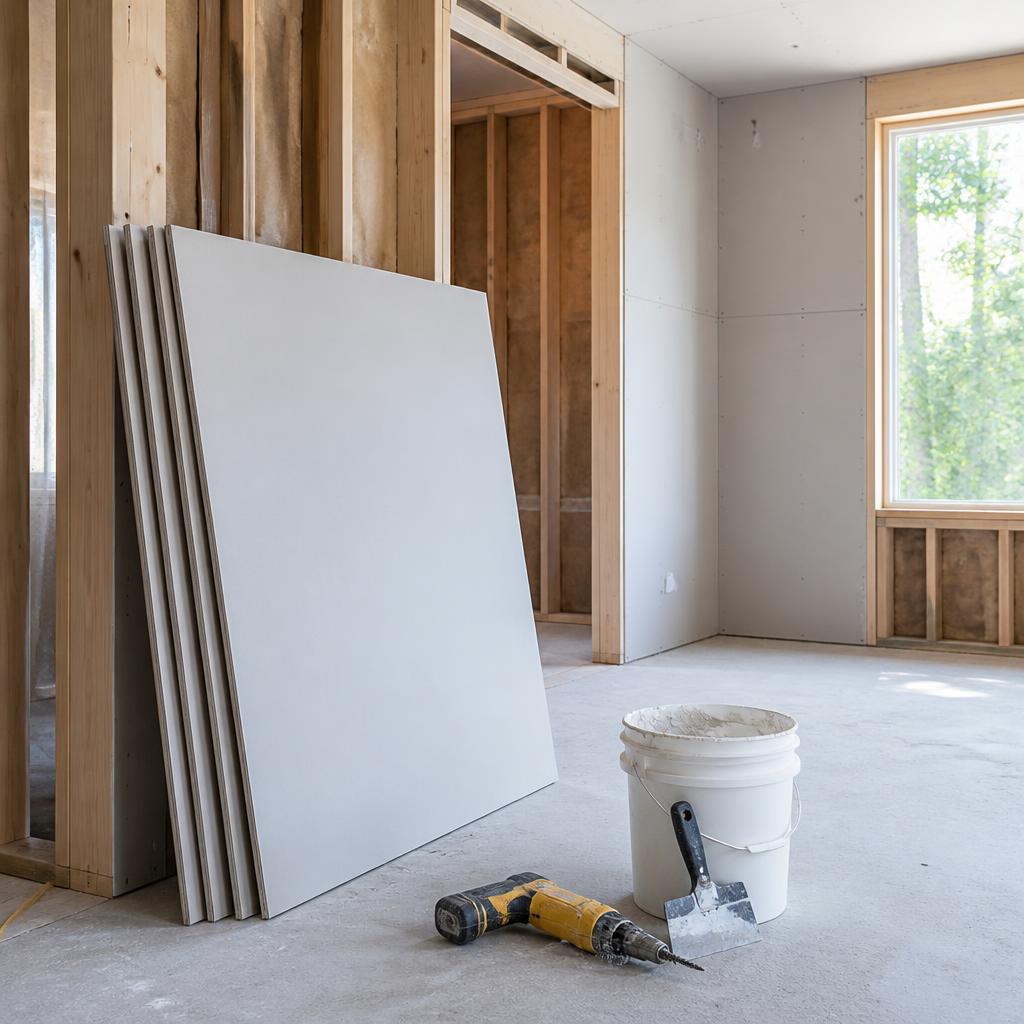
- 1/2 inch drywall sheets (5/8 inch for ceilings and fire-rated walls).
- Drywall screws (1-1/4 inch for walls, 1-5/8 inch for ceilings).
- Drywall lifter or a strong friend for ceilings.
- Utility knife, T-square, rasp.
- Setting-type compound (90-minute hot mud) for the first coat, premixed joint compound for skim coats.
- 4 inch, 6 inch and 10 to 12 inch taping knives.
- Drywall sander (220 grit screens), shop vac with dust attachment.
The Skill Levels Industry Uses
The Gypsum Association GA-214 standard defines five finish levels:
- Level 1: tape embedded, no mud beyond it. Behind walls, attics.
- Level 2: one skim over tape. Garages, warehouses.
- Level 3: two skims, sanded. Textured wall finishes hide imperfections.
- Level 4: three skims, fully sanded. Standard residential.
- Level 5: a final skim coat over the entire surface, sanded smooth. Required under raking light or flat paint.
Most DIY work realistically lands at level 3. Most pros target level 4. Level 5 is specialty work.
Hanging: The Forgiving Part
- Hang ceilings first, perpendicular to joists. Use a drywall lift, two people minimum.
- Hang walls horizontally on residential framing, top sheet first, butt joints staggered between rows.
- Drive screws 12 inches apart on ceilings, 16 inches on walls. Dimple the paper, do not break it.
- Score with a utility knife, snap, score the back paper, snap again.
- Cut outlet holes with a rotary tool or jab saw.
Leave a 1/2 inch gap at the floor. Baseboard covers it and prevents wicking.
Finishing: The Hard Part
- Coat 1: bed tape into hot mud over every seam and corner. Use paper tape on inside corners, mesh on butt joints if you prefer (paper for both is fine).
- Coat 2: wider knife (8 inch), feather the edges 6 inches past the tape.
- Coat 3: 10 to 12 inch knife, feather 12 inches past the tape.
- Sand lightly between coats with a 220 grit screen on a pole sander.
The key: thinner coats, wider knives, more passes. Beginners want to fix it in one heavy coat, which always creates a hump.
Corners
Inside corners use paper tape folded and embedded. Outside corners use metal or vinyl bead nailed or screwed at 8 inch spacing, then 2 to 3 mud coats to feather past the bead edge.
Dust Containment
Sanding drywall makes more dust than any other home project. Tape plastic sheeting over doorways. Use a HEPA shop vac. Wear an N95 minimum, P100 ideal.
Time Estimate
- Hanging 500 square feet of wall: 1 day for two people.
- Taping and three coats over 500 square feet: 3 to 4 days with drying time.
- Sanding and prime: half a day.
Cost
Materials run 1.50 to 3 dollars per square foot of wall area. Pro hanging and finishing is 2.50 to 5 dollars per square foot. The savings are real but the time investment is large.
Bottom Line
Hang it yourself. Finish it yourself if you can accept a level 3 finish and you are not under raking light. For a smooth, paint-ready ceiling in a great room, hire a taper. The 800 dollars you save by hanging it is the right trade. The 800 dollars you save by finishing it is the one you will regret every time the sun comes in low.
Common Questions About DIY Drywall Installation
What thickness do I need?
1/2 inch for residential walls, 5/8 inch for ceilings and any fire-rated assembly (garage walls adjacent to living space, multi-family).
Should I hang drywall horizontally or vertically?
Horizontally on residential walls. The long edge is the tapered edge, easier to tape, and you cut the number of vertical seams in half. Vertical hanging is for commercial 9 foot plus walls.
Mesh or paper tape?
Paper for inside corners (cannot tear), either for flat seams. Mesh is faster but more prone to cracking at butt joints. Pros usually use paper for all joints in residential.
Hot mud or premixed mud?
Hot mud (setting compound) for the first coat over tape (sets in 20 to 90 minutes by formula). Premixed all-purpose joint compound for the second and third skim coats.
How do I avoid visible seams?
Use wider knives on each successive coat (6 inch, then 10 inch, then 12 inch). Each coat must be wider than the previous, feathered to nothing at the edge.
How do I patch a hole?
Small holes (under 2 inches): a self-adhesive mesh patch and 2 coats of joint compound. Larger holes: cut to a clean rectangle, attach a wood backer, fit a drywall patch, tape and finish like a regular seam. Successful drywall installation DIY repairs are nearly invisible after primer and paint.