Quick Answer
Mechanically, a UTV and a side-by-side are the same class of vehicle. For pure trail riding the answer is: a sport side-by-side beats a utility UTV every time. Long-travel suspension, higher ground clearance, and a lower center of gravity make trail work smoother, safer, and more fun.
The real question is not UTV vs side-by-side. It is sport vs utility.
The split inside the class
The UTV / side-by-side family splits into two distinct design lineages:
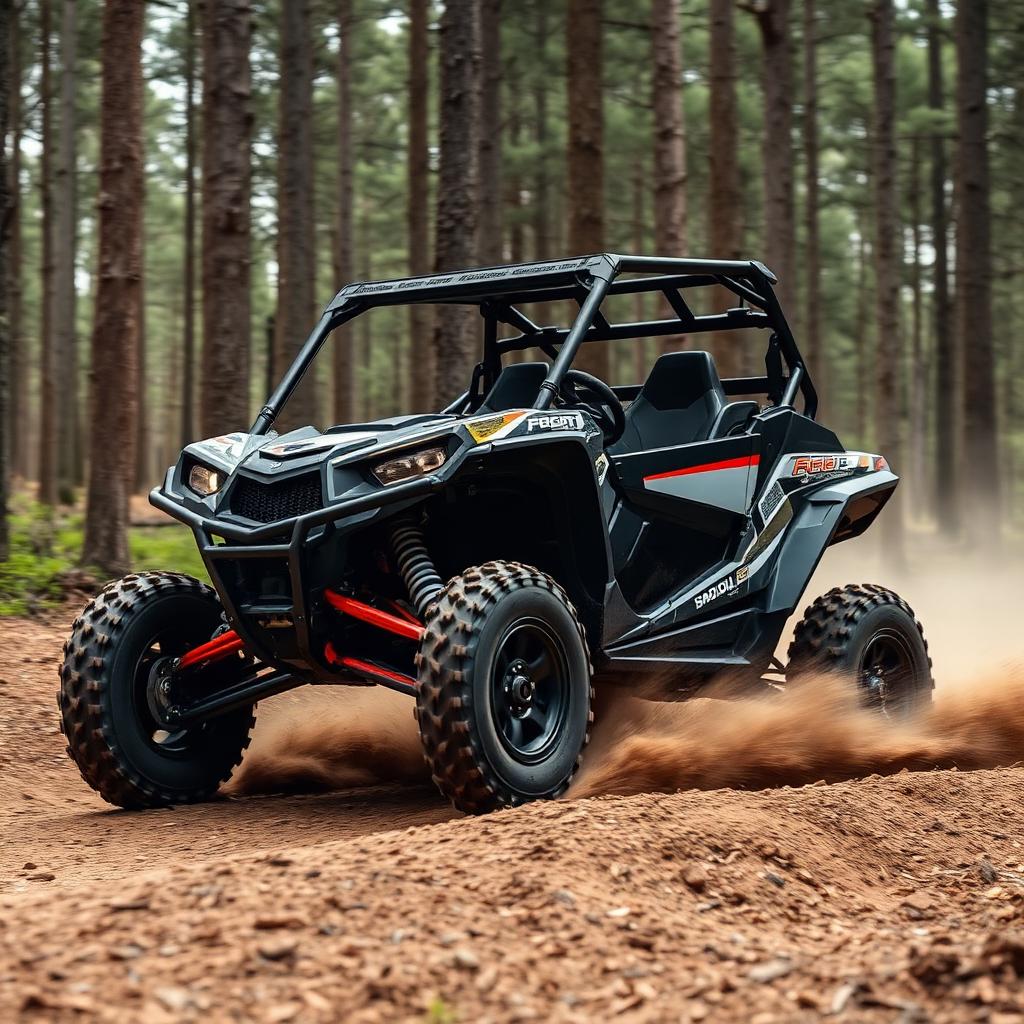
- Sport side-by-sides. Polaris RZR, Can-Am Maverick, Honda Talon. Built for speed, whoops, and agility.
- Utility UTVs. Polaris Ranger, Can-Am Defender, Kawasaki Mule, Honda Pioneer. Built for payload, hauling, and work.
Why sport side-by-sides win on trails
Long-travel suspension
A modern sport side-by-side runs high-end long-travel suspension with 16 to 24 inches of wheel travel depending on model. On a rocky, whoop-lined trail that soaks up hits that would jar the fillings out of a stiffly sprung utility rig.
Real ground clearance
Sport models roll off the line with 13 to 16 inches of clearance, so logs, ruts, and rock ledges pass under the frame instead of dragging on it. Most utility UTVs sit at 10 to 12 inches, which is fine on a farm two-track and rough on a real trail.
Cockpit and controls tuned for speed
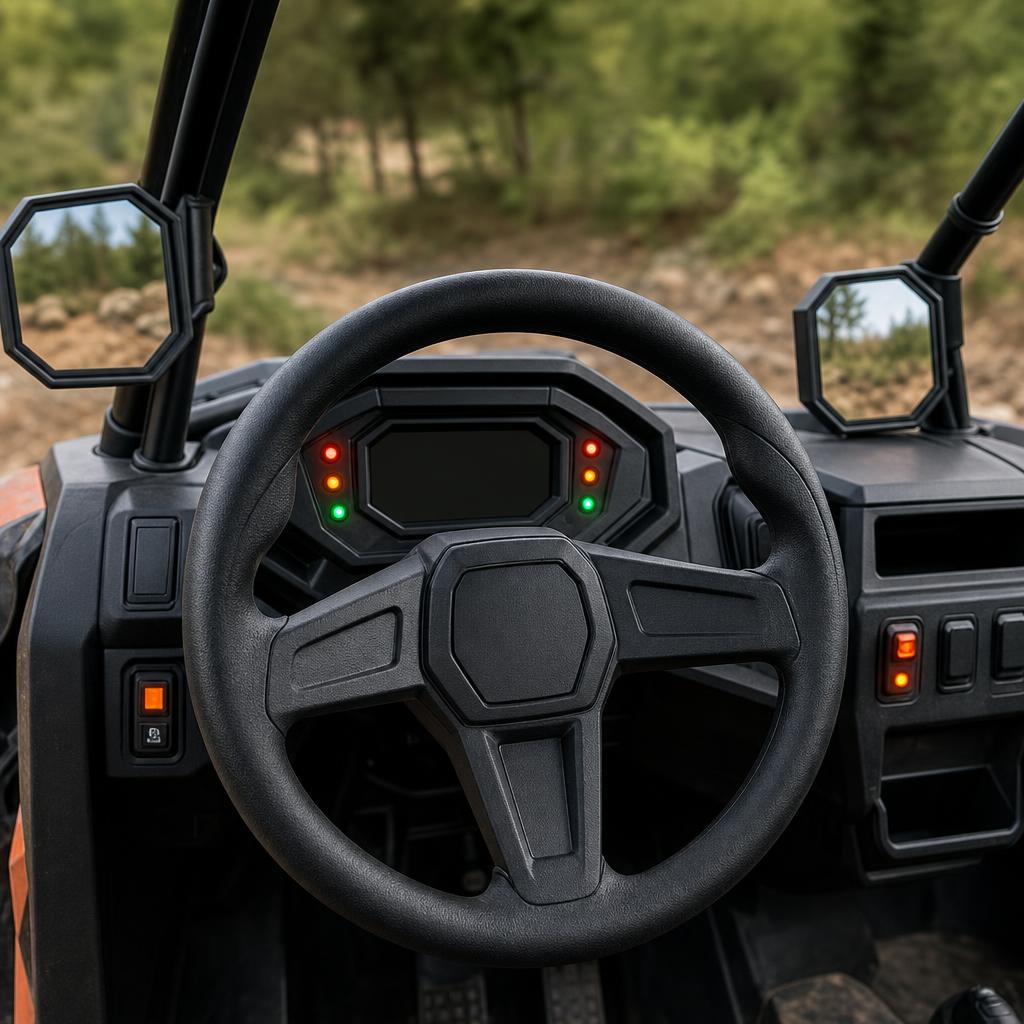
Bucket seats, four-point harnesses, and sport-tuned power steering let you drive with intent. Utility UTVs use bench seating and softer steering that feel great when you are hauling firewood and cramped when you are picking a line at speed.
When a utility UTV still makes sense
If your "trail riding" is mostly graded fire roads, ranch two-tracks, and short recreational loops between chores, a utility UTV can absolutely do it. You just trade ride quality for cargo capacity. Try to run a Kawasaki Mule down a whooped-out desert wash and you will feel every hit.
Comparison at a glance
| Metric | Sport side-by-side | Utility UTV |
|---|---|---|
| Suspension travel | 16 to 24 in. | 8 to 10 in. |
| Ground clearance | 13 to 16 in. | 10 to 12 in. |
| High-speed comfort | Outstanding | Stiff and choppy |
| Cargo capacity | Small plastic bed | Large dump bed |
| Best use | Trail riding, dunes | Property, hauling, hunting |
The crossover option
If you need a genuine jack of all trades that can work Monday and play Saturday, look at crossover models like the Polaris General or Yamaha Wolverine RMAX. They pair a functional cargo bed with sport-tuned long-travel suspension. They give up some outright speed to a pure RZR and some pure hauling capacity to a Ranger, but they cover both jobs credibly.
Frequently asked questions about UTV trail riding
Is a two-seat sport model better than a four-seat?
Two-seat sport models have shorter wheelbases and turn tighter, which helps in wooded terrain. Four-seat models track more stable at speed and carry more passengers. Pick based on who typically rides with you.
Do I need a roll cage upgrade for trail riding?
Most factory cages meet ROPS standards. If you are running technical rock or racing, upgraded cages and higher-rated harnesses become worth the money. For general trail use, factory hardware is fine.
What tire size makes the biggest difference on a sport SxS?
Moving from the stock 27 inch tire to a 30 or 32 inch aggressive trail tire adds ground clearance, contact patch, and traction. Just re-gear or upgrade the clutch to keep drivability if you jump more than 3 inches over stock.
Tire and wheel choices that change trail behavior more than any other mod
Whether you buy a sport side-by-side or a utility UTV, the tire package changes trail behavior more than any other single upgrade. A stock 27 inch trail tire loses grip fast in mud and rocky terrain. Moving to a 30 or 32 inch 8-ply aggressive trail tire like a Maxxis Carnivore or an ITP Coyote adds real ground clearance, doubles the contact patch, and improves puncture resistance.
Beadlock wheels for technical rock
If you regularly air down below 10 psi for rock crawling, beadlock wheels stop the tire bead from popping off the rim. They add cost and weight but they are the only reliable answer to ultra-low pressures on technical trails.
Re-clutching after a tire upsize
Any tire upsize larger than about 2 inches over stock changes the effective gear ratio and hurts CVT drivability. A clutch kit (typically $150 to $400) re-tunes weights and springs to restore low-end response. Skip this step and you will feel it in every climb.
How terrain shapes the buy decision
Ranchers and hunters who spend 80 percent of their time on graded ranch roads and 20 percent on trails should default to a utility UTV. Weekend trail riders who tow to a park and rip trails all Saturday should default to a sport side-by-side. Anyone genuinely split down the middle should test drive a crossover like the Polaris General or Yamaha Wolverine RMAX before committing to either pure lineage.
Passenger comfort matters more than spec sheets
Sport buckets and four-point harnesses are amazing at speed and terrible for a 45-minute putt to a lunch spot. Utility bench seats are the opposite. Whichever machine you buy, sit in it with all your gear for an hour before writing the check.
Bottom line
For dedicated trail riding, a sport side-by-side wins. For property work with the occasional trail loop, a utility UTV or a crossover is the smarter buy.