Quick Answer
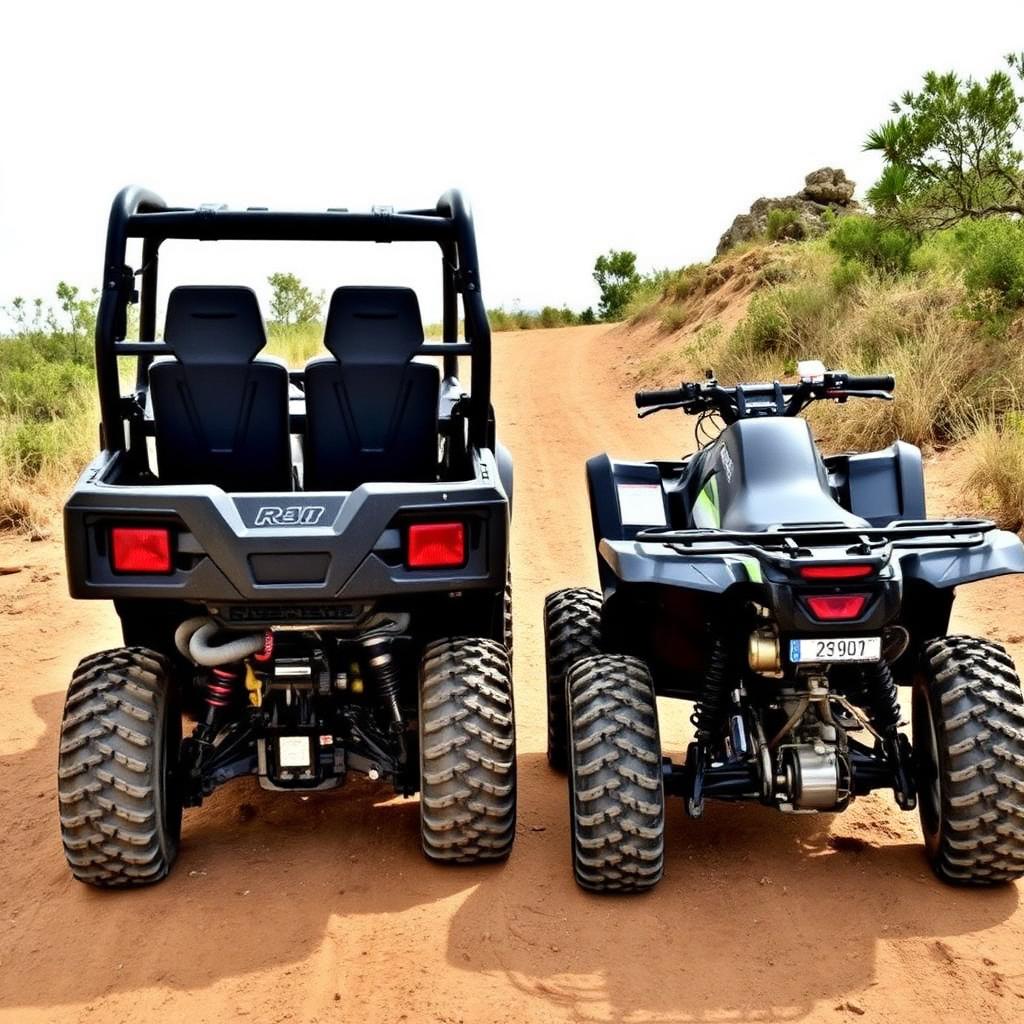
A side-by-side is a UTV, not an ATV. All three sit under the broader off-highway vehicle umbrella, but they are different machines. An ATV has a straddle seat and handlebars. A UTV (also called a side-by-side or SxS) has bucket or bench seats, a steering wheel, foot pedals, and a roll cage.
The distinction changes what safety gear you need, which trails you can use, and what your insurance costs.
Where the terms come from
"UTV" stands for Utility Terrain Vehicle (some manufacturers use Utility Task Vehicle). "Side-by-side" is just the consumer-friendly nickname, borrowed from how the two front occupants sit next to each other, like in a car.
"ATV" stands for All-Terrain Vehicle. Colloquially people also call ATVs "quads" or "four-wheelers."
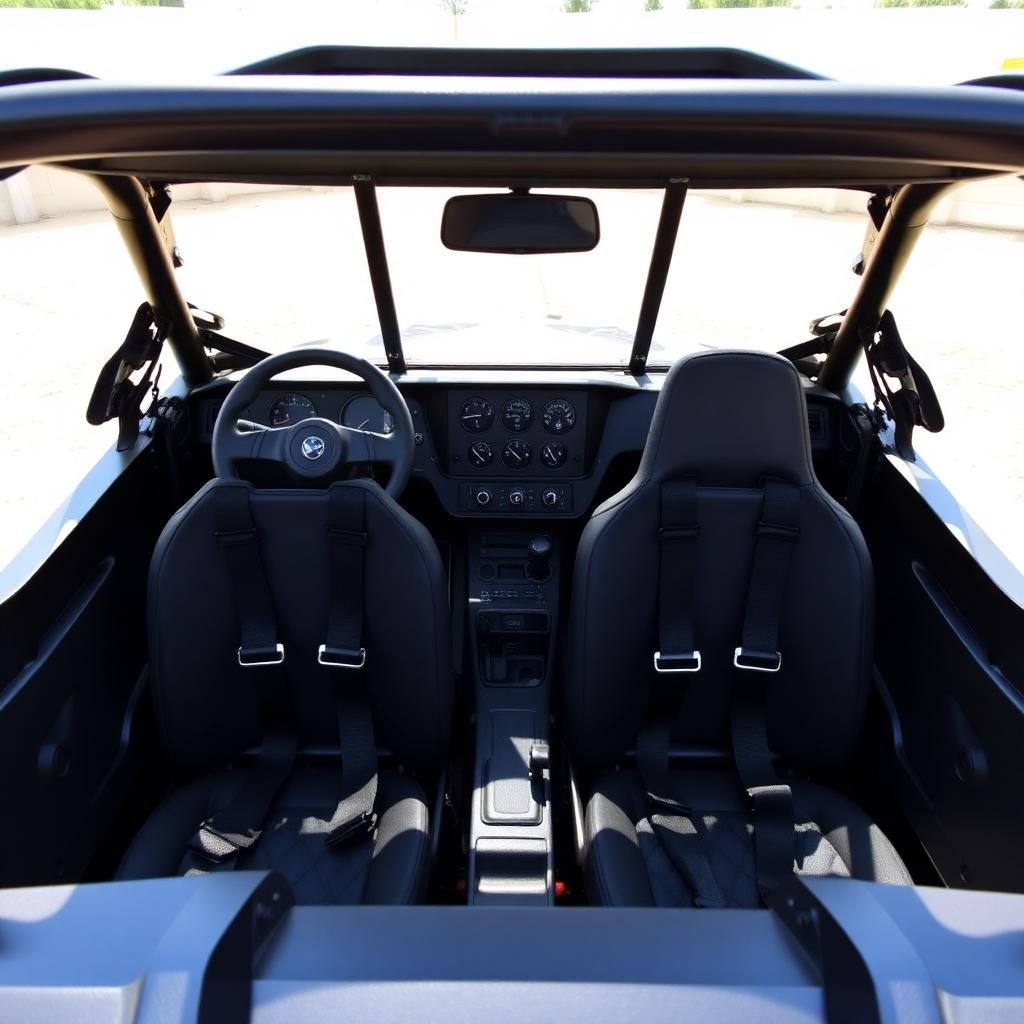
Direct comparison of ATV vs UTV
| Feature | ATV (quad) | UTV (side-by-side) |
|---|---|---|
| Seating | Straddle, like a motorcycle | Bucket or bench seats, like a car |
| Steering | Handlebars | Steering wheel |
| Controls | Hand levers and thumb or twist throttle | Foot pedals for gas and brake |
| Safety enclosure | None; rider is thrown clear in a crash | Rollover Protective Structure (ROPS) |
| Passengers | 1 (2 with a specific 2-up model) | 2 to 6 depending on model |
| Cargo and towing | Small steel racks | Rear cargo bed, receiver hitch |
| Typical weight | 400 to 800 lb | 1,200 to 2,500 lb |
The two sub-categories inside side-by-sides
Utility UTVs (the workhorses)
These are built for farming, ranching, hunting, and job-site use. They prioritize payload, torque, dump-bed capacity, and towing. Typical examples include the Polaris Ranger, John Deere Gator, and Can-Am Defender.
Sport UTVs (the trail weapons)
Sport UTVs are performance machines built for speed and technical trails. They run huge suspension travel, turbocharged engines, and race-grade shocks. Typical examples include the Polaris RZR, Can-Am Maverick X3, and Honda Talon.
Safety differences to take seriously
People assume a side-by-side is safer than an ATV because of the cage and seatbelts. The cage helps in a rollover, but a 2,000-plus-pound UTV carries far more kinetic energy than a 600-pound quad. Consumer Product Safety Commission data has consistently shown that rollovers, ejections, and limb injuries from occupants reaching outside the cage are the top causes of serious UTV injuries. Wear the helmet and use the multi-point harnesses. Do not let a passenger ride with an arm on the door tube.
Trail-width rules
Most side-by-sides are 60 to 72 inches wide. Many dedicated ATV trails are gated to 50 inches to protect narrow paths and prevent widening. Before I take a side-by-side onto a trail system, I check the width rule. In some state parks and BLM areas, a wide UTV is legally required to stay on separate, wider routes.
Bottom line
If you straddle it and steer with handlebars, it is an ATV. If you sit down inside a cage, steer with a wheel, and use pedals, it is a UTV, and "side-by-side" is another name for the same machine. Knowing which category your rig falls into decides your helmet law, harness law, and where you can legally ride.
Common questions about ATVs and UTVs
Is a UTV harder to drive than an ATV?
Not really, and often it is easier for a first-time rider. The car-like controls, steering wheel, and foot pedals are familiar to anyone who drives a car. ATVs require balance, body movement, and hand-and-thumb coordination that new riders take a season to master.
Do I need a helmet in a UTV?
Legally it depends on the state and whether you are on public land, but every UTV manufacturer, every insurer, and every serious rider says yes. Rollovers happen, and even at low speed a helmet is what keeps a survivable crash from becoming a head-injury story.
Which is better for hunting, an ATV or a UTV?
An ATV is lighter, narrower, and quieter, so it slips into tighter timber and does less trail damage. A UTV carries more gear, an extra hunter, and a full harvest with an enclosed cab option for cold-weather sits. Most serious hunters own an ATV first and add a utility UTV later.
Can kids ride in a UTV?
Manufacturers require a passenger to be able to sit upright with both feet flat on the floor, both hands on the grab bar, and the seatbelt or harness properly fitted. That usually means at least 12 years old and around 5 feet tall. Anything smaller does not fit the safety systems and should not ride.
Is a UTV cheaper to insure than a truck?
Off-road only, yes, considerably. Once you plate it for street use, premiums climb quickly because the exposure looks more like a motorcycle policy than a farm vehicle policy.
How long does a modern side-by-side last?
With regular maintenance, a well-cared-for utility UTV like a Polaris Ranger or Kawasaki Mule commonly runs past 5,000 hours. Sport UTVs like the RZR and Maverick X3 see harder use and typically show major wear by 2,000 to 3,000 hours. Belt life on CVT models is the main service item and usually falls between 1,500 and 3,000 miles depending on how aggressively the machine is driven.