Quick Answer
Plant dahlia tubers in spring once the soil temperature has stabilised above 15 degrees Celsius and all danger of frost has passed. Dig a hole roughly 6 inches deep, lay the tuber horizontally with its growth eye facing up, drive your stake in first, then backfill with loose soil and walk away. Do not water until you see green shoots break the surface, usually two to four weeks later.
Premature watering is the number one reason new tubers rot before they ever sprout.
Why Dahlias Demand Specific Technique
Dahlias (Dahlia pinnata) grow from underground tubers rather than true bulbs. A tuber has no roots and no leaves at planting time, which means it cannot process water. A buried, leafless tuber in saturated soil is essentially a vegetable sitting in a wet sponge, and fungi finish it off in days.
Get the planting fundamentals right and a single tuber will produce a 4-foot plant carrying dozens of cut-ready blooms from midsummer through the first hard frost.
Dahlia Planting Specifications
| Parameter | Standard |
|---|---|
| Soil temperature | Stable above 15 C |
| Trench depth | 4 to 6 inches |
| Spacing | 12 to 18 inches apart |
| Orientation | Horizontal, eye facing up |
| First watering | Only after shoots emerge |
Step 1: Find the Eye
Pick up the tuber and inspect the narrow neck where the fat finger meets the old woody stem from last year. You are looking for a small raised pink or green bump that looks like a sprouting potato eye. That bump is the only place green growth will emerge.
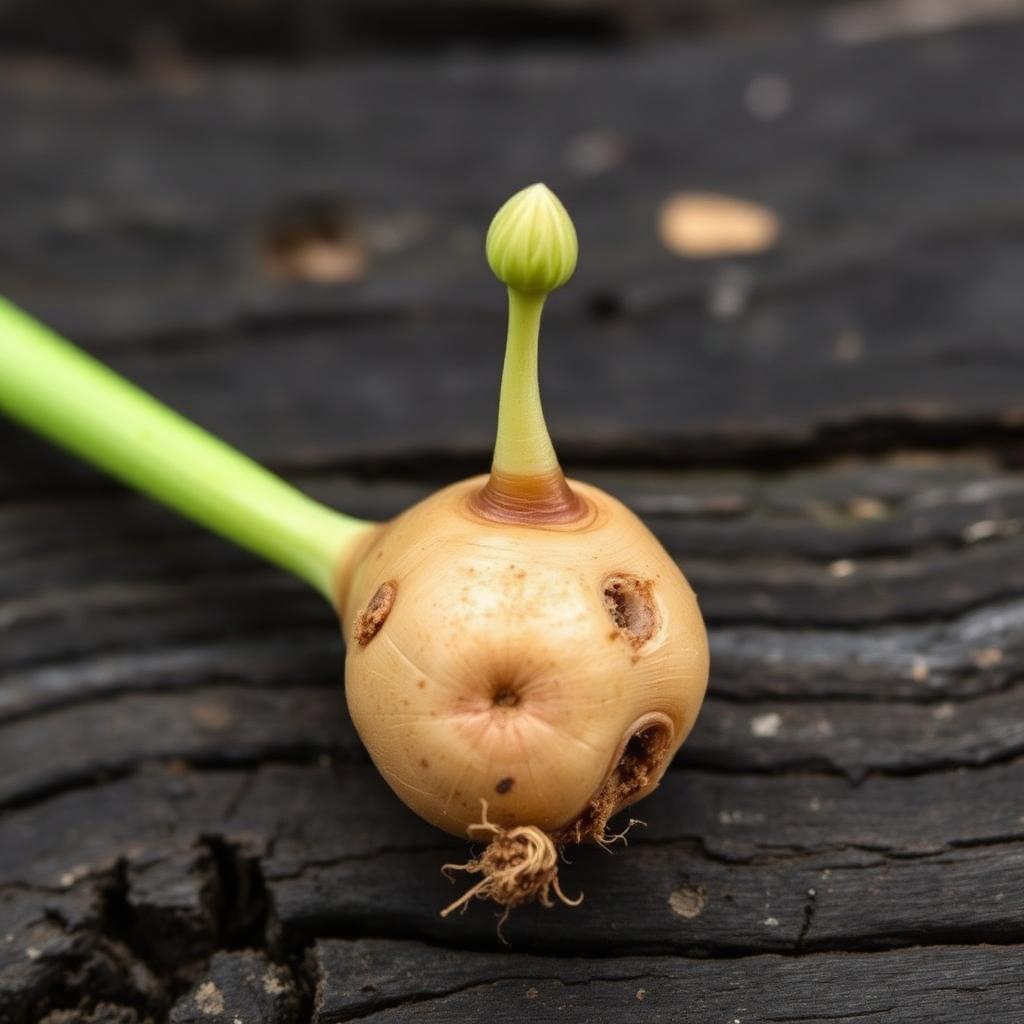
If the neck is broken off the body, the tuber is biologically blind even if it looks plump. Set it aside and use it for compost. If a tuber has multiple eyes, you can divide it cleanly with a sterilised knife so each piece carries one eye plus a portion of the body.
Step 2: Prep the Bed
Dahlias want six to eight hours of direct sun and loose, well-draining loam. Heavy clay needs improvement: dig in a generous handful of compost plus coarse perlite or sharp grit per hole. Standing water for more than a few hours after rain is a sign you need a raised bed instead.
Dig each planting hole 6 inches deep and roughly a foot wide. For dinner-plate varieties, drive a sturdy 5-foot wooden or metal stake into the bottom of the hole now, before you place the tuber. Staking later risks driving the point straight through the underground tuber and killing the plant.
Step 3: Place and Backfill
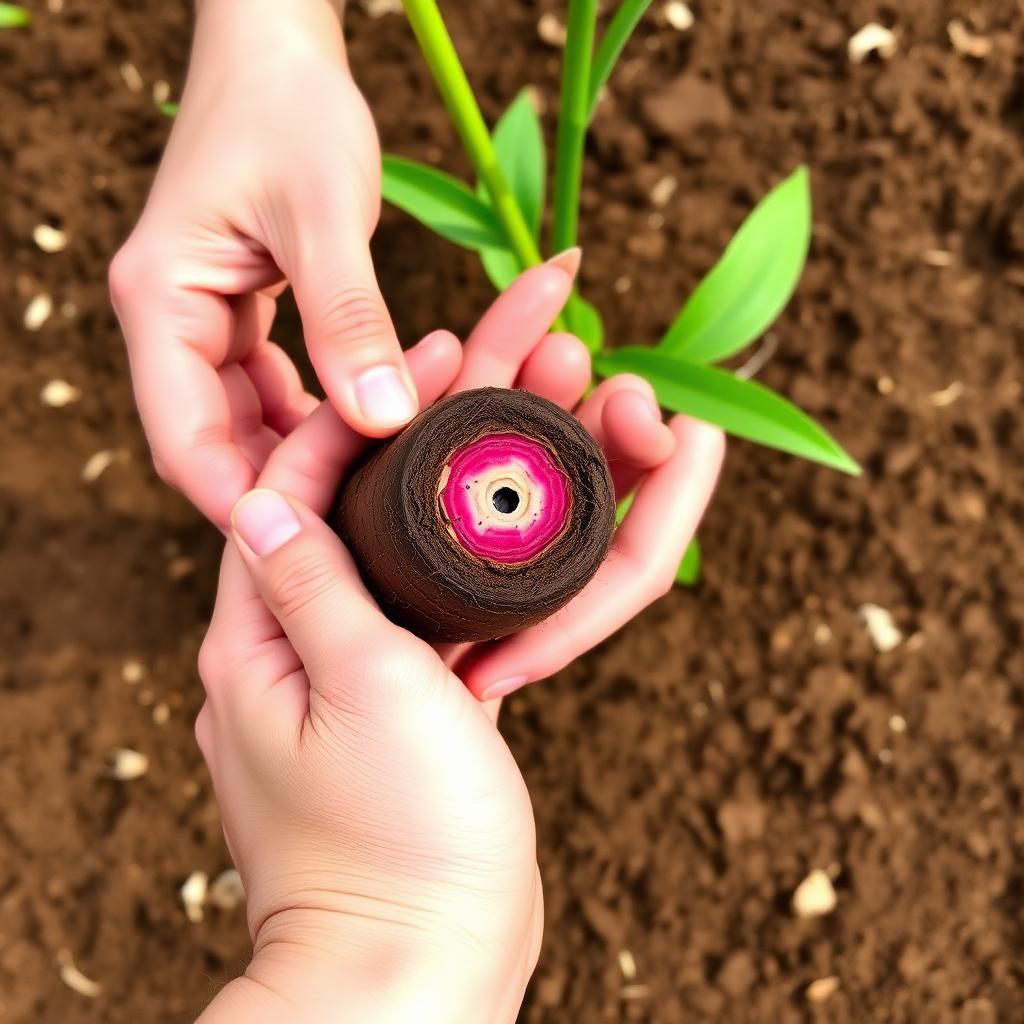
Lay the tuber flat on its side at the bottom of the hole, eye pointing straight up, roughly two inches away from the stake. Backfill with the loose excavated soil and pat it down gently. The eye should sit about 4 inches below the soil surface.
Step 4: The Golden Anti-Rot Rule
Now step away from the hose. Apply zero water to the freshly planted hole. The tuber has no roots to take up moisture; everything you pour just sits around the dormant flesh and invites Fusarium and Pythium fungi.
The tuber will draw on its own internal moisture reserves to push its first roots and shoot. Only when you see the tip of a green shoot break the surface (typically 14 to 28 days later) do you begin regular watering: a deep soak once or twice a week depending on weather.
Step 5: Feed, Pinch, and Disbud
Once the plant reaches 12 inches, pinch out the central growing tip. The plant will respond by branching, doubling the number of flower stems you eventually cut. Feed with a low-nitrogen, high-potassium tomato fertiliser every two weeks from bud break onward; too much nitrogen produces lush foliage and few flowers.
For show-quality blooms, disbud by removing the two side flower buds and leaving the central one to take all the energy.
Lifting for Winter
In zones colder than USDA 8, dahlias will not survive the winter outdoors. After the first hard frost blackens the foliage, cut the stems to 4 inches, lift the clumps carefully with a fork, brush off loose soil, and store the tubers in a cardboard box of slightly damp vermiculite or wood shavings somewhere cool, dark, and frost-free (5 to 10 degrees Celsius is ideal).
The Takeaway
Find the eye, place the tuber horizontally, stake before planting, and resist the urge to water. Follow that sequence and you will go from a wrinkled brown lump in spring to a hedge of fireworks by August.