Quick Answer
For plastic boards: scrub with hot soapy water after every use, and once a week soak in a sanitising solution of 1 tablespoon of liquid chlorine bleach diluted in 1 gallon of water for 5 minutes, then rinse and air-dry. Plastic boards are also dishwasher-safe.
For wooden boards: never submerge, never put in the dishwasher. Wipe with a hot soapy cloth, deodorise weekly with coarse salt scrubbed in by a halved lemon, rinse, dry on edge, and re-oil monthly with food-safe mineral oil.
Why Cutting Board Hygiene Matters
A cutting board takes thousands of microscopic knife cuts over its life. Those grooves trap blood, plant juices, and bacteria like Salmonella and E. coli that no surface rinse can reach. Improper cleaning turns a kitchen workhorse into a cross-contamination machine.
The right protocol depends entirely on the material, because wood and plastic behave in opposite ways under heat and water.
Material Comparison Table
| Board Material | Dishwasher Safe | Daily Wash | Deep Sanitiser |
|---|---|---|---|
| Plastic (polyethylene) | Yes | Hot soapy water | 1 tbsp bleach per gallon water |
| Hardwood (maple, walnut) | Absolutely not | Warm damp soapy wipe | Coarse salt and fresh lemon scrub |
| Bamboo | No | Warm damp soapy wipe | White vinegar wipe down |
The Plastic Board Protocol
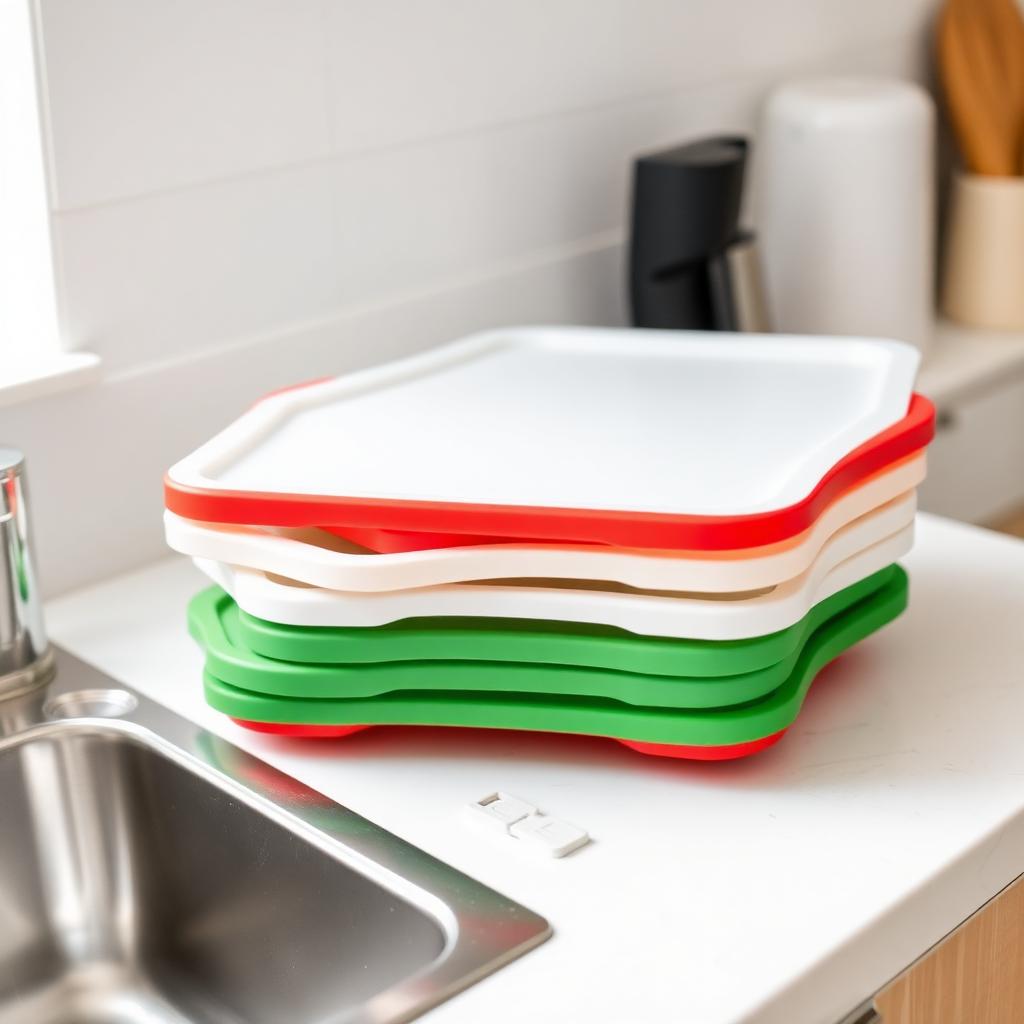
Polyethylene is non-porous and chemical-resistant, which makes it ideal for raw poultry, fish, and meat. After every use, scrub the surface vigorously with a stiff nylon brush under hot running water with dish soap. Pay attention to the deep knife scars; the bristles need to reach the bottom.
Once a week, mix 1 tablespoon of regular household liquid chlorine bleach (5 to 6 percent sodium hypochlorite) with 1 gallon of cool water. Submerge the board or pour the solution generously over the surface, leave it for 5 minutes, rinse thoroughly with clean water, and air-dry on edge. Higher bleach concentrations are not better; they damage the plastic and leave residues.
Heavily scarred boards (deep grooves you cannot scrub clean) should be replaced. Once the plastic is too grooved to sanitise, it becomes a bacteria reservoir.
The Wood Block Protocol
Wood is a living, porous fibre. Submerge it and the cells swell with water; as they dry unevenly the board warps, splits, and cracks apart. The dishwasher is a guaranteed killer.
Daily: scrape food debris off with a bench scraper, then wipe the entire surface with a cloth dipped in hot soapy water. Rinse the cloth and wipe again to remove soap residue. Stand the board on its long edge against a wall or in a dish rack to dry evenly on both sides; leaving it flat traps moisture underneath and warps the board.
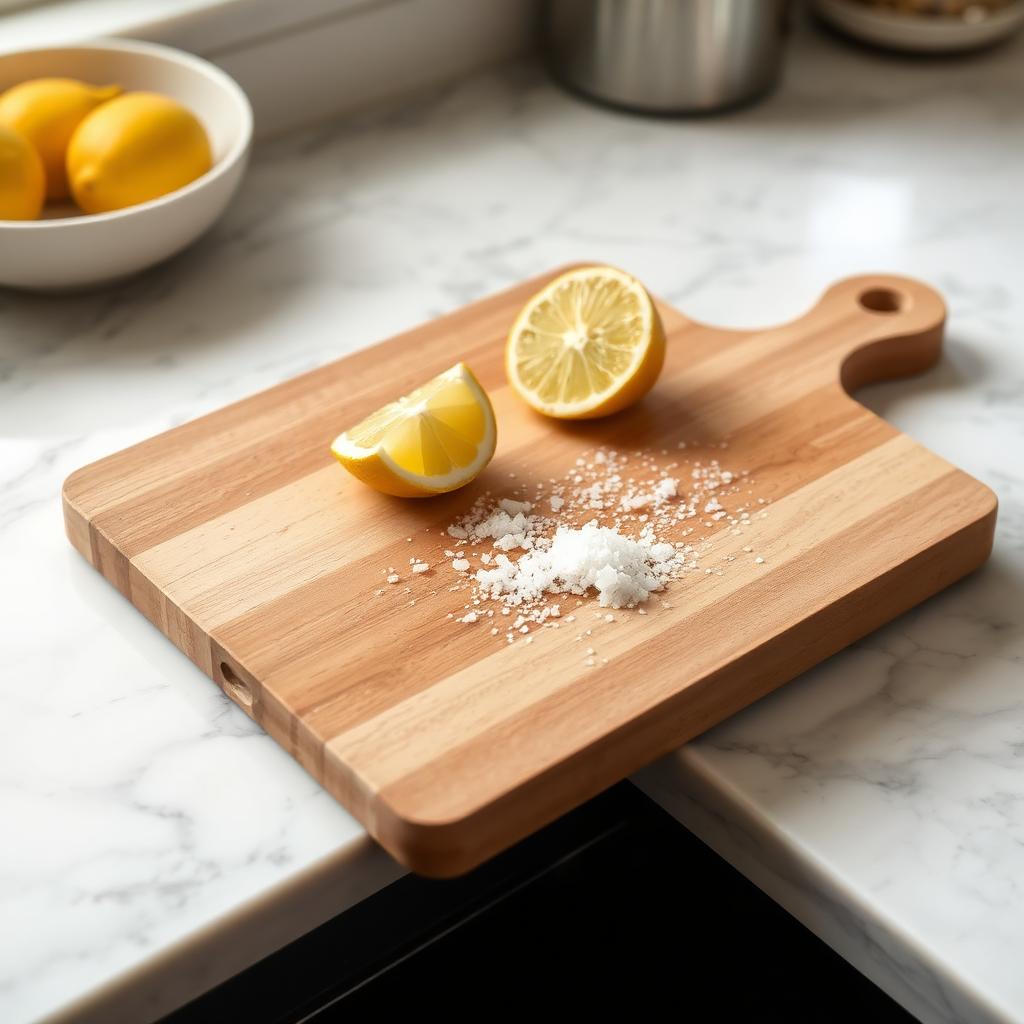
Weekly deodorise: sprinkle a generous tablespoon of coarse sea salt or kosher salt across the dry board. Press half a fresh lemon cut-side down onto the salt and scrub in firm circles. The salt acts as a non-scratching abrasive while the citric acid in the lemon dissolves organic films and lifts garlic, onion, and fish odours. Wipe clean with a damp cloth and stand to dry.
Monthly: rub a generous coat of food-safe mineral oil (or a beeswax and mineral oil blend) into the surface with a soft cloth. Let it soak in for several hours, then buff off the excess. Never use olive, sunflower, or canola oil; they go rancid and leave a sticky film.
Bamboo and Composite Boards
Bamboo behaves like a dense hardwood: hand wash only, dry on edge, and oil occasionally. Avoid the dishwasher. Composite paper-resin boards (Richlite, Epicurean) tolerate the dishwasher and a mild bleach solution but should still be dried promptly.
Cross-Contamination Hygiene
Keep at least two boards in rotation: one for raw animal protein, one for produce and bread. Color-coded plastic sets make the rule easy to follow. Sanitise the raw-meat board immediately after every use; the produce board only needs sanitising weekly.
The Takeaway
Treat plastic boards with heat and bleach, treat wood boards with salt and oil. Match the protocol to the material, keep raw and ready-to-eat boards separate, and the same cutting board will serve you safely for many years.