Quick Answer
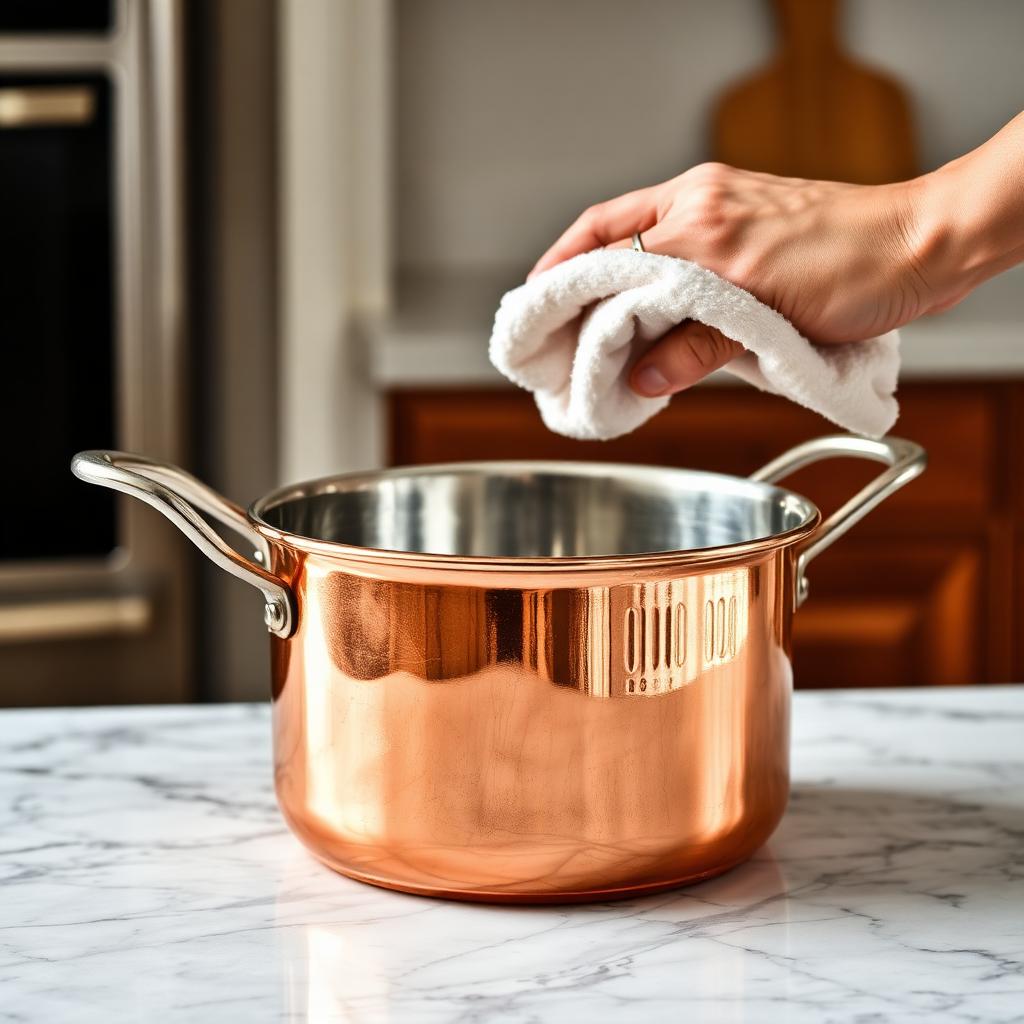
To remove tarnish from copper pans, sprinkle the exterior with table salt, pour over a generous splash of white vinegar, and gently rub the resulting slurry with a soft sponge. The acid and sodium chloride combine to dissolve copper oxide instantly. Rinse with warm water and buff dry immediately with a clean cotton towel.
For stubborn black heat stains around rivets, switch to a paste of equal parts baking soda and fresh lemon juice. Never use steel wool, scouring pads, or alkaline oven cleaners; they scratch the soft metal and strip the protective tin lining inside the pan.
Why Copper Tarnishes
Copper is highly reactive. Exposure to oxygen, moisture, and the sulphur compounds in cooking food forms a dull brown layer of copper oxide and copper carbonate (called patina). A thin patina is harmless and even slightly protective, but a heavy crust degrades thermal conductivity and looks neglected.
The fix is acid plus a mild abrasive. The acid converts the oxide back into a water-soluble copper salt; the abrasive lifts it off without scratching.
Cleaning Mixture Comparison
| Mixture | Mechanism | Best For |
|---|---|---|
| Salt and white vinegar | Mild acid dissolution | Uniform outer tarnish across the whole pan |
| Baking soda and lemon juice | Alkaline acid paste with fine abrasive | Black heat stains around rivets and handles |
| Tomato ketchup buff | Natural acetic and citric acids | Quick spot treatment on small areas |
Method 1: The Salt and Vinegar Scrub
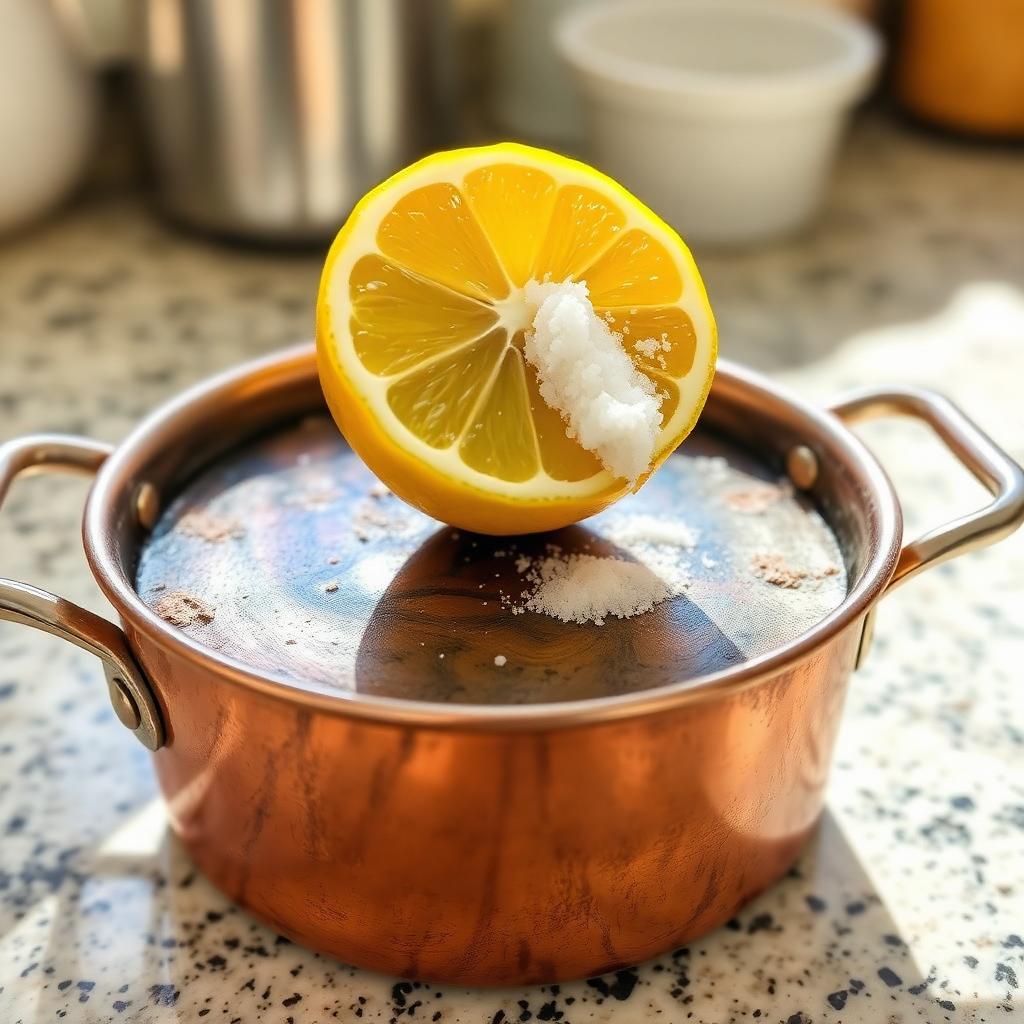
Place the dry copper pan in your sink. Sprinkle a heavy, uniform layer of standard table salt across the entire tarnished exterior. Pour a few tablespoons of plain white distilled vinegar straight over the salted surface.
You will see the slurry begin to fizz as the acetic acid reacts with the copper oxide. Take a soft blue non-scratch sponge and rub the mixture in gentle circles. The tarnish dissolves under your hand and the bright pinkish copper reappears within seconds.
Method 2: The Baking Soda and Lemon Paste
For carbonised black stains on the bottom of the pan or around the brass rivets where the handle attaches, mix equal parts baking soda and fresh lemon juice in a small bowl until you have a thick toothpaste-textured slurry.
Apply the paste generously to the stains with a soft microfiber cloth and rub in small circular motions. The lemon juice attacks the tarnish chemically while the ultra-fine baking soda crystals act as a microscopic, non-destructive polishing abrasive. Work patiently; stubborn rivet stains may need two or three applications.
Method 3: The Ketchup Trick
Tomato ketchup contains both acetic acid (from vinegar) and natural fruit acids. For a quick spot fix on a tarnished area, squirt on a tablespoon, spread it with your fingertip, leave it for 5 minutes, then buff off with a soft cloth. It is the fastest method when you do not have lemons handy.
What to Avoid
Steel wool, copper scrub pads, abrasive powder cleansers (Comet, Ajax), and any alkaline oven cleaner. Every one of these will leave permanent micro-scratches on the soft copper exterior, and the alkaline cleaners can attack the tin lining inside the pan, which is the layer that actually contacts your food. Once tin is damaged, the pan needs professional re-tinning before it is safe to cook in again.
Rinse and Dry Immediately
Once the tarnish is gone, rinse the pan thoroughly under warm running water to wash away every trace of salt and acid. Buff the pan dry instantly with a clean, lint-free cotton towel. Never let copper air-dry; water droplets sitting on bare metal react with oxygen within minutes and leave cloudy mineral spots that look like new tarnish by morning.
Daily Care That Reduces Tarnish
Wash copper exteriors with mild dish soap and warm water after every use, dry immediately, and store the pans in a dry cupboard. Cooking with the pan slows tarnishing because the warming and cooling cycles drive moisture off the surface. The shiniest copper cookware is the cookware that gets used.
The Takeaway
Acid plus salt equals instant copper polish. Use vinegar and salt for routine tarnish, baking soda and lemon paste for stubborn stains, and buff dry every single time. Skip the steel wool and your copper pans will keep their mirror finish for a lifetime.