Quick Answer
Water succulents using the soak-and-dry method: drench the soil completely until water runs out the drainage holes, then wait for the entire pot to dry out before watering again. In practice that means about once every 10 to 14 days in summer for a sunny windowsill plant, and as little as once a month in winter.
Never mist, never water on a fixed calendar, and never let the pot sit in a saucer of standing water. Misting and frequent shallow drinks are the two fastest ways to kill a succulent.
Why Succulents Are Picky About Water
Succulents evolved in arid regions with infrequent torrential rain followed by long bone-dry stretches. Their roots are adapted to absorb a huge volume of water quickly, then breathe air. Constant moisture suffocates them; their tissue rots from the bottom up, turning the base black and mushy weeks before the top shows damage.
Watering Method Comparison
| Method | Outcome |
|---|---|
| Daily spray bottle misting | Roots stay dry, leaves and crown rot |
| Tiny weekly drips | Salt buildup, shallow roots, slow decline |
| Calendar-based watering | Ignores humidity and light, leads to overwatering |
| Soak and dry | Mimics desert rain, builds deep healthy roots |
Step 1: The Finger Test
Throw away your fixed watering calendar. Before you reach for the watering can, push your finger or a dry wooden skewer two inches deep into the soil. If you feel any coolness or damp grit, walk away and check again in a few days. Only water when the top two inches are completely bone-dry.
Step 2: The Deep Soak
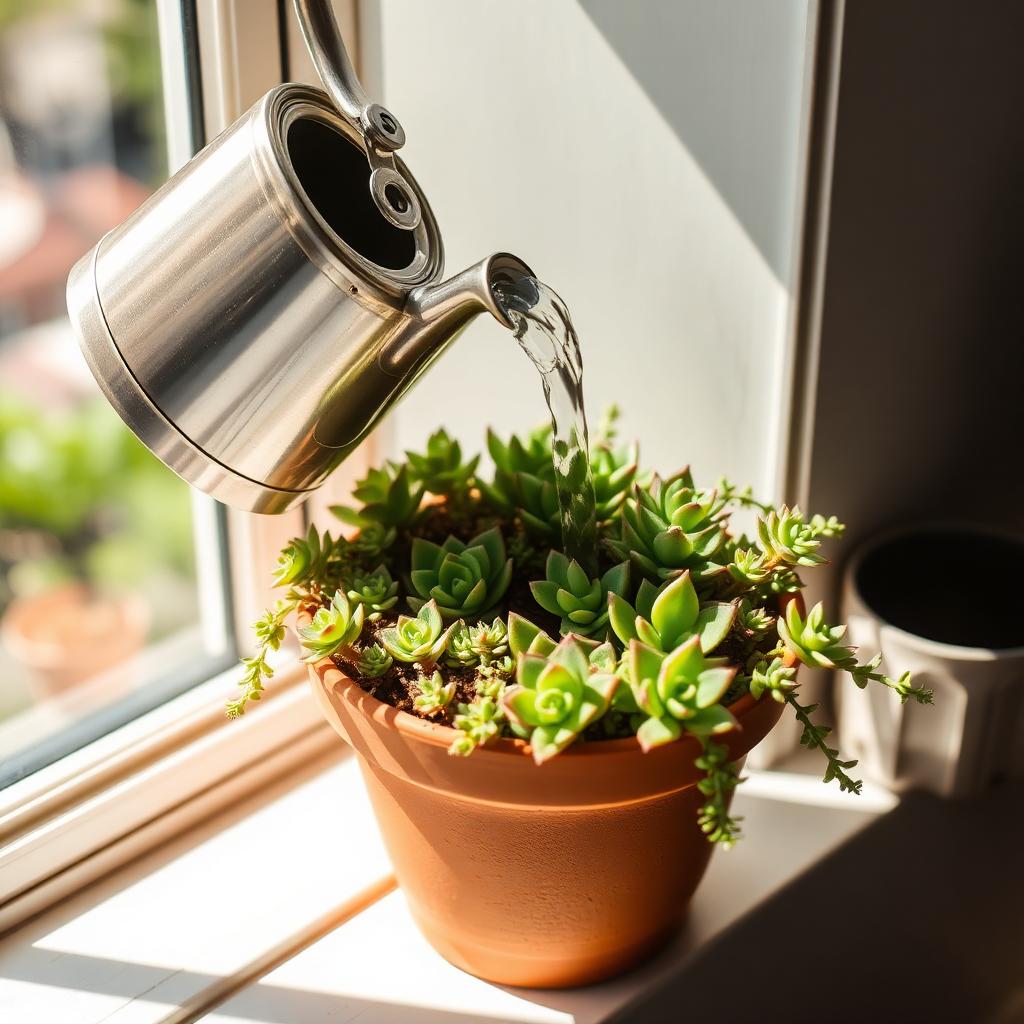
When the soil tests dry, take the pot to the sink. Pour room-temperature water steadily across the entire soil surface until it runs freely out of the drainage holes. Keep pouring for a few seconds after that to flush out built-up mineral salts. Aim the water at the soil, not the rosette; pooled water in the centre of an Echeveria rosette is a fungal magnet.
Step 3: Drain Completely
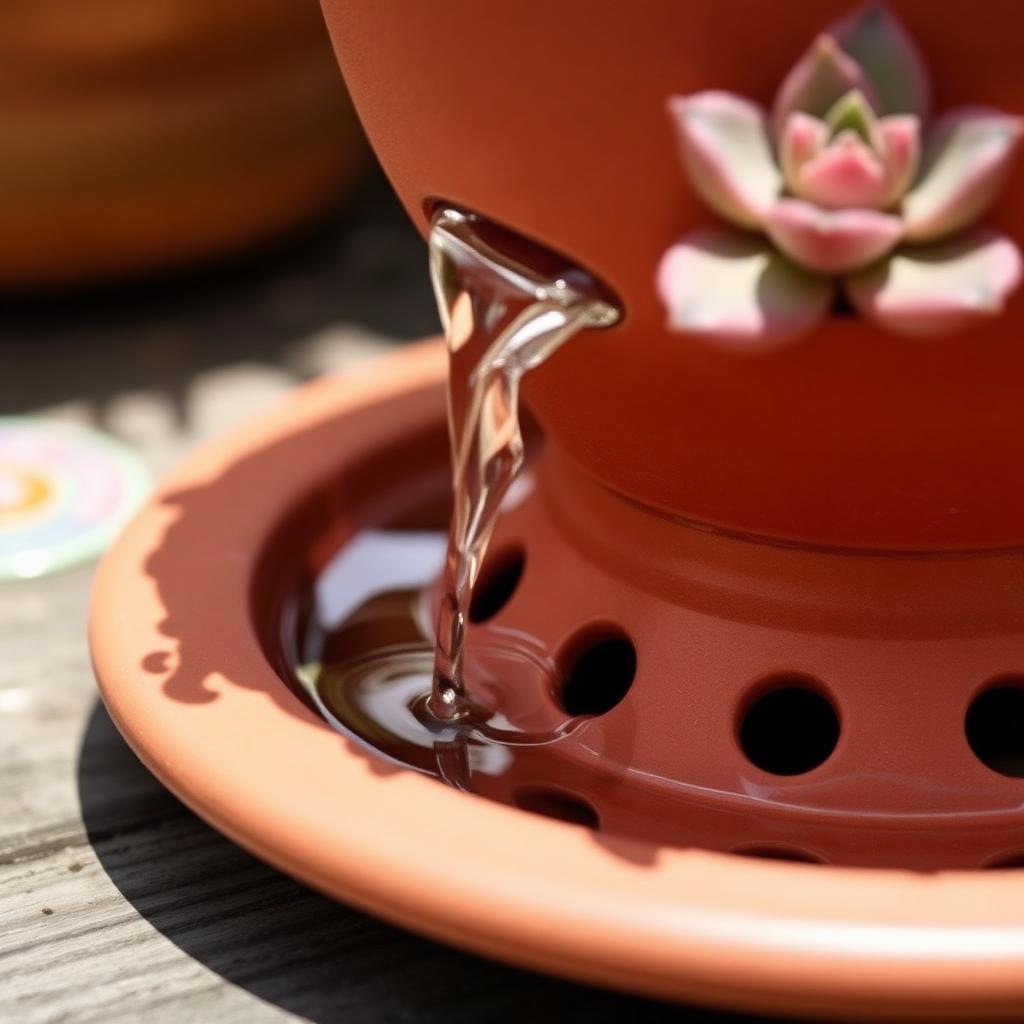
Let the pot sit in the sink for 15 minutes so every drop drains. If your decorative outer pot or saucer collects water, dump it. A succulent left sitting in a quarter inch of pooled water will wick that moisture back up into the soil for days, creating exactly the swamp the roots cannot tolerate.
Seasonal Frequency Guide
Summer growing season (long days, warm air): expect to water roughly every 10 to 14 days for a 4-inch terracotta pot in bright light. Plastic pots dry slower, so stretch the interval by a few days.
Autumn transition: cut watering volume in half as light drops. Most succulents enter semi-dormancy.
Winter rest: in a cool indoor space (15 to 18 degrees Celsius), once every four to six weeks is usually enough. In a warm centrally heated room, check soil every two weeks.
The Pot and Soil Matter
An unglazed terracotta pot breathes through its walls and dries soil faster, which is forgiving for new succulent owners. Use a gritty cactus and succulent mix amended with extra perlite or pumice; standard houseplant compost holds far too much moisture.
Every container must have drainage holes. Closed cute mugs and sealed glass terrariums are death traps no matter how you water.
How to Read Distress Signals
Wrinkled, soft leaves at the base, a wobbly stem, and a darkening crown mean overwatering and almost certain root rot. Stop watering, unpot the plant, trim away any black roots, and let it sit bare for two days before replanting in fresh dry mix.
Wrinkled leaves that are still firm, plus a stem that feels light, mean underwatering. Give a full soak; the plant will plump up within 24 hours.
The Takeaway
Watering succulents is about extremes: deep desert rain followed by total drought. Test the soil with your finger, soak hard, drain fully, and wait. Get that rhythm right and your collection will outlive every other plant in the house.