Quick Answer
If you actually take your 4x4 off-road, follow the severe-duty schedule: change engine oil every 3,000 to 5,000 miles, differential fluid every 10,000 to 15,000 miles, transfer case fluid every 20,000 to 30,000 miles, and grease chassis joints after every muddy or dusty trail run.
The factory schedule in your owner manual assumes a highway commuter. Off-road use is officially "severe service" and every major manufacturer publishes a separate schedule for it.
Why off-road multiplies wear
Three environmental drivers accelerate wear compared to pavement driving:
- Silt and mud creep past rubber seals and grind bearings and U-joints.
- Fine dust chokes air filters, robbing the engine of clean intake charge.
- Sustained low-range crawling generates high heat inside gearboxes with almost no airflow.
The severe-duty service matrix
| Component | Highway interval | Off-road interval | Why |
|---|---|---|---|
| Engine oil and filter | 7,500 to 10,000 mi | 3,000 to 5,000 mi | Micro-soot from low-speed high-load crawling |
| Differential gear oil | 30,000 to 50,000 mi | 10,000 to 15,000 mi | Water intrusion from creek crossings |
| Transfer case fluid | 60,000 to 100,000 mi | 20,000 to 30,000 mi | Heat from sustained 4-Low use |
| Chassis grease points | Sealed for life | Every trail / 3,000 mi | Purges grit out of U-joints |
| Engine air filter | 15,000 to 30,000 mi | Inspect every trail | Dust choke |
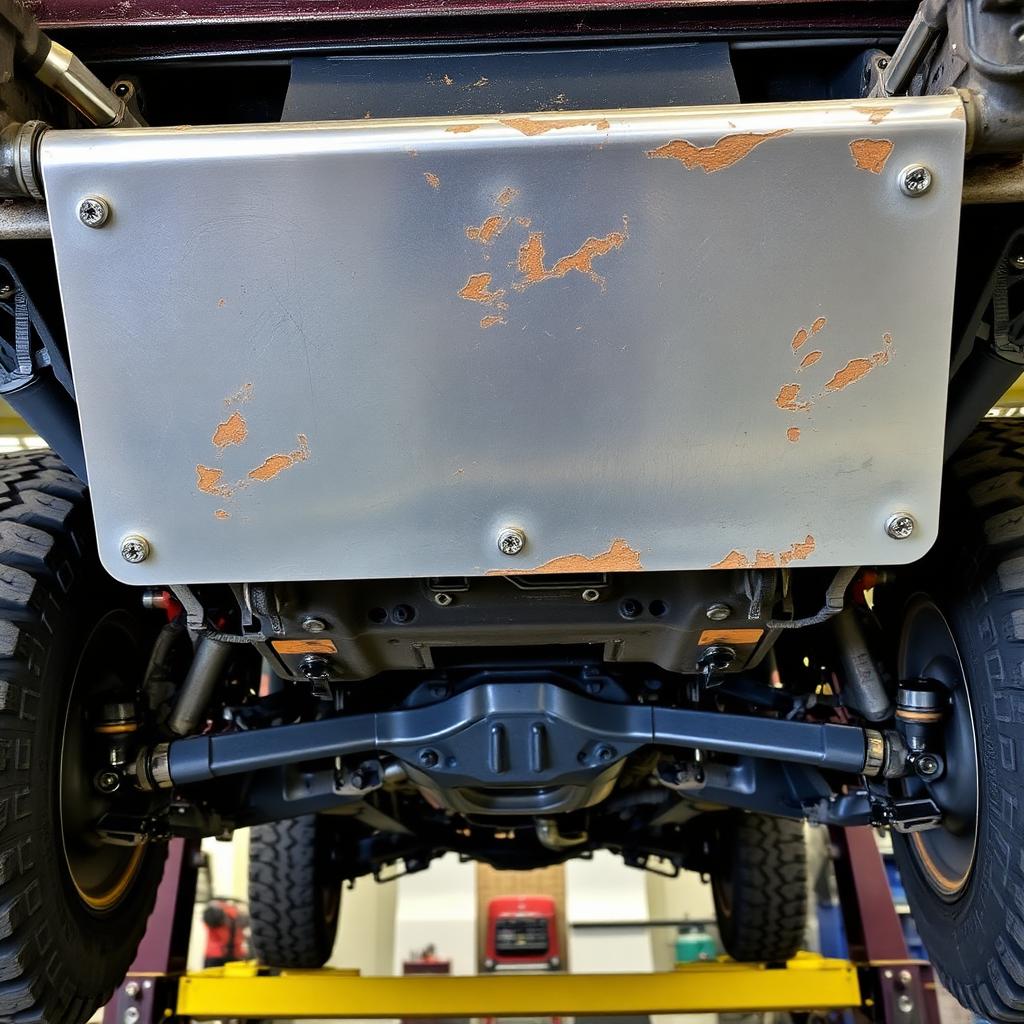
My post-trail inspection checklist
Steering linkage shake
With the front wheels off the ground, I grab the tie rods and drag link and shake them by hand. Any play or torn rubber boot means grit has entered and the joint is on borrowed time.
Axle seal weep check
I look at the inside face of the brake backing plates and the bottom of the differential pumpkin. Wet oily rings mean an inner seal has torn and gear oil is escaping.
Radiator fin audit
After mud runs, caked dirt across the radiator core acts like a thermal blanket. If left, engine temps spike on the next highway run. A gentle low-pressure hose flush clears it.
Frequently asked questions
What counts as "off-road" for a severe-duty schedule?
Any regular trail use, dusty gravel roads, water crossings, sand driving, or extended 4-Low crawling. Weekend fire road commuting alone is closer to normal service.
Should I change diff fluid immediately after a water crossing?
If water reached the diff breather height, yes. Milky, coffee-colored gear oil means water intrusion and the fluid needs to come out before it strips the ring and pinion gears.
How often should I inspect brakes on an off-road 4x4?
Every trail. Trail debris can wedge into rotors and pads, and mud accelerates pad wear.
Bottom line
Switch to severe-duty intervals the day you start using your 4x4 the way it was designed. It is cheaper than replacing a differential or an engine.
Fluids I always keep in the garage
Because severe-duty intervals come up fast, I stock the fluids I know I will need: 5 quarts of the specified engine oil, 4 quarts of gear oil for the diffs, 2 quarts of transfer case fluid, and a fresh set of oil and air filters. Buying in bulk from a wholesale account cuts my per-service cost by roughly 40% versus grabbing a quart at retail.
Signs your severe-duty schedule is too slow
If your engine oil comes out looking like tar at 4,000 miles, shorten the interval to 3,000. If differential oil shows metal glitter on the drain magnet, pull the cover, inspect the ring and pinion, and investigate why. If your air filter looks like a chocolate bar after one dusty trip, add a snorkel or a pre-filter wrap.
What NOT to skip on a trail-driven 4x4
Brake fluid: absorbs water rapidly and boils on long descents. Flush every 2 years minimum. Coolant: heat cycles on hot climbs break down inhibitors. Change per the manufacturer severe schedule, usually every 30,000 miles. Wheel bearings: repack or replace at 60,000 to 80,000 miles if you cross water. Ignoring any of these ends a trip faster than any tire failure.
Building a service log
I keep a simple spreadsheet with date, mileage, fluid changed, and any notes. Ten years from now, that log is what a resale buyer wants to see. It is also what saves you from wondering "did I already do the diffs this year?" on a Saturday morning.
Shop it out or DIY?
Engine oil, air filter, and chassis grease points are easy DIY jobs that pay for themselves in one service. Differential fluid and transfer case fluid are also DIY-friendly if you have a floor jack, jack stands, and a fluid pump. I only shop out coolant flushes and brake fluid bleeding because both benefit from professional equipment.
Tools that make severe-duty service easier
A basic set of tools transforms severe-duty service from a chore into a 30-minute weekend job: a good floor jack rated to the vehicle's weight, four jack stands, a fluid transfer pump for diff and transfer case fluid, a filter wrench, and a set of oil drain magnets. Total investment is well under $250 and pays back inside the first two services. I also keep nitrile gloves and shop rags on a wall roll in the garage.