Quick Answer
Adults over 50 should aim for at least 1.0 to 1.2 grams of protein per kilogram of body weight per day. That is roughly 70 to 84 grams for a 70kg person, well above the standard 0.8 g/kg allowance written for the general adult population.
If you exercise regularly, push to 1.2 g/kg or higher. If you are recovering from illness, surgery or a hospital stay, needs rise further and should be set with a clinician.
Just as important as the total is spreading it evenly, because ageing muscle responds less strongly to small protein doses.
Why the requirement goes up with age
The phrase researchers use is anabolic resistance. As we age, muscle becomes less responsive to the same amount of dietary protein. A 25 gram serving that produces a strong muscle building response in a 25 year old produces a weaker one at 70.
At the same time, more of the protein you eat gets extracted by the gut and liver before it reaches muscle, appetite tends to fall, and chronic low grade inflammation raises background protein breakdown.
The result is sarcopenia, the gradual loss of muscle mass and strength that begins in the forties and accelerates later. It is the single biggest predictor of losing independence, because muscle is what gets you off a chair, up stairs and back on your feet after a stumble.
What the expert groups actually say
The PROT-AGE study group, convened by the European Union Geriatric Medicine Society, recommends an average daily intake of at least 1.0 to 1.2 g/kg for people over 65, with 1.2 g/kg or more for those who are exercising and active, and higher still for most older adults living with acute or chronic illness.
The ESPEN expert group reached closely aligned conclusions, pairing higher protein intake with regular resistance and aerobic exercise as the combination that actually protects muscle function with age.
Both groups make the same point: the 0.8 g/kg allowance was never designed as an optimal target for older people.
Spread it across the day
Older adults typically eat a tiny protein breakfast, a light lunch and a large dinner. That pattern wastes the opportunity, because a single large evening dose cannot compensate for two meals that never crossed the threshold.
A useful rule is 25 to 30 grams of protein at each of three meals, plus a snack if needed. Because of anabolic resistance, the per meal threshold for older adults sits higher than it does for younger people, so three good meals beat six small ones.
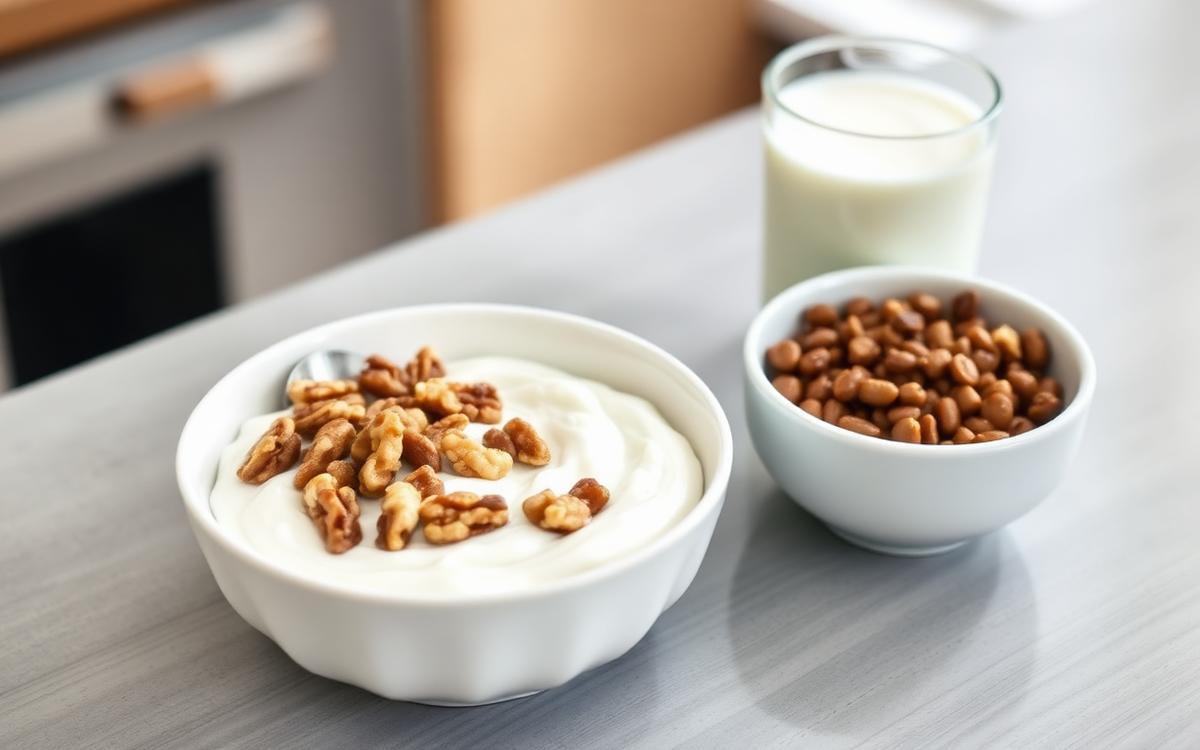
- Breakfast: two eggs plus a pot of Greek yogurt, or porridge made with milk plus a spoon of milk powder.
- Lunch: tinned fish, chicken, cheese or lentils in a soup or sandwich.
- Dinner: a palm-sized portion of meat, fish, tofu or beans.
Practical fixes when appetite is low
Most older adults do not fall short because they refuse protein. They fall short because eating enough volume becomes hard. These fixes work.
- Put protein on the plate first and eat it before the vegetables and starch, so it does not get abandoned when you fill up.
- Choose soft, dense foods. Eggs, yogurt, cottage cheese, minced meat, fish, dhal and slow cooked stews are far easier than a dry chicken breast.
- Drink some of it. Milk, kefir and blended smoothies with yogurt deliver 15 to 25 grams without any chewing.
- Fortify what you already eat. Stirring skimmed milk powder or unflavored protein powder into soups, mash and porridge adds grams invisibly.
- Address dental problems. Ill fitting dentures quietly remove meat from a person's diet, and no nutrition advice can outrun that.
Protein alone is not the answer
Every serious guideline pairs higher protein with exercise, because unused muscle is not maintained no matter what you feed it. Two or three sessions a week of resistance work, even with bands, light dumbbells or bodyweight sit-to-stand practice, changes the outcome dramatically.
Vitamin D status matters too, since deficiency is common after 50 and is associated with muscle weakness and falls. It is worth discussing testing with your doctor rather than guessing.
Adequate total calories are the third leg. If overall intake is too low, protein gets burned for energy instead of being used for repair.
What about kidney concerns?
The idea that higher protein damages healthy kidneys is not supported by evidence in people with normal kidney function. Kidney function does decline gradually with age, however, so anyone with diagnosed chronic kidney disease needs an individualised protein target set by their medical team, not a general recommendation.
If you are unsure of your kidney status, a simple blood and urine test through your doctor answers the question before you change anything.
A realistic day at 1.2 g/kg
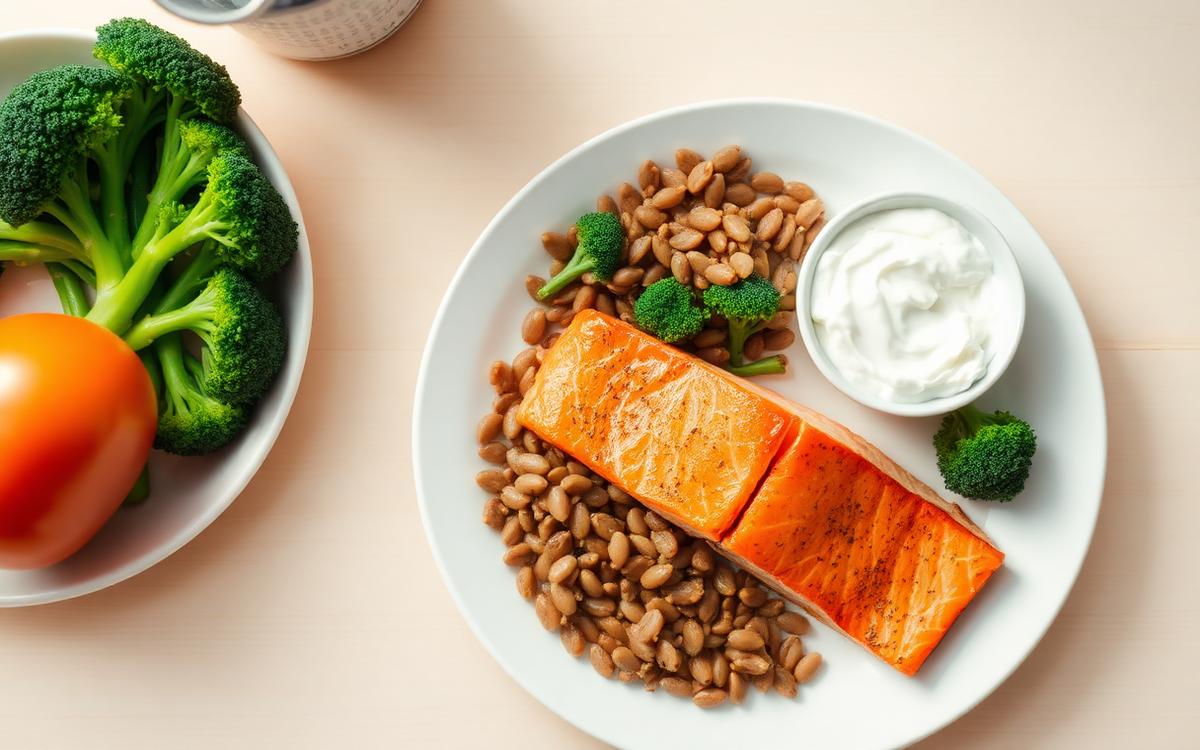
For a 70kg person aiming at 84 grams: two eggs and a yogurt at breakfast is about 26 grams, a tuna sandwich at lunch is about 28 grams, and chicken with lentils at dinner is about 35 grams. That is 89 grams from ordinary food with no supplements involved.
Write it down for three days and you will see immediately which meal is dragging the average down. In my experience it is almost always breakfast.
How to check whether you are actually short
Guessing is unreliable, so spend three ordinary days writing down what you eat and roughly how much protein each item carries. Do not change your eating for those days, or the exercise tells you nothing useful.
Then compare the total against your target. Most people find one of three patterns: a breakfast under 10 grams, a lunch built on bread and salad with almost no protein anchor, or portion sizes at dinner that are far smaller than they assume.
Physical signs are worth watching too. Losing grip strength, finding stairs harder than a year ago, taking longer to recover from a cold, or seeing loose skin and shrinking arms without weight loss can all point toward lost muscle rather than simple ageing.
Shopping list that makes the target easy
- Eggs, the cheapest complete protein and easy to chew in almost any form.
- Greek yogurt and kefir, which carry protein plus calcium in a soft format.
- Tinned mackerel, sardines and salmon, adding omega-3 fats alongside 20 to 25 grams a tin.
- Minced meat, far easier to chew than steak and just as protein dense.
- Red lentils, which cook down into soups and sauces without any texture problems.
- Milk and milk powder, the simplest way to fortify porridge, soup and mashed potato.
Keep these six categories stocked and hitting 1.2 g/kg stops needing any planning at all.
The bottom line
Treat 1.0 to 1.2 g/kg as the floor after 50, go higher if you are active or unwell, and get 25 to 30 grams at each of three meals rather than saving it all for dinner. Add resistance exercise two or three times a week and you have the only combination shown to slow age-related muscle loss meaningfully.
This is not about bodybuilding. It is about still carrying your own shopping at 80.