Quick Answer
A meal prep full week plan fits into two hours if you cook components rather than finished meals. Roast two trays of vegetables, cook one big grain, prepare two proteins, make one sauce, and assemble on the day.
The running order matters more than the recipes. Oven items go in first because they cook unattended, the grain goes on the hob next, and knife work happens while both are running.
Refrigerated cooked food should be eaten within three to four days, so plan four days in the fridge and freeze the rest rather than making seven identical containers that go off by Thursday.
Why Component Prep Beats Meal Prep
Cooking five identical finished meals is the reason most people quit meal prep by week three. By Wednesday you are eating the same bowl for the fourth time and you resent it.
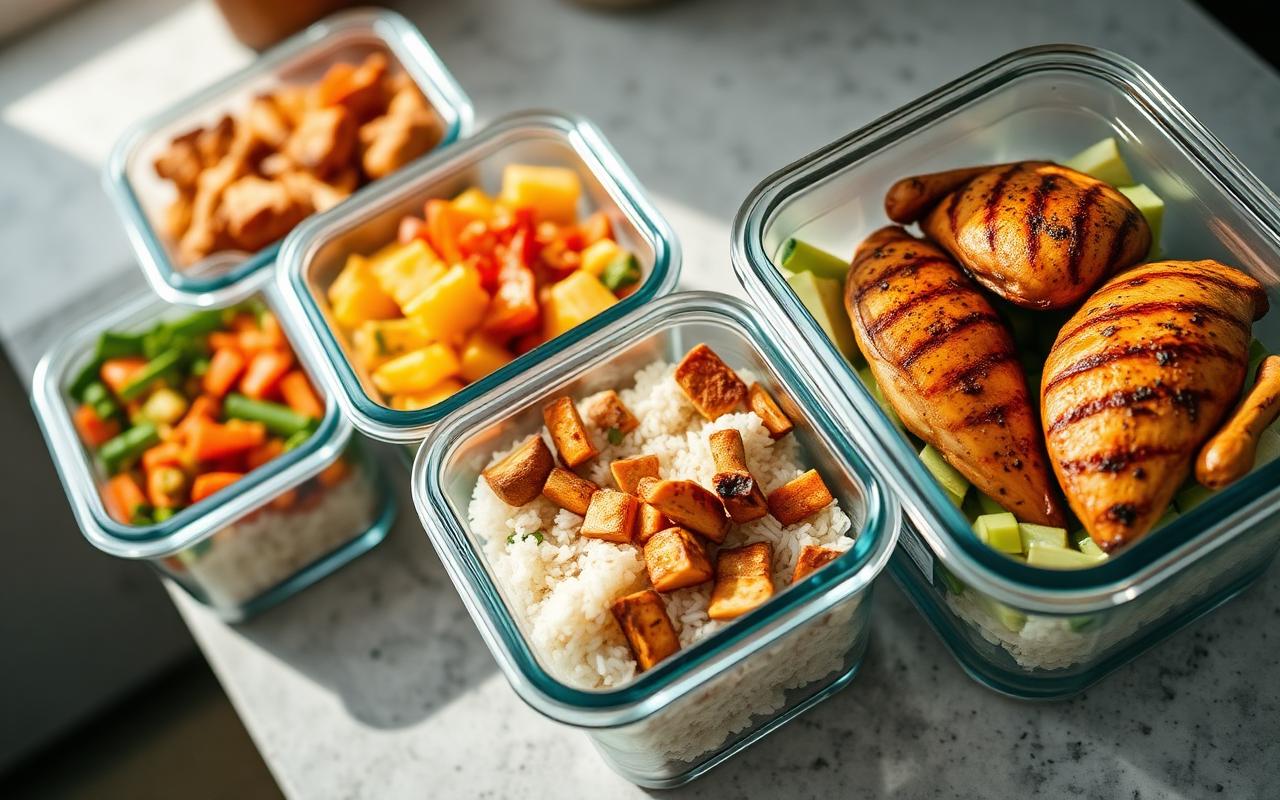
Component prep fixes that. The same roasted vegetables, rice and chicken become a grain bowl on Monday, a wrap on Tuesday and a fried rice on Wednesday, because the sauce and the format change even though the ingredients do not.
It is also faster. One tray of mixed vegetables replaces three separate recipes, and there is far less washing up.
The Two Hour Running Order
| Time | Task | Why then |
|---|---|---|
| 0:00 to 0:10 | Preheat oven, chop vegetables for tray one | The oven is the bottleneck, so it starts first |
| 0:10 to 0:15 | Tray one in, start the grain on the hob | Both cook unattended |
| 0:15 to 0:35 | Chop tray two, season proteins | Dead oven time is prep time |
| 0:35 to 0:50 | Tray one out, tray two and protein in | The oven never sits empty |
| 0:50 to 1:10 | Make sauces, wash up as you go | Sauces need no heat and no oven space |
| 1:10 to 1:30 | Second protein on the hob, cool tray one | Hot food must not go straight into the fridge |
| 1:30 to 2:00 | Portion, label, refrigerate and freeze | Everything is cool enough to store safely |
The single biggest time saving is never letting the oven sit empty. Most people lose 20 minutes waiting for it.
What to Cook in Each Category
Pick one or two from each row and the week assembles itself.
- Grains: rice, quinoa, farro or orzo. Cook double what looks sensible; grains disappear fastest.
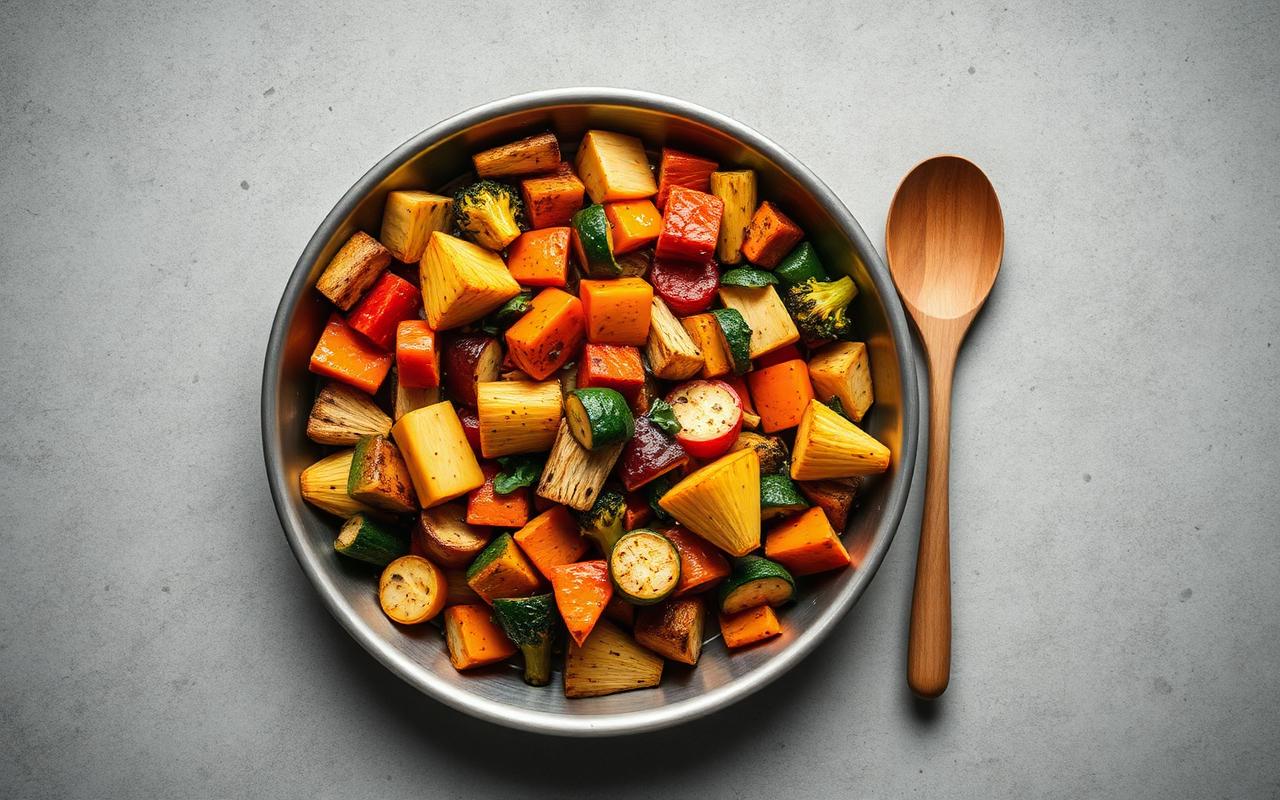
- Roasted vegetables: anything dense enough to survive reheating. Peppers, courgette, broccoli, carrots, red onion, sweet potato.
- Proteins: chicken thighs, a tray of meatballs, baked tofu, hard boiled eggs, a tin of beans dressed while warm.
- Sauces: a yoghurt herb sauce, a peanut lime sauce and a lemon vinaigrette will carry an entire week between them.
- Crunch: toasted seeds, pickled red onion or raw shredded cabbage, added at serving rather than stored wet.
The Food Safety Part Nobody Reads
This is the section that decides whether meal prep helps or makes you ill, and the rules are short.
Cooked food should not sit at room temperature for more than two hours, or one hour if the kitchen is above 90F. Cool it quickly by spreading it in shallow containers rather than leaving a deep pot on the counter, then refrigerate.
Keep the fridge at or below 40F. Cooked leftovers, including rice, roasted vegetables and cooked meat, keep three to four days refrigerated. Anything you want beyond that goes in the freezer, where it stays safe indefinitely and stays good for two to three months.
Reheat leftovers to 165F throughout, not just warm on the outside. Stir halfway through microwaving, because microwaves heat unevenly and cold spots are exactly where problems survive.
Rice Deserves Its Own Warning
Cooked rice can carry spores that survive cooking and multiply if the rice cools slowly at room temperature. The fix is simple: cool it within an hour, spread thin rather than in a deep pot, refrigerate promptly, keep no more than a few days, and reheat until steaming hot all the way through.
Do not leave a covered pot of rice on the stove overnight, which is by far the most common way this goes wrong.
What to Freeze Instead
Freezing is what makes a two hour session cover more than four days.
Freeze well: soups, stews, chilli, cooked grains, meatballs, cooked shredded chicken, portioned sauces, uncooked marinated proteins.
Freeze badly: salad leaves, cucumber, plain roasted potatoes, anything with a crisp coating, cream sauces that split, and hard boiled eggs, which turn rubbery.
Portion before freezing rather than after. A single frozen block is useless on a Tuesday night, and defrosting the whole thing to take a quarter is both wasteful and unsafe.
Containers and Labels
Glass containers with sealing lids reheat without staining or absorbing odour, and they stack. Wide shallow shapes cool faster and reheat more evenly than tall ones, which matters more than it sounds.
Label everything with the contents and the date it was cooked, not the date you plan to eat it. A roll of masking tape and a marker costs almost nothing and removes every argument about whether something is still good.
Making It Stick Past Week Three
Keep the session to two hours and one day a week. A four hour Sunday marathon feels heroic once and never happens again.
Change one variable a week. Same method, different sauce or different grain, is enough novelty to keep it tolerable without adding planning time.
And leave one night unplanned. A prep plan that assumes seven perfect evenings collides with the first unexpected dinner invitation and gets abandoned; a plan that covers four lunches and three dinners survives contact with a real week.
Frequently Asked Questions
How long does prepped food last in the fridge?
Three to four days for cooked leftovers, held at 40F or below.
Can you put hot food straight in the fridge?
Spread it into shallow containers first so it cools quickly. A large hot pot raises the temperature of everything around it.
Is it safe to reheat rice?
Yes, if it was cooled quickly, refrigerated promptly and reheated until steaming hot throughout.
How much food do you actually need for a week?
Plan around four days refrigerated plus two or three frozen portions, rather than seven fresh containers.
What temperature should leftovers be reheated to?
165F throughout, checked with a thermometer in the centre.