Quick Answer
Enriched means nutrients lost during processing have been put back. Fortified means nutrients have been added that were never there in meaningful amounts to begin with.
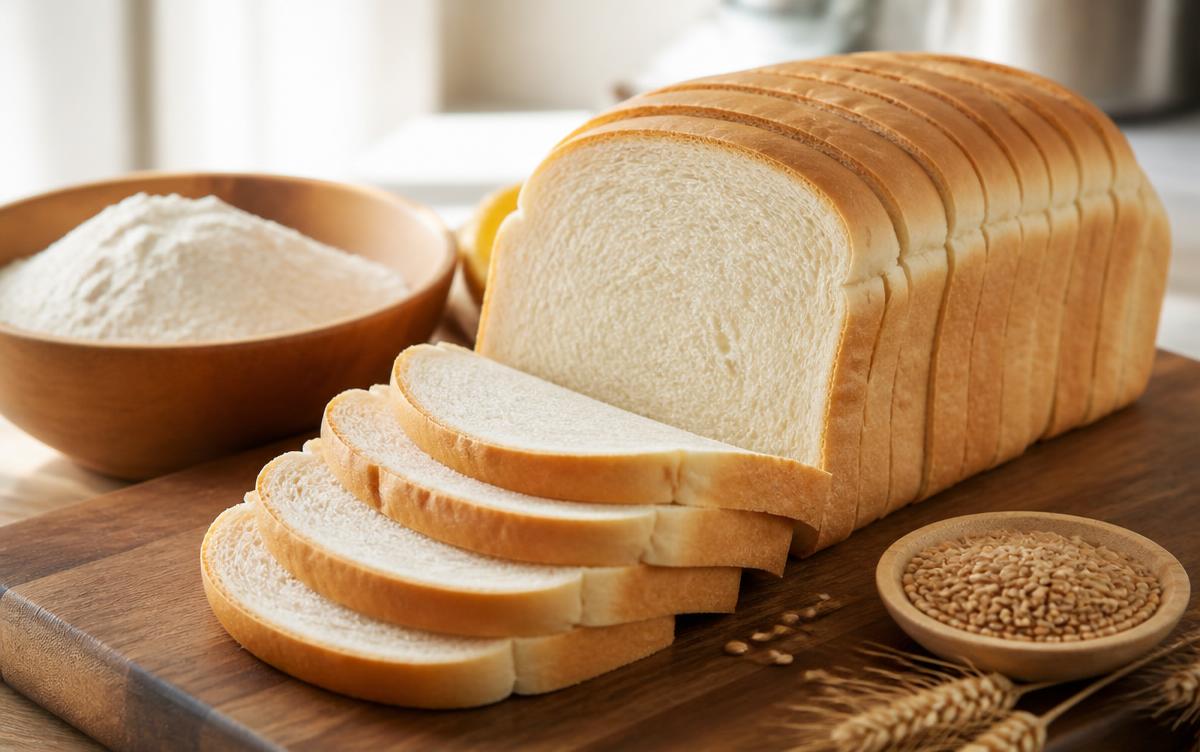
Enriched white flour is the classic example: milling strips out the bran and germ along with much of the thiamin, riboflavin, niacin, iron and folic acid, and enrichment restores those specific nutrients.
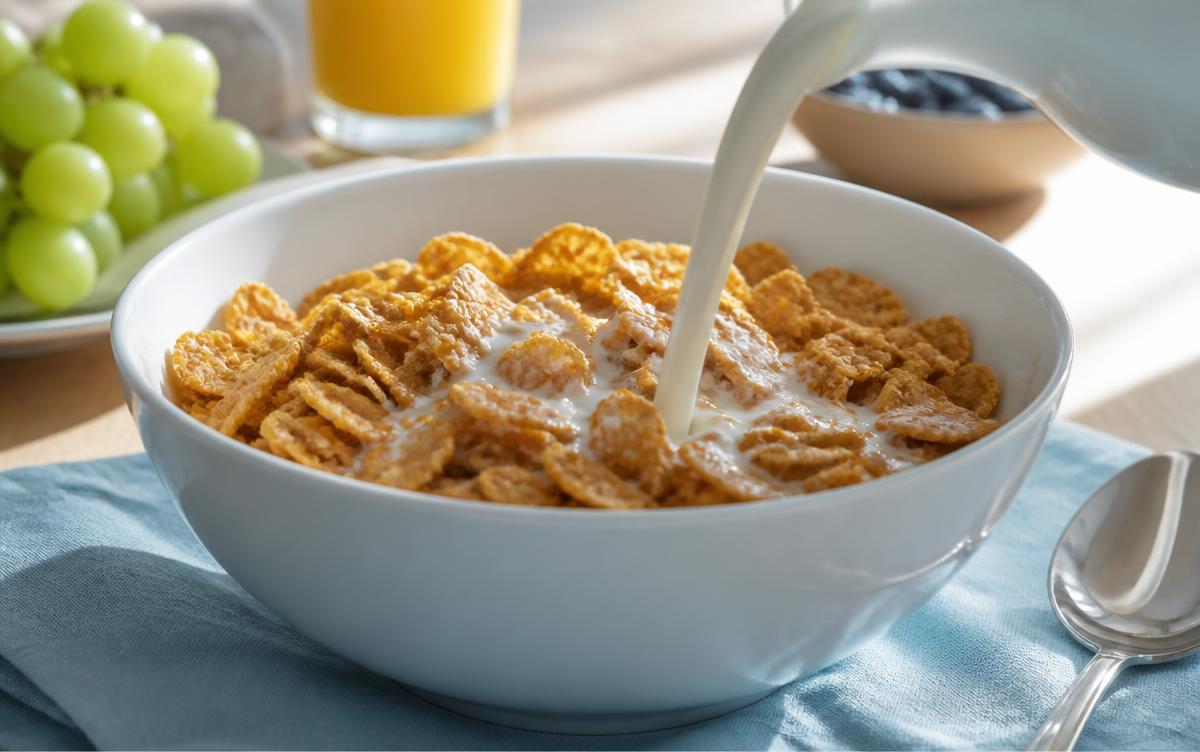
Fortified describes milk with added vitamin D, cereal with added B12, salt with added iodine and plant milk with added calcium. Neither term is a quality signal on its own, and neither one makes a food nutritious by itself.
Enrichment: putting back what milling removed
A wheat grain has three parts. The bran is the fibrous outer layer, the germ is the oily embryo and the endosperm is the starchy bulk. White flour is the endosperm alone, because removing the other two gives a flour that keeps for months rather than weeks and bakes into a lighter loaf.
That trade costs nutrients. The bran and germ carry most of the fibre, most of the B vitamins and most of the minerals. Enrichment programmes, introduced in the United States in the 1940s and mandated for white flour in the United Kingdom, add back a defined shortlist.
Note what enrichment does not restore. Fibre does not come back. Nor do magnesium, zinc, vitamin E or the range of compounds present in the germ. Enriched white flour is closer to whole wheat on the specific nutrients listed than an unenriched version would be, and still meaningfully behind it overall.
Fortification: adding what was never there
Fortification is a public health tool rather than a restoration exercise. A nutrient is added to a widely eaten food specifically to reduce a deficiency in the population.
The historical wins are substantial. Iodised salt largely eliminated goitre in many countries. Vitamin D in milk played a major role in reducing rickets. Folic acid in flour reduced neural tube defects in populations where it was introduced.
Modern fortification is often voluntary and commercial rather than mandated. A breakfast cereal carrying a long list of added vitamins is fortified because it sells better that way, not because a regulator required it.
Reading the label for both
The difference between enriched and fortified food is easiest to see in the ingredient list, which is where the truth sits. Enrichment usually appears as a parenthetical string after the flour: niacin, reduced iron, thiamin mononitrate, riboflavin and folic acid are the standard five in the United States.
Fortification generally appears near the end of the ingredient list as named vitamins and minerals, sometimes grouped under a vitamin and mineral blend. Any nutrient with an unusually high percent daily value on the panel almost certainly got there by fortification rather than nature.
A useful sanity check: if a highly refined food shows several hundred percent of a vitamin per serving, the vitamin was sprayed on. Whole foods rarely produce numbers like that.
Does the added form work as well?
Sometimes better, sometimes worse. Folic acid, the synthetic form used in fortification, is actually absorbed more efficiently than the folate naturally present in food.
Iron is the opposite case. The reduced iron used in flour enrichment is absorbed less well than the haem iron in meat, and its absorption drops further alongside tea, coffee or high phytate foods.
Fat soluble vitamins added to low fat products can be poorly absorbed if the meal contains almost no fat, which is why vitamin D fortified skimmed milk is best consumed as part of a meal rather than alone.
Where the two terms get muddled
Labelling law in some jurisdictions treats both under the same umbrella term of nutrient addition, so a package may use either word loosely. Marketing muddles it further by using fortified as a general health cue.
Whole grain products are typically neither enriched nor fortified, because nothing was removed and nothing needed adding. Seeing no vitamin list on a whole grain pack is not a deficiency, it is the point.
Organic products are frequently unfortified as a matter of certification rules in some countries, which occasionally surprises people who assume organic implies more nutrients rather than fewer additions.
Can you overdo it?
For most water soluble vitamins the surplus is excreted and the practical risk is low. A few nutrients deserve more care.
- Vitamin A in retinol form has an established upper limit and matters particularly in pregnancy
- Iron accumulates in people with haemochromatosis and should not be pushed through supplements plus heavily fortified foods
- Niacin in large doses causes flushing
- Folic acid intake from fortified food plus a supplement can be higher than intended
The realistic risk comes from stacking a multivitamin on top of several fortified foods each day rather than from any single product.
How to use this when shopping
Treat enrichment as damage limitation and fortification as a targeted top up. Neither converts a refined product into a whole one.
If you eat mostly whole foods, fortified products are a convenience rather than a necessity, with the important exception of B12 on a vegan diet and vitamin D in low sunlight months.
If your diet leans heavily on refined staples, enriched versions are genuinely better than unenriched ones, and choosing a fortified cereal you actually eat beats choosing a nutritionally superior one you leave in the cupboard.
The bottom line
Enriched means restored, fortified means added. The ingredient list tells you which is happening, and an unusually large percent daily value tells you the nutrient arrived by design rather than by nature.
Both practices have solved real public health problems. Neither is a reason to pick a refined food over a whole one when both are on the shelf.
Frequently asked questions
Is enriched flour as good as whole wheat?
No. Enrichment restores a shortlist of B vitamins and iron, but the fibre, magnesium, zinc and vitamin E lost with the bran and germ are not added back.
Why do some cereals show 100 percent of a vitamin?
Because it was added deliberately. A refined grain does not naturally reach that level, so any very high percentage on a processed food is a fortification decision.
Do I need fortified food if I eat well?
Usually not, with two exceptions. Vitamin B12 matters on a plant based diet, and vitamin D is difficult to obtain from food in low sunlight months regardless of diet quality.
Is unenriched flour worse for me?
Only if refined grain makes up a large share of what you eat. In a varied diet the difference is small, which is why enrichment is framed as a population level measure rather than personal advice.