Quick Answer
In 2026, a professionally installed epoxy floor in a residential garage runs $3 to $12 per square foot, with most homeowners landing around $6 to $8. Designer systems with metallic pigments, large vinyl flake broadcast or quartz aggregate jump to $8 to $15. Commercial polyurethane-cement systems for restaurants and warehouses run $10 to $20.
A typical 400 square foot one-car garage in a mid-range flake-broadcast epoxy comes to roughly $2,400 to $3,500 installed.
What Drives the Price
- System type. Single-coat water-based epoxy is the cheapest; multi-coat 100% solids with flake broadcast and topcoat is the most common residential install.
- Surface prep. Diamond grinding or shot blasting the slab is non-negotiable for adhesion and typically costs $1 to $2 per square foot.
- Crack and pit repair. Slabs in older garages often need patching before coating, adding $200 to $800 to the job.
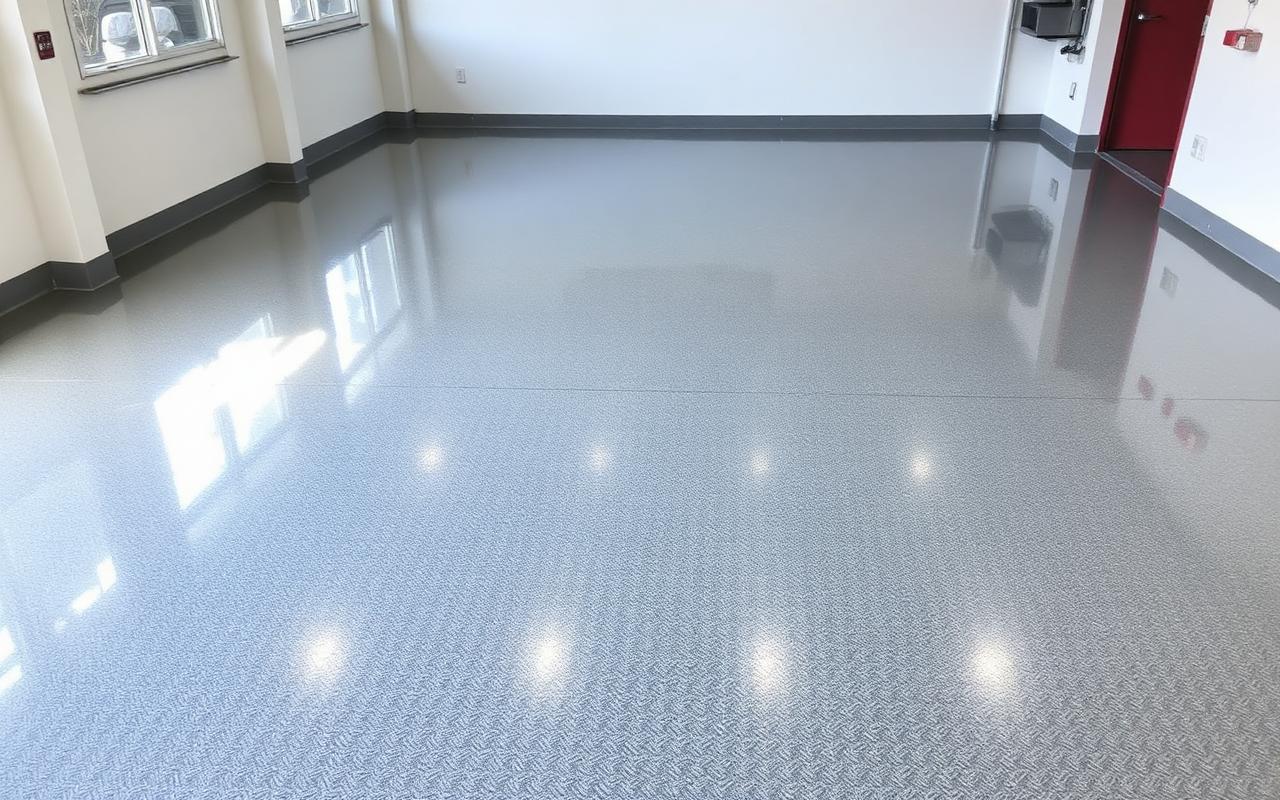
- Finish. Solid colour is cheapest. Flake broadcast adds $1 to $2. Metallic pigments add $2 to $5. Full quartz broadcast adds $3 to $6.
- Square footage. Larger floors have lower per-square-foot rates because mobilisation cost is spread.
DIY vs Pro
Big-box DIY epoxy kits (Rust-Oleum EpoxyShield, Quikrete Epoxy Garage Floor Coating) cost $80 to $250 and cover 200 to 500 square feet. They are water-based epoxy with much thinner build (4 to 8 mil dry film) than a pro install (40 to 60+ mil). DIY kits last 3 to 5 years in a garage; a pro install lasts 10 to 20.
If you DIY, the single biggest mistake is skipping the etch or grind. The slab must be open and clean or the coating peels in months.
Hot vs Cold Climate Premiums
Garages in cold-winter regions need salt and freeze-thaw resistant systems with strong primer bond. Expect to pay $1 to $2 more per square foot in places like Chicago, Minneapolis or Denver than in mild-climate cities. Polyurea or polyaspartic top coats (15 to 20 percent more than standard epoxy) are common in northern climates because they stay flexible at low temperatures and resist hot tyre pickup.
What to Ask the Installer
- How thick is the total dry film build (in mils)?
- Are you grinding or just etching with acid?
- Is the system 100% solids epoxy or water-based?
- Is there a topcoat? Polyurethane or polyaspartic?
- What is the cure time before driving on it?
- What warranty do you offer in writing?
For US benchmark pricing, HomeAdvisor's epoxy floor cost guide tracks national averages updated yearly.
Why This Matters in 2026
Flooring buyers in 2026 face a tighter renovation budget and a wider product range than ever before. Understanding the question above (how much does epoxy flooring cost) lets you skip several wrong products on the showroom floor and zero in on the one or two that actually fit your room, climate, and lifestyle. The half hour spent on this kind of background reading saves hours of back-and-forth at the retailer.
What the Industry Consensus Says
The National Wood Flooring Association (NWFA), Resilient Floor Covering Institute (RFCI) and World Floor Covering Association (WFCA) all publish free consumer guides on the topics covered here. When in doubt, cross-check anything you read on a manufacturer marketing page against one of these trade association resources. They have no SKU to sell, so the advice is generally more even-handed.
When to Call a Professional
If your project involves moisture, asbestos, structural subfloor work, or radiant heat, hire a professional for at least the consultation. A short site visit from a certified installer routinely saves multiples of its fee in avoided mistakes. DIY is great for click-lock floating floors in dry rooms; it is a poor fit for tile setting, hardwood refinishing or any glue-down install.
Frequently Asked Questions
Will this answer change in 5 years?
Pricing and product lines drift, but the underlying physics of flooring (moisture, expansion, wear layer) does not. The buying principles in this guide hold long-term.
Is the answer different in the UK and Europe?
Mostly the same. Retailers like B&Q, Wickes and Carpetright sell equivalent product categories, and EU EN standards mirror North American ASTM tests closely.
What about commercial settings?
Commercial floors use the same materials but higher wear ratings (AC5 laminate, 28 mil vinyl, commercial-grade epoxy). Spec sheets state the heaviest foot traffic the product is rated for.
Where can I get a second opinion?
The National Wood Flooring Association (NWFA), Resilient Floor Covering Institute (RFCI), and World Floor Covering Association (WFCA) all publish free consumer guidance and certified-installer locators.
Pro Tips From the Trade
- Order 10 percent extra. Cuts, mistakes and future repairs add up. One spare carton stashed in the basement is cheap insurance.
- Photograph every layer. Subfloor, vapour barrier, expansion gap, transitions. Warranty claims hinge on documentation.
- Save the lot number. Replacement planks must match the production run or the colour will not line up.
- Acclimate before installing. 48 hours minimum in the room of installation for click-lock products; 7 to 14 days for engineered or solid hardwood.
Bottom Line
Flooring decisions are part budget, part lifestyle, part long-term resale. Prep the subfloor properly, match the product to the room, and follow the manufacturer's install spec, and even a mid-tier material will outperform a premium one that was rushed in. Cut corners on prep and even a top-shelf plank will telegraph every flaw underneath.