
Quick Answer
Pubic hair does not need removal for cleanliness. If you prefer grooming, work slowly with good lighting, your own clean tools, and a method intended for the external area you are treating. Leaving some length with a guarded trimmer can avoid the close shave that triggers bumps for some people.
Do not groom irritated, infected, or injured skin. Keep cutting tools and hair-removal chemicals away from mucosal surfaces, and follow the device or product instructions. A guard reduces exposure to the blade but cannot prevent every nick or pinch.
Choose a goal before choosing a tool
Tidying long hair, defining an outer bikini line, and removing all visible hair are different tasks. More extensive removal exposes more skin to irritation and creates more opportunities for injury. There is no medical requirement to achieve a completely smooth result.
I would start with modest trimming rather than combining trimming, shaving, and exfoliating in one session. That makes it easier to judge skin tolerance and reduces the temptation to keep going over the same area until every hair is identical.
If you repeatedly develop painful bumps, dark marks, or rashes, consider leaving the hair alone while the skin settles. A dermatologist can distinguish ingrown hairs from dermatitis, infection, or another condition and discuss alternatives.
Set up where you can see clearly
The American Academy of Dermatology recommends standing while trimming and doing your own grooming rather than having a partner do it. Arrange good lighting and a stable, nonslip footing. Do not work while distracted or in a position that hides the cutting area.
A mirror may help, but stop if you cannot see the tool and skin adequately. Do not attempt awkward blind passes around folds. Mobility, balance, vision, or hand-control limitations may make professional advice or simply leaving more hair the safer option.
Shower use is appropriate only for a device designed for it, and wet floors add slipping risk. Do not bring a plugged-in trimmer near water. Dry trimming may be recommended for some devices, so check the manual rather than assuming warm running water is always best.
Select and inspect a guarded trimmer
Look for a body trimmer whose instructions cover the intended external area. Check the recommended attachment, skin positioning, and permitted wet or dry use. Begin with a longer guard if you are uncertain about how short you want to go.
Inspect the guard for cracks, missing teeth, and insecure attachment. Check the cutting head for damage and trapped debris. A guard that shifts during use cannot provide the spacing its design assumes, so stop if the attachment feels loose.
Use light pressure and slow controlled movements according to the manual. Do not force a guard into a crease or assume a named skin-protection feature makes all genital tissue safe to trim. Avoid passing over moles, sores, and skin tags.
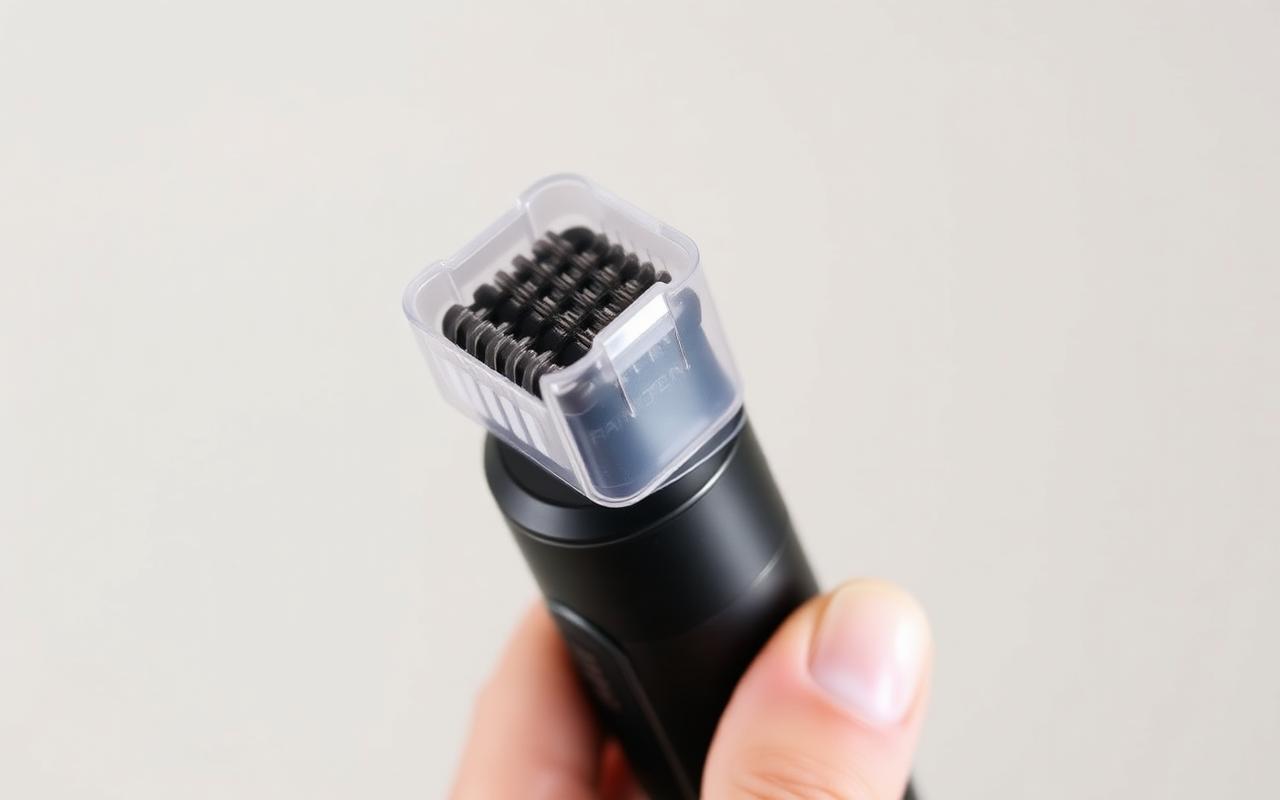
The retained caption overstates the role of a guard. It is one precaution, not the whole safety story: visibility, correct attachment, suitable anatomy, gentle pressure, tool condition, and stopping when uncomfortable remain essential.
Trim without rushing
Start with clean external skin and prepare hair as directed for the device. Keep the area you are working on visible and gently position skin as instructed, without pulling so aggressively that it becomes uncomfortable. Do not press hard to get a closer result.
Make a small pass, stop, and inspect the result before repeating. Clear hair from the head with the power off as the instructions specify. Repeated passes over the same place can irritate even when no obvious cut is visible.
Do not chase hair on delicate folds or mucosal surfaces with a general-purpose trimmer. The vulvar mucosa, vaginal opening, anal opening, and other sensitive tissues are not equivalent to ordinary hair-bearing outer skin. If directions exclude an area, respect that restriction.
If you choose to shave
For suitable external hair-bearing skin, soften the hair with warm water and use a well-tolerated shaving cream or gel intended for the area. Shave lightly in the direction of growth, rinse the blade frequently, and avoid going repeatedly against the grain.
Use your own sharp, clean razor and replace it when dull or damaged. Do not share razors or trimmer heads. AAD general shaving guidance suggests replacing disposable razors after about five to seven shaves, but pulling or damage is a reason to replace sooner.
Do not shave over an active rash, open cut, or painful bump. Close shaving is not necessary for hygiene, and stopping it may be the most effective way to reduce recurring razor bumps. Do not pick or dig out ingrown hairs with a needle.
Chemicals, waxing, and professional options
Depilatory creams can cause chemical burns if used on an excluded body area or left on too long. Use only a product explicitly labeled for the intended external site, follow its test and timing directions, and keep it away from mucosal tissue.
For waxing, choose a provider with appropriate hygiene practices. The AAD advises avoiding double dipping: a new applicator should be used each time wax is taken from the pot. Tell the provider about medicines and skin conditions that could affect treatment suitability.
For longer-term hair reduction, discuss laser treatment with a qualified professional experienced with your skin tone and the intended area. A home device or salon promise is not a guarantee of safety or complete permanent removal.
Aftercare without extra irritation
Rinse away residual shaving product as directed and pat the external skin dry. Cool water can feel soothing, but it does not close pores or seal cuts. Avoid rubbing the area with a rough towel.
If needed, use a small amount of a simple fragrance-free moisturizer on suitable intact external skin. Do not apply serums, perfumed deodorants, acids, or alcohol-based aftershaves to freshly irritated tissue. Aloe and botanical ingredients can also cause reactions in some people.
Wear comfortable clothing that does not chafe and let the skin recover before another session. There is no universal weekly schedule that prevents bumps. Routine acid exfoliation around the genitals is not necessary and may worsen irritation.
Tool care and warning signs
Switch off the tool before cleaning. Rinse only parts the manual permits, dry them thoroughly, and apply approved blade oil if required. Do not assume weekly rubbing alcohol or a fixed replacement interval suits every device.
For a minor superficial nick, use gentle pressure with clean material and appropriate basic wound care. Seek urgent help for significant or persistent bleeding, a deep wound, severe pain, or an injury involving delicate genital structures.
Spreading redness, warmth, swelling, pus, fever, or worsening pain needs medical advice. Recurrent bumps, unexplained sores, and persistent itching should also be assessed rather than labeled automatically as shaving rash. Do not self-prescribe antibiotics or antifungals based on appearance alone.
FAQ
Is removing pubic hair cleaner?
No. Normal washing of the external area is sufficient; hair removal is a personal preference, not a hygiene requirement.
Can a guard guarantee no cuts?
No. It reduces direct blade exposure but cannot eliminate pinching, slipping, incorrect use, or injury from damaged equipment.
Should I exfoliate before every session?
No. Harsh scrubs and acids can irritate sensitive skin, particularly near mucosal surfaces. Focus on gentle technique and seek advice for recurring ingrown hairs.
Bottom line
Choose optional, conservative grooming with clear visibility and tools intended for the exact external area. Guards help but are not guarantees. Avoid irritated skin, use gentle aftercare, and seek assessment when injuries or recurring bumps go beyond a minor temporary nuisance.