

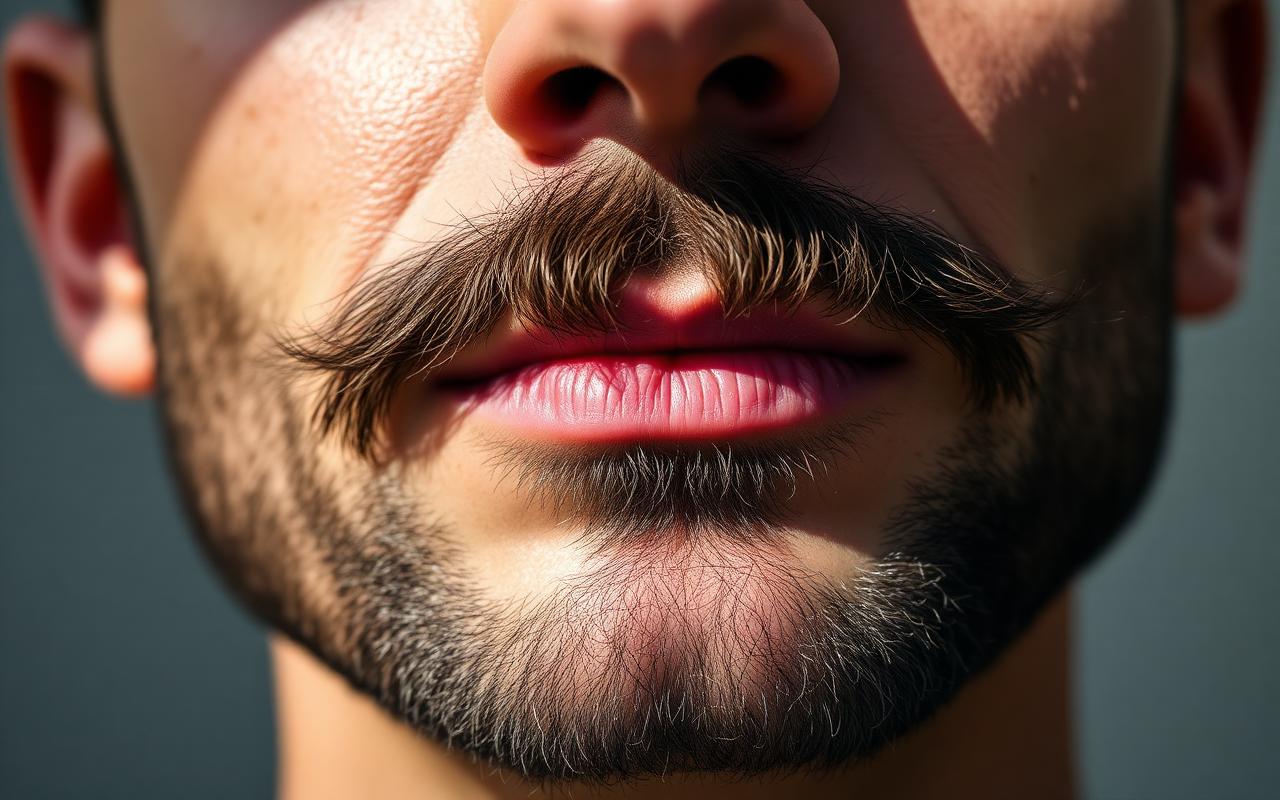
Quick Answer
Wash your mustache with a gentle cleanser, let it dry into its usual shape, comb it without pulling, and trim only a little at a time. Use small facial-hair scissors or a guarded trimmer with a clear view of your upper lip.
The right outline depends on your style, not a compulsory gap under the nose or a perfectly straight lip border. I would decide which hairs actually interfere with eating before shortening a mustache that I am trying to grow longer.
Start with the skin underneath
The American Academy of Dermatology recommends daily cleansing and skin-appropriate moisturizing for facial hair. Food, styling residue, and skin oils can collect beneath a mustache just as they can beneath a beard. Clean skin gives you a better starting point than trimming through wax and debris.
Use lukewarm water and a cleanser suited to your skin. Rinse carefully around the corners of the mouth and pat dry rather than scrubbing. Hot water and harsh soap may leave already dry skin more uncomfortable.
Itching is not necessarily a signal that your scissors are blunt. Irritation can have several causes, including products, shaving, or a skin condition. If the skin is persistently red, flaky, sore, or developing bumps, simplify the routine and seek medical advice when it does not settle.
Put together a small practical kit
A comfortable comb
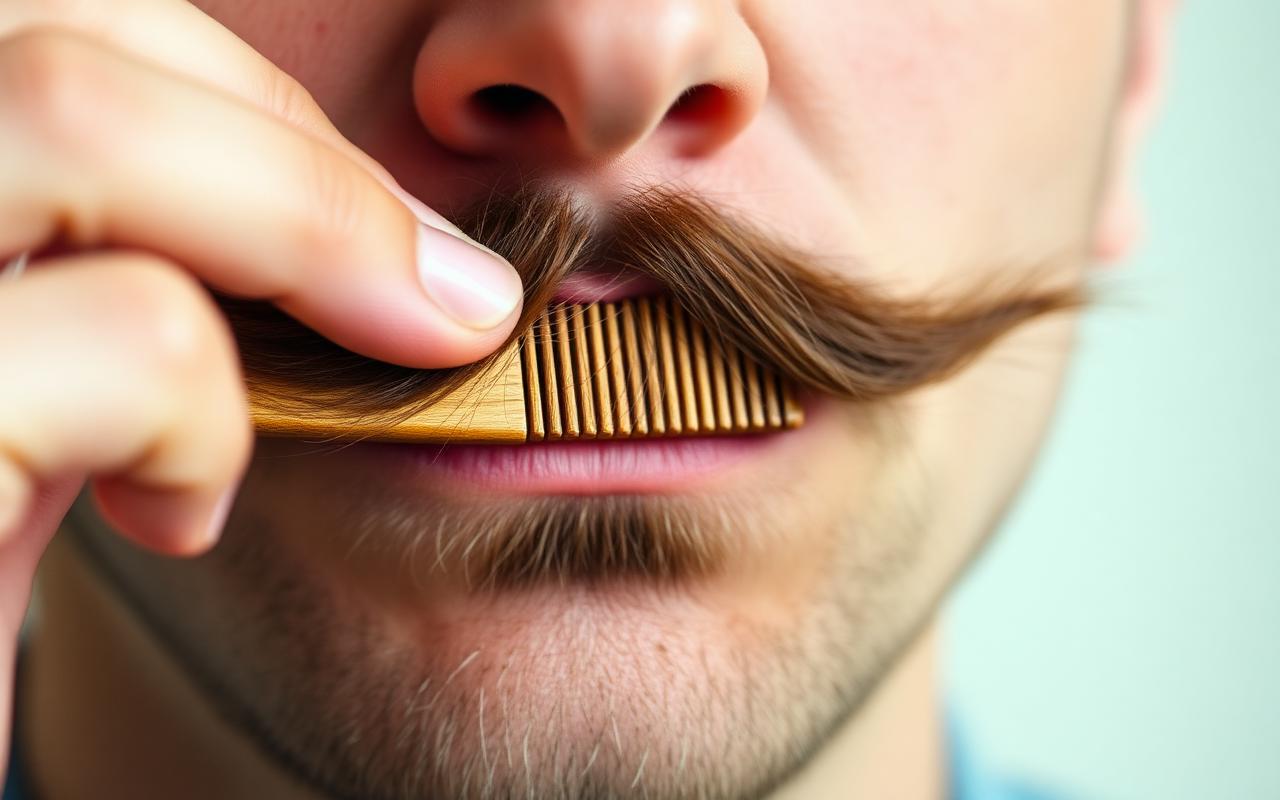
Choose teeth that pass through your whiskers without snagging. Fine teeth can help align short hair, while a wider spacing may be more comfortable for dense or curly growth. Smooth edges matter more than whether the comb is wood, plastic, or another material.
Wash the comb regularly and remove trapped wax and hair. If a tooth becomes rough or broken, replace it. Pulling through knots to force everything flat can make a simple trim uncomfortable and distort the shape you are trying to judge.
Scissors or a guarded trimmer
Small scissors designed for facial hair offer control when removing individual ends. A trimmer is useful for reducing bulk, but start with a longer guard than you expect to need. An exposed outlining blade can cut skin if it is pressed or used carelessly.
You do not need a particular steel, blade shape, or professional brand. More important are a stable grip, clean cutting surfaces, readable instructions, and the ability to see exactly what is entering the blade. Never put a trimmer inside your nostrils unless it is designed for that purpose.
Set the shape before cutting
Dry the mustache fully enough to see how it normally lies. Hair can sit differently when wet, combed under tension, or loaded with styling product. Dry trimming helps you avoid taking too much off because the hair looked longer while stretched.
Stand in front of a fixed mirror in good light. Relax your mouth rather than holding a broad smile. A changing expression moves the upper lip and makes the outline harder to judge consistently.
Comb in the direction you intend to wear the hair. For a short everyday mustache, that may be downward. For a handlebar, it may be outward from the center. Do not comb long side hairs down and cut them away if those are the ends you want to preserve.
Trim in a controlled sequence
First remove only the obvious ends that enter your mouth or sit outside the intended outline. Keep scissors away from skin and make tiny cuts. Put the tool down between adjustments if you find yourself rushing.
Work from the center toward one side, then repeat on the other. Pause frequently and look from normal conversation distance. Small natural differences in density are usually less noticeable than an outline repeatedly cut shorter in pursuit of perfect symmetry.
If reducing bulk with a trimmer, follow the manufacturer's guidance and begin with the longest suitable guard. Make one cautious pass, comb again, and inspect. Do not assume a guard guarantees that every area will be cut to an identical apparent length.
Check the corners after the main outline is finished. These hairs often curl differently from the center. Turn your head slightly to inspect each side, but stop cutting whenever your view becomes uncertain. A barber can help establish an outline you can maintain later.
Adapt the routine to the style
A short, practical mustache may need regular small cleanups around the mouth. A fuller chevron can retain density without exposing every part of the lip. There is no hygiene rule requiring all styles to follow one precise border.
For a handlebar or another long style, protect the side length. Use a small amount of suitable wax to guide the ends, then wash it out gently as needed. Do not twist so hard that the skin feels pulled or the hair starts snapping.
Growth rate, curl pattern, and personal preference determine the trimming interval. A fixed monthly or weekly schedule is less useful than checking when hair begins interfering with comfort or the shape you want.
Condition without creating buildup
If your skin feels dry, apply a suitable moisturizer after cleansing while the skin is still slightly damp. The AAD notes that beard oil may suit normal or dry skin, while sensitive or acne-prone skin may need a different product.
Use very little near the mouth, avoiding the lip surface and nostrils. A facial-hair cosmetic is not food. Fragrance, essential oils, and botanical ingredients can still irritate, so stop anything that causes burning, rash, or persistent itching.
FAQ
Do I need beard oil and wax?
No. Oil is optional conditioning; wax is optional styling. Neither replaces cleansing or treatment for a skin disorder. Start with the fewest products that keep the mustache and surrounding skin comfortable.
What if I trim one side too short?
Stop rather than repeatedly shortening both sides. Comb into the usual shape and leave it alone for a while. A modest asymmetry often blends better than a much smaller mustache created by chasing an error.
How do I clean the tools?
Remove hair after use and clean according to the tool instructions. Keep electrical handles dry unless rated for washing, and dry permitted washable parts thoroughly. Do not share personal grooming tools without appropriate cleaning and disinfection.
Bottom line
Cleanse gently, trim in the dry shape you actually wear, and remove less than you think you need. Comfort, clear visibility, and healthy skin matter more than rigid style rules. A simple routine maintained patiently is easier to live with than frequent aggressive reshaping.