


Quick Answer
For a lower-irritation starting point, trim chest hair with a guarded body groomer and leave some length rather than immediately shaving smooth. Start with a longer setting, work slowly, and avoid nipples, raised moles, inflamed skin, and areas you cannot see clearly.
Shaving is also a valid choice if you prefer it and your skin tolerates it. I would choose the method by comfort and desired appearance, not by claims that shaving always causes bumps or that trimming eliminates all irritation.
Choose a result before choosing a length
You can leave chest hair natural, reduce its bulk, shape its outline, or remove it. None is more hygienic by default. Regular washing and caring for the skin matter more than whether you keep hair or remove it.
If you are unsure, begin with the longest practical guard and assess the result in ordinary lighting. Guard labels vary between tools, so check the actual marked length. A length that looks subtle on dense dark hair may look quite different on sparse or lighter hair.
Do not copy a fixed blending map unless it suits your growth pattern. Some people prefer a uniform length, and others like a gradual transition toward the shoulders or abdomen. There is no need to shorten every edge to a prescribed number of millimeters.
Pick suitable equipment
A guarded body groomer
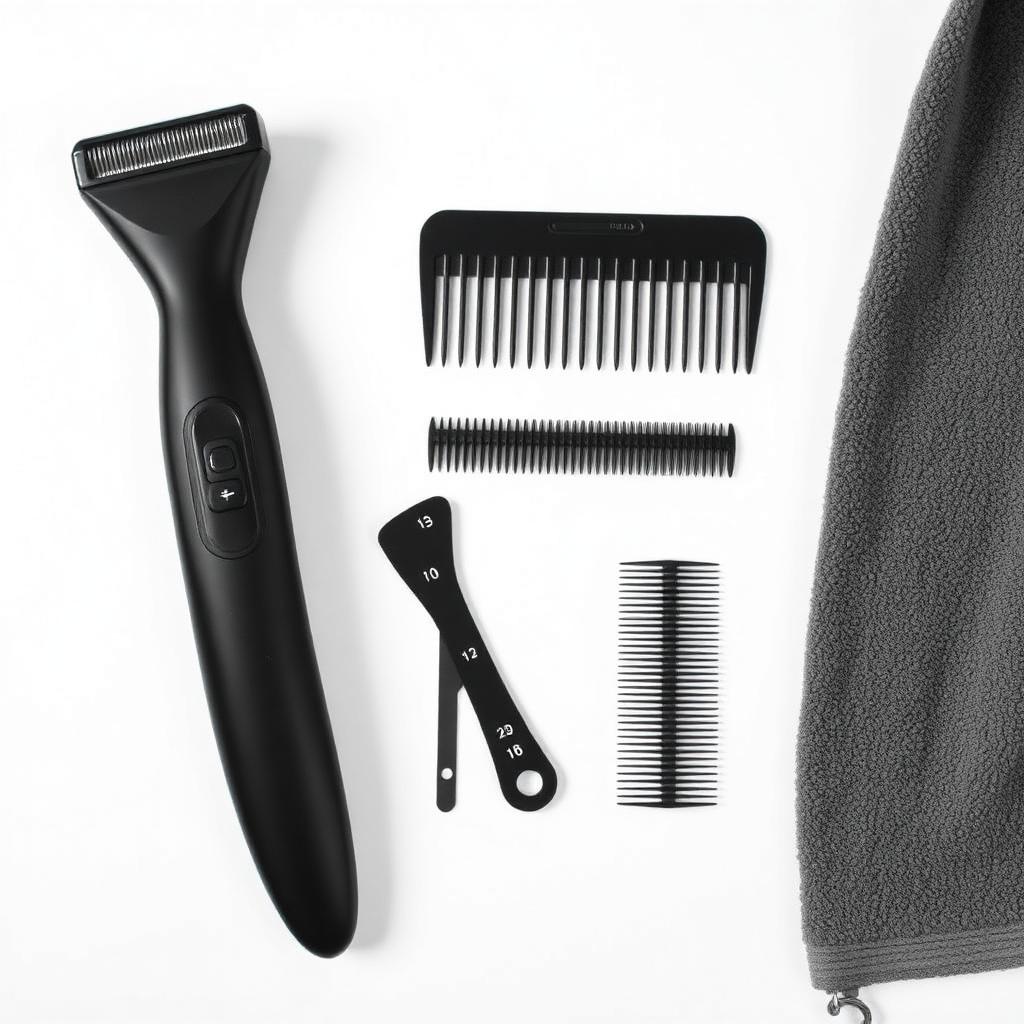
Look for instructions that explicitly permit body use, secure comb attachments, and a grip that remains comfortable when reaching across the torso. A skin guard can help reduce direct blade contact, but it does not make cuts impossible or protect every fold.
Inspect the guard and blade before use. A cracked attachment or bent tooth can catch skin. Make sure the head is properly seated and the tool is charged or connected according to its instructions before you begin working around sensitive areas.
Wet use is model-specific
Water resistance varies. A washable blade does not necessarily mean the whole groomer can be used in the shower, and cordless does not automatically mean waterproof. Follow the manufacturer's exact wet-use and charging restrictions.
For an initial trim, dry hair often makes it easier to see the remaining length and collect clippings. If the model is designed for wet trimming and you prefer that method, use it only as directed. Do not run a plugged-in charger beside the shower.
Prepare the skin and workspace
Choose bright lighting and a stable stance. Lay out the guards, a towel, and a way to collect loose hair. A mirror helps with the collarbone and sides, but avoid twisting into a position where you cannot control the cutting head.
Check for acne, rash, scratches, sunburn, or tender areas before cutting. Postpone grooming over irritated skin. If you have a raised mole or another growth, do not run the blade across it; leave a margin and ask a clinician about any changing lesion.
Use a clean tool and avoid sharing personal grooming equipment. Clean the skin gently and dry it if required for the chosen method. There is no benefit to scrubbing aggressively beforehand, particularly if you are already prone to irritation or ingrown hairs.
Trim in small, controlled passes
Attach the longer guard securely and test a small, easy-to-see area. Use light pressure and keep the head in stable contact as the manufacturer recommends. Cutting direction affects how much hair is removed, so check the result before changing direction or going shorter.
Brush collected hair from the guard with the tool switched off whenever it begins to clog. Do not repeatedly grind over an area that looks uneven. Hair can lie in several directions, and irritation may develop before repeated passes produce the symmetry you imagined.
Keep the blade away from nipples and other protruding or delicate skin. Do not drag a bare blade across the areola or use pressure to flatten it. Leave a small amount of hair around difficult areas rather than trying to achieve complete removal at any cost.
If you want a softer outline, use a longer guard first and make gradual changes. Step back between passes with your shoulders relaxed. Looking down can bunch the chest and distort the apparent boundary of hair near the neck or upper abdomen.
If you prefer shaving smooth
The AAD recommends wetting skin and hair before shaving, applying shaving cream or gel, and shaving in the direction of growth. Use light strokes and rinse the razor frequently. A sharp, clean blade is more useful than repeated scraping with a worn one.
Do not stretch the skin aggressively for an extra-close result. Avoid shaving over acne lesions or broken skin. If close shaving repeatedly causes painful bumps, consider leaving a short length with a guarded trimmer and discuss persistent problems with a dermatologist.
Shaving does not change the number of follicles or make hair grow back biologically thicker. A blunt regrowing tip can feel different, which may create that impression. Regrowth comfort varies, so do not assume someone else's smooth-shave experience predicts yours.
Aftercare should be simple
Rinse away loose hair and product residue, pat dry, and apply a gentle fragrance-free moisturizer if needed. Cool water can feel soothing, but it does not close pores. Avoid heavily fragranced aftershave or harsh exfoliation on newly irritated skin.
Loose, comfortable clothing may reduce friction after grooming. If a workout, tight shirt, or repeated rubbing makes the skin sting, give it time to settle. You do not need to use a strong acid or scrub immediately to prevent every possible ingrown hair.
If a small nick occurs, stop grooming and apply gentle pressure with clean material. Seek medical advice for persistent bleeding, a significant cut, or signs of infection. Do not keep passing a tool over broken skin to finish the appearance.
Clean and store the tool
Switch off before removing attachments. Brush away hair, rinse only approved parts, and dry thoroughly. Follow the manufacturer's lubrication directions; extra oil is not a substitute for cleaning, and the wrong cleaning chemical can damage some parts.
Keep chargers away from water and let washed components dry before reassembly or storage. Protect blades and guards from drops. Replace worn or damaged parts rather than trying to compensate for pulling by pressing harder against the chest.
FAQ
How often should I groom?
Repeat when the length no longer suits you and the skin is comfortable. Growth and preference differ, so a universal monthly schedule is unnecessary. If the skin remains irritated when you plan the next session, delay and reconsider your method.
Are bumps always ingrown hairs?
No. Irritation, folliculitis, acne, and other conditions can look similar. Avoid picking or squeezing. Painful, spreading, recurrent, or pus-filled bumps deserve medical advice rather than automatic treatment with a stronger cosmetic product.
Can I use a beard trimmer?
Only if its instructions permit the intended body use and you have suitable guards. Tool names alone do not establish safety. Separate attachments or a dedicated body tool can simplify hygiene, especially if you also groom other body areas.
Should I use hair-removal cream instead?
That is a different method with its own irritation risks and area restrictions. Use only a product labeled for the intended area, follow its testing and timing directions, and never apply it to broken or irritated skin.
Bottom line
Start conservatively with a guarded trim, protect delicate skin, and choose closeness by your own tolerance. If shaving, soften the hair and use gentle strokes with the grain. Clean tools, calm skin, and realistic expectations are more important than a prescribed chest-hair pattern.