

Quick Answer
Shape a goatee by choosing its width and connections first, trimming the retained hair with a longer guard, and defining the borders in small steps. Check both sides with your head neutral before shortening the chin or clearing the cheeks.
Mouth corners can be useful visual references, but they do not dictate a universal shape. You can leave the surrounding skin as short stubble rather than shaving it smooth, especially if close shaving causes bumps.
Choose the version that fits your growth
Goatee can describe a chin patch, a connected mustache-and-chin shape, or a wider variation. None is inherently outdated or more professional. The useful question is which outline works with your existing hair distribution and the amount of maintenance you want.
Look at where hair naturally connects around the mouth. If a connection is sparse, forcing a very narrow, perfectly closed circle may emphasize the gap. A disconnected mustache and chin can be an intentional style rather than a failed version of another one.
I would let the area grow enough to see its density before removing a wide band from each side. You can always narrow the shape later. A photograph taken at normal viewing distance is more useful for judging balance than inspecting every follicle in a magnifying mirror.
Set up safe, visible tools
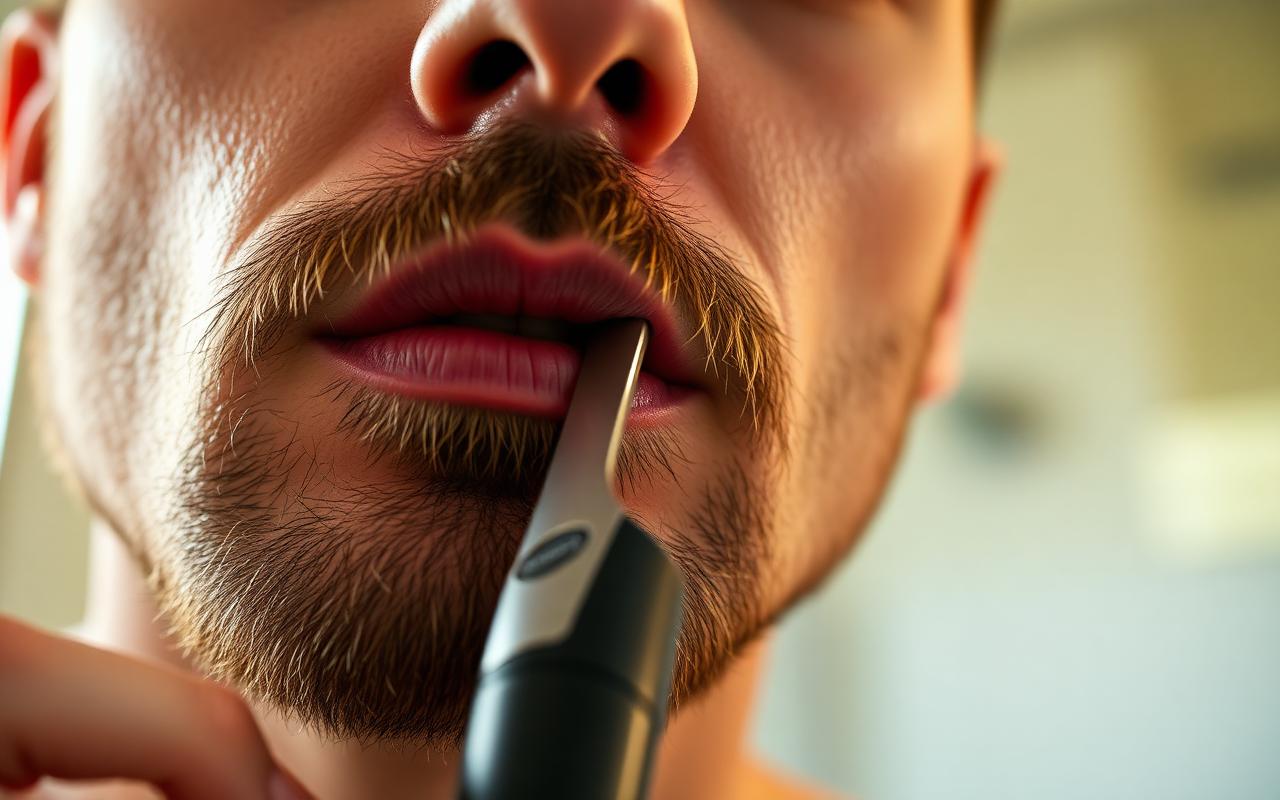
Use a clean trimmer with a securely fitting guard. A smaller detailing head can help near the mouth, but it should still be a tool intended for facial hair. Do not assume that any narrow cylindrical personal trimmer is suitable for drawing cheek borders.
Choose a mirror and lighting that let you see both corners of the mouth without leaning awkwardly. A second mirror can show the chin underside if you can use it comfortably. Stop if you lose track of which way the reflected tool is moving.
For smooth surrounding skin, have a suitable razor and moisturizing shaving gel or cream ready. Clear gel can improve visibility, but ordinary cream is also workable if you keep it out of the retained outline. Never dry-scrape a border because you are worried about hiding it with lather.
Establish length before the final borders
Start with a guard longer than your desired finish. Trim a small area, inspect it, and reduce length only if necessary. The mustache and chin do not have to use the same setting: different density may make different lengths look more balanced.
Comb the hair into its normal position between passes. Do not press hard to make a stubborn curl match the rest. Work around the chin's curve in shorter strokes so the guard remains stable rather than tilting an edge into the skin.
If hair catches or pulls, switch the tool off and check for trapped cuttings, a poorly seated guard, low charge, or a worn head. More pressure is not the remedy. Do not continue over a painful bump or a fresh cut just to finish one side.
Mark a conservative outline
With your face relaxed, use the mouth corners as optional starting landmarks for the side borders. A washable cosmetic pencil suitable for skin can help if tolerated. Leave the first outline slightly wider than the final shape you think you want.
Remove small amounts from one side, then compare with the other before going further. Exact symmetry is not realistic because faces and hair growth differ. Aim for a balanced appearance at normal distance, not identical measurements that require repeatedly narrowing both sides.
Shape the lower border while checking the face both straight ahead and in profile. Do not draw an arbitrary line at the jaw or a fixed distance above the Adam's apple. The appropriate boundary depends on the shape you are retaining and where the hair actually grows.
Detail the mustache without chasing the lip
Comb mustache hair downward gently and identify strands that extend into the mouth. Use a guarded detail tool or small, visible snips to shorten the ends. Keep blades away from the pink lip surface and never turn a cutting edge into the mouth corner.
Do not raise the upper border repeatedly to correct one uneven spot. That can make the mustache progressively thinner. Leave a minor irregularity until your next session if further cutting would remove a substantial band of hair.
Clear surrounding hair gently
You may use a guarded trimmer on the cheeks and neck for a soft contrast. Skin does not have to be perfectly smooth for a goatee to look deliberate. Leaving length can be especially practical for curly hair and skin prone to ingrown hairs.
If shaving, soften the hair with comfortably warm water, apply lubrication, and follow the local growth direction. Do not stretch the skin or make repeated against-the-grain passes to sharpen the outline. Rinse, pat dry, and use a bland moisturizer afterward.
Wait before applying strong acids or fragranced aftershave to irritated skin. A stinging finish is not proof of cleanliness. If the border is red or tender, let the area recover rather than touching it up again that evening.
Skin care and tool hygiene
I treat the skin beneath facial hair as part of the haircut. Wash daily with a gentle cleanser suited to your skin, rinse thoroughly, and pat rather than scrub. Work fingertips through the hair so cleanser reaches the skin. A strongly scented beard wash is not necessary, and a tight feeling afterward is a reason to choose something milder.
Use a light, noncomedogenic moisturizer if you develop clogged pores. A beard conditioner may help coarse hair; oil is optional rather than compulsory. Introduce one product at a time so you can identify irritation. Protect exposed skin with broad-spectrum SPF 30 or higher sunscreen, including the neck and areas where hair coverage is sparse.
After trimming, switch the tool off before detaching parts. Brush out trapped hair, then wash only components the manual permits you to rinse. Let them dry before reassembly. Apply lubricant only when specified. Do not assume alcohol, boiling water, or a bathroom disinfectant is compatible with every blade coating, plastic guard, or motor housing.
Keep tools personal and store them dry. Replace cracked guards, damaged foils, or blades that continue pulling after proper cleaning and charging. Avoid passing a cutter over open sores, inflamed bumps, or a suspicious new lesion. Persistent scaling, painful pustules, patchy hair loss, or recurrent bleeding needs medical assessment rather than a closer trim.
FAQ
How often should I maintain a goatee?
Use visible regrowth and skin comfort as your guide. Shorter styles usually show change sooner, but no every-other-day rule applies to everyone. Separate an occasional length trim from optional border cleanup so you do not remove more each time.
Can I fill a thin connection with powder?
A cosmetic intended for that area may change the appearance temporarily if your skin tolerates it. It will not increase hair growth. Remove it gently, avoid broken skin, and seek advice about sudden new patches of loss rather than covering them indefinitely.
What if I accidentally make one side too narrow?
Stop before narrowing the other side dramatically. Soften the transition with a slightly longer surrounding stubble if you like, or allow the small area to regrow. Constant corrections usually make a minor asymmetry more noticeable.
Bottom line
Choose a shape from your own growth pattern, start with extra width and length, and work in small visible steps. Healthy skin and a balanced outline matter more than compulsory connections, fixed mouth-corner rules, or a completely smooth neck.
Sources: Authoritative guidance; Further safety guidance.