

Quick Answer
To groom a ducktail beard, preserve more length at the chin, gradually taper the sides, and shape the lower outline into a soft point. Work on a clean, dry beard in its natural resting position and remove small amounts while checking both front and side views.
There is no compulsory chin length, guard setting, or neckline measurement. Adapt the style to your growth pattern and preferences. If you are creating the shape for the first time or cannot see the underside clearly, a barber can establish a safer, easier template to maintain.
Understand the shape before cutting
A ducktail generally has narrower sides and greater length toward the center beneath the chin. The point can be subtle or pronounced. A softer taper may work better for some growth patterns than a very sharp triangle, especially when the hair curls or changes direction.
Do not judge the style by whether it perfectly elongates a particular face shape. That is an aesthetic preference, not a grooming rule. Look at your own beard from several angles and decide how much width and length you want to retain.
I would choose the shortest version of the finished shape I can accept before cutting, then leave extra length initially. Hair cannot be restored once removed, and repeatedly correcting a point is a common way to shorten the beard more than planned.
Prepare the beard and skin
Clean the beard and underlying skin with a product you tolerate, rinse thoroughly, and dry gently. Detangle without force. If you normally style with a blow-dryer, avoid stretching the beard into a shape you cannot reproduce comfortably every day.
The AAD's hair-care guidance emphasizes gentle handling and suitable conditioning. Hair texture affects how it behaves, so inspect the beard after it has settled rather than assuming every hair should lie perfectly straight.
Avoid trimming across inflamed follicles, cuts, or a painful rash. Persistent scaling, soreness, or unusual hair loss needs assessment rather than stronger fragrance or more beard oil. A comfortable skin barrier matters more than maintaining a sharply defined style through an active flare.
Assemble a modest tool kit
Use a clean trimmer with secure adjustable guards, a comb that moves through the beard without snagging, good lighting, and a mirror arrangement that lets you see the sides. Confirm the trimmer's actual guard lengths rather than assuming numbers mean the same across models.
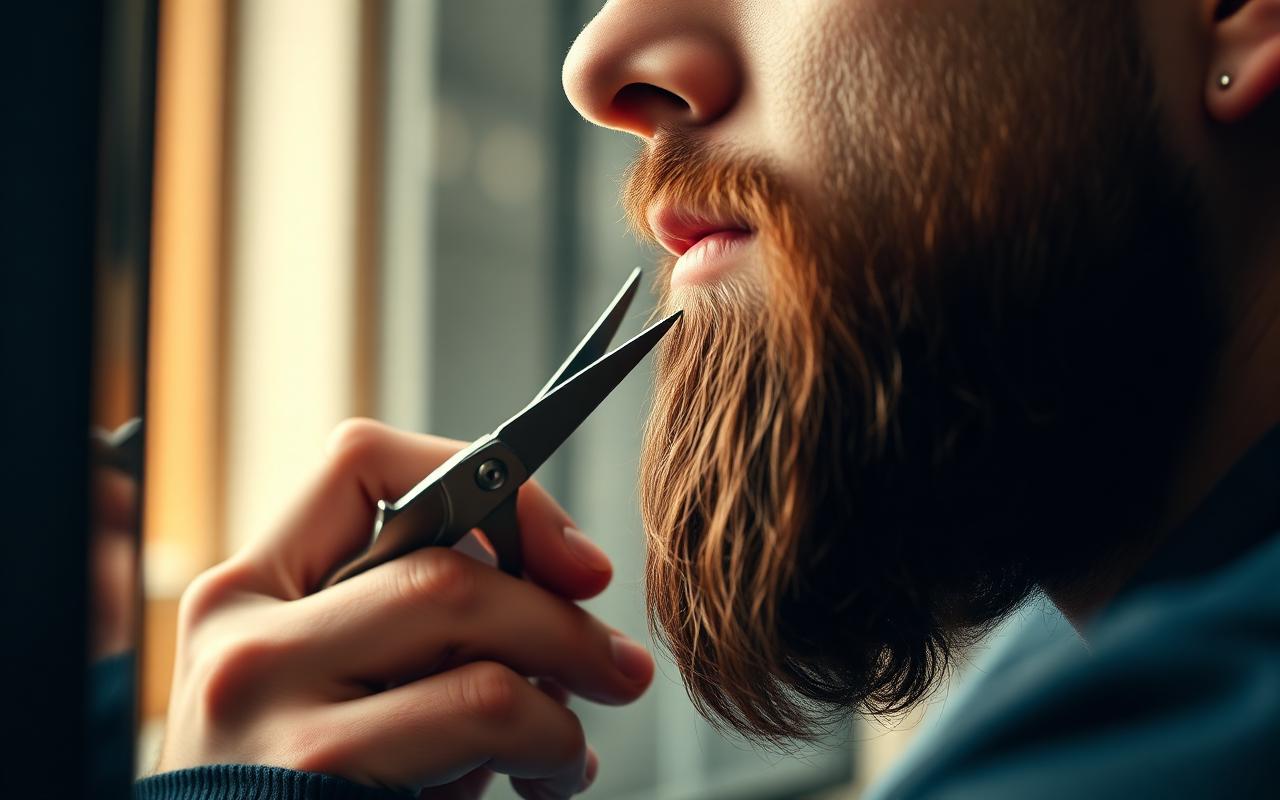
Barber shears can help with individual projecting hairs and careful outline work, but they are not the only tool capable of shaping a point. A skilled barber may use clippers, scissors, or both. Choose a tool you can control, not one a tutorial declares mandatory.
Do not use damaged guards, blunt pulling blades, or household scissors with awkward handling. Keep sharp tips away from the lips, neck skin, and eyes. Switch off the trimmer before changing attachments, and do not attempt close work while distracted or rushed.
Establish the side taper gradually
Begin with a longer guard than you expect to need. Work on a small section near a sideburn, following the device's instructions and avoiding pressure. Check the result before repeating on the opposite side or shortening the setting.
Blend toward the jaw by retaining progressively more length as you approach the chin. The transition should suit the existing beard density rather than a fixed set of millimeter values. Guarded cutting can still expose gaps if hair lies in an unexpected direction.
Leave the central chin area largely untouched until the sides are balanced. Comb the beard back into its natural position between passes. Do not keep trimming one side simply because it looks different while your head is tilted or one cheek is stretched.
Form the lower outline conservatively
Look straight ahead with the head in a relaxed position. Identify the center of the desired point and the two gentle slopes approaching it. Remove only hairs clearly outside that outline, working in tiny increments and checking both side views.
Avoid making the point excessively thin just to create a dramatic photograph. A fragile tip may separate, curl, or need more styling product than you want to use. The finished shape should look acceptable when the hair moves naturally, not only when held between your fingers.
If you cannot see the underside without bending awkwardly, stop and use professional help. Blind cutting near neck folds creates unnecessary risk. A barber can show where to leave supporting bulk so future maintenance does not gradually hollow out the beard.
Set a neckline that works on your neck
There is no universal two-finger rule that fits every neck and beard. Start conservatively and assess the line while looking forward rather than stretching the chin upward. A line placed too high can remove support and make the underside look disconnected.
You can use a guarded trim instead of a bare shave if close cutting causes irritation. For areas you choose to shave, the AAD recommends softening hair, using shaving cream, and shaving with growth using light technique.
Rinse the blade between strokes and avoid repeatedly scraping dry skin. Do not try to shave off acne or inflamed bumps. An immaculate neckline is optional, and leaving a little length may be the more comfortable choice for sensitive skin.
Style without forcing the hair
A small amount of a tolerated conditioner, moisturizer, or styling product may help manage the beard. Heavy balm and wax are not required for a legitimate ducktail. Use only as much as needed and stop if buildup, itching, or breakouts develop.
Comb gently rather than repeatedly dragging through resistance. If you use heat, choose a cautious low setting, keep airflow moving, and avoid directing heat into the skin. Frequent high heat and strong tension can undermine the healthy appearance you are trying to create.
Do not assume oil hydrates every skin type or treats dandruff and dermatitis. Persistent flaking, redness, or soreness can need targeted medical advice. Adding essential oils or multiple fragranced products can make irritation harder to identify and manage.
Maintain the shape rather than restarting it
Check the beard in its usual dry state before deciding it needs cutting. Tidy a few projecting hairs when necessary and reassess the taper less frequently than the neckline if that suits your growth. There is no mandatory every-other-day schedule.
Clean attachments according to the manual, let washable parts dry, and replace damaged or pulling heads. Keep tools personal. The AAD's razor-bump advice supports changing shaving habits or allowing growth when close shaving repeatedly causes problems.
FAQ
How much growth do I need?
Enough to create a visible difference between the sides and chin, which varies with density, curl, and the style you want. There is no universal number of inches or months that makes the shape authentic.
What if one side grows more densely?
Work with the natural difference and avoid cutting the denser side endlessly to match a sparse area. A softer taper or shorter point may create a more balanced result. A barber can help adapt the outline.
Can I fix a point cut too short?
Not immediately. Stop cutting, let the area grow, and adjust styling if desired. Trying to restore symmetry through repeated trimming often removes more length without solving the original problem.
Bottom line
Preserve chin length, taper the sides gently, and shape a point that suits your natural beard. Conservative cuts, a practical neckline, and comfortable skin make the style easier to maintain than rigid measurements, aggressive shaving, or excessive styling products.