

Quick Answer
Groom your beard at home by gently cleansing the skin and hair, letting the beard dry into its usual shape, combing out tangles, and trimming conservatively with a secure guard. Shape the outline gradually and finish with a moisturizer or conditioner suited to your skin.
I start longer than my intended result because it is easy to take another pass and impossible to put hair back. A comfortable, repeatable routine matters more than a perfectly sculpted neckline or a shelf full of beard products.
Begin with the skin beneath the hair
The American Academy of Dermatology recommends washing the face and beard daily with a gentle cleanser suited to skin type. The goal is removing accumulated dirt and oil without leaving the skin tight or uncomfortable. A dedicated beard wash is optional, not a requirement.
Use lukewarm water, work cleanser gently toward the skin, rinse thoroughly, and pat with a clean towel. Avoid aggressive scratching with fingernails. After exercise or messy meals, remove residue promptly instead of letting sweat or food remain trapped against the skin.
Beard hair does not literally pull moisture out of your skin. Dryness can relate to cleansing, weather, underlying skin conditions, and inadequate moisturization. Treat persistent flaking as something to investigate rather than proof that you need more oil.
Assemble a small, useful kit
A trimmer with secure guards, a comfortable comb, a mirror, and good lighting cover most basic maintenance. A second mirror helps you check the sides. You do not need a particular battery chemistry, wooden comb, or animal-bristle brush to achieve a safe trim.
Read the tool's instructions for guard attachment, wet use, cleaning, and lubrication. A rinseable blade does not necessarily mean the entire trimmer is waterproof. Keep plugged-in equipment away from water and avoid charging or handling chargers with wet hands.
Inspect blade teeth and guards before each session. Cracked combs, bent teeth, and a loose head can catch skin or produce uneven patches. If a trimmer tugs, stop and check cleanliness, lubrication, charge, and blade condition rather than pressing harder.
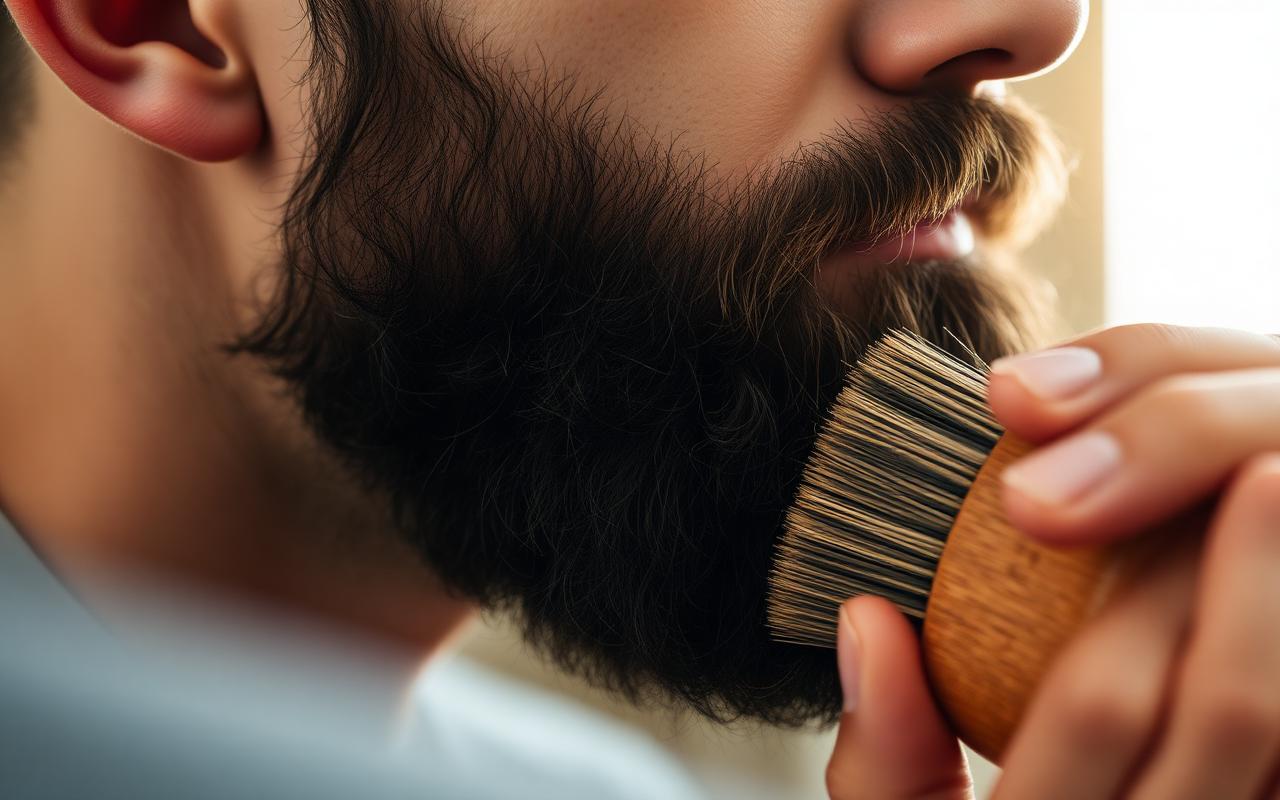
Brushing arranges hair temporarily and helps reveal tangles. It does not train follicles to change their growth direction. Use a light touch, especially over acne, irritated skin, and areas where the beard grows in several directions.
Establish your starting shape
Dry the beard before judging length
Hair can sit differently when wet, stretched, or freshly combed. For a predictable home trim, let it dry into the way you normally wear it. There is no universal percentage by which every wet beard will shorten after drying.
Comb gently from the ends through any knots, then settle the hair into its normal position. Check both sides with your head level. Tilting your chin or leaning close to the mirror can make an otherwise balanced outline look uneven.
Choose length before removing bulk
Attach a longer guard than you think you need. Guard numbers differ between manufacturers, so read the marked length instead of assuming one brand's number matches another. Test on a less conspicuous area and evaluate the result before continuing across the face.
Use slow, controlled passes following the trimmer's directions. Cutting against growth often removes more than cutting with it, so do not switch direction casually halfway through. Clear accumulated hair from the guard with the tool off when necessary.
Shape the outline without chasing perfection
Keep the cheek line close to its natural boundary at first, removing isolated hairs rather than carving a new line through dense growth. Stand back between changes. Small differences in density are normal and do not always need to be corrected by cutting.
For the neck, choose a curve that suits your jaw, beard length, and anatomy. The popular two-finger rule above the Adam's apple is a starting reference, not a medical or aesthetic standard. A longer beard may need a different boundary from short stubble.
If you shave below the neckline, soften the skin and hair, apply shaving gel, and shave in the direction of growth. Use light pressure and avoid repeated passes. A clean, sharp razor is preferable to trying to force a worn blade through coarse hair.
Around the lips, work slowly and keep your mouth relaxed. Do not trim when distracted or when your hands are unsteady. If you use scissors, keep the tips away from skin and remove only clearly visible ends rather than cutting blindly into bulk.
Match the finish to your skin
For dry or normal skin, a small amount of beard oil may soften hair and improve comfort. For sensitive skin, a gentle fragrance-free moisturizer may be a better fit. Acne-prone skin may do better with a suitable conditioner or non-comedogenic product.
Oil is optional, not compulsory. Begin with a small amount and distribute it evenly rather than soaking the hair. If a product causes itching, bumps, burning, or redness, stop using it instead of assuming the skin needs time to adapt.
Protect exposed facial skin from sunlight with broad-spectrum SPF 30 or higher and other sun-protective measures. A beard does not provide a dependable sunscreen rating, particularly where growth is sparse. Choose products you can apply consistently without irritation.
Clean and store tools properly
Switch off the trimmer before brushing away loose hair or removing attachments. Rinse only parts the manufacturer permits, then dry them thoroughly. Apply compatible clipper oil where directed and wipe away excess before the next use.
Do not share razors. If tools are shared, cleaning and appropriate disinfection are separate steps, and the method must suit the equipment. A quick splash of alcohol is not a universal substitute for the product's cleaning instructions or a disinfectant's labeled contact time.
Keep dry equipment protected from impact and bathroom splashes. Replace damaged guards promptly. A storage cap protects blade teeth, while a clean, dry pouch or drawer helps keep the tool ready for a predictable next session.
Troubleshoot before trimming again
If the beard looks patchy, let it settle after combing and inspect in ordinary lighting. Cutting surrounding hair shorter can sometimes balance a shape, but repeatedly chasing a bare area often creates a larger mistake. Growth patterns and density vary naturally.
For bumps, pause close shaving and reduce friction. Do not pick ingrown hairs or shave over inflamed spots. Persistent scaling, painful lumps, pus, spreading redness, or patchy hair loss warrant advice from a dermatologist rather than another cosmetic product.
FAQ
How often should I trim?
Trim when the outline or length no longer suits you. Short stubble may need frequent touch-ups, while a longer beard can go longer between shaping sessions. Inspect regularly, but do not turn an arbitrary twice-weekly schedule into unnecessary skin exposure.
Do I need to brush every day?
Gentle combing can help a longer beard remain manageable. Very short stubble may not need brushing at all. If a brush scratches or causes redness, change technique or stop rather than treating discomfort as evidence that it is working.
Can I use ordinary facial moisturizer?
Often yes, if it suits your skin and can reach beneath the hair. The label does not need to say beard. Avoid products that leave you irritated or congested, and introduce new products separately so you can identify a reaction.
Bottom line
Clean gently, trim a dry beard conservatively, and shape around your own growth pattern. Keep tools maintained and choose skin care by comfort rather than marketing. A healthy beard routine should leave the skin calm, not sore, greasy, or dependent on constant correction.