Quick Answer
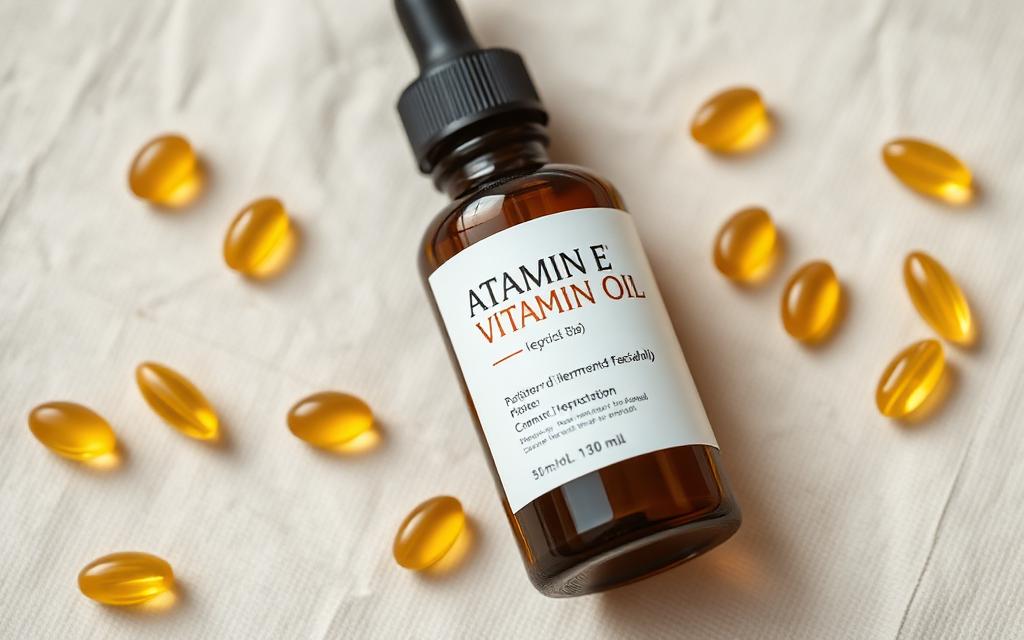
Vitamin E oil benefits the face by acting as a powerful lipid soluble antioxidant. It neutralizes free radicals generated by UV light and pollution, supports the skin's lipid barrier and helps lock in moisture, which together can reduce visible signs of aging and irritation.
It is one of the most studied ingredients in skincare, with research stretching back more than fifty years. The benefits are real, but they depend heavily on how the vitamin is formulated and what other ingredients sit alongside it.
The short answer
Vitamin E oil benefits the face by acting as a powerful lipid soluble antioxidant. It neutralizes free radicals generated by UV light and pollution, supports the skin's lipid barrier and helps lock in moisture, which together can reduce visible signs of aging and irritation.
It is one of the most studied ingredients in skincare, with research stretching back more than fifty years. The benefits are real, but they depend heavily on how the vitamin is formulated and what other ingredients sit alongside it.
Why antioxidants matter for skin?
Free radicals are unstable molecules that damage skin cells, collagen and DNA. They are produced by sunlight, pollution, smoke and even normal metabolism. Antioxidants like Vitamin E donate electrons to these unstable molecules, stabilizing them before they can cause harm.
Without enough antioxidants in the skin, free radical damage accumulates and shows up as fine lines, uneven tone, dullness and weakened collagen. With a steady topical supply, the skin has more raw material to repair itself and to fend off daily oxidative stress.
Vitamin E and your skin barrier
Because Vitamin E is lipid soluble, it integrates directly into the fatty layer that holds your skin cells together. Strengthening this layer reduces transepidermal water loss, calms redness and helps the skin recover faster from irritation, sun exposure and active ingredients like retinol.
People with sensitive or compromised skin barriers (after over exfoliation, after a course of strong actives, or in dry climates) often see noticeable improvements within a few weeks of adding a Vitamin E containing moisturizer to their routine.
The forms you will see on labels
- Tocopherol: the natural form, well absorbed and effective.
- Tocopheryl acetate: a stabilized form that converts to active tocopherol after application. More shelf stable but slightly less potent.
- Mixed tocopherols: a blend of natural variants, often used in cleaner formulations.
- Tocotrienols: a related family with slightly different antioxidant behavior, increasingly used in premium serums.
How it pairs with Vitamin C?
Vitamin E works best alongside Vitamin C. Together they regenerate one another and provide broader protection against both water soluble and lipid soluble damage. Many serums combine the two, often with ferulic acid added to extend stability. The famous "C E Ferulic" combination, popularized by clinical research, is the textbook example.
Using a Vitamin C serum in the morning followed by a moisturizer that contains Vitamin E gives you a similar layered protection at lower cost than a single high end serum.
How to use it without breakouts?
- Choose a low concentration (0.5 to 1 percent) in a serum or moisturizer rather than a pure capsule.
- Avoid pure undiluted Vitamin E oil on acne prone skin. The thick texture clogs pores.
- Patch test on the jawline for 48 hours before applying to the full face.
- Layer it after water based serums and before heavier creams.
- Use it at night if your skin is oily, where the slightly heavier feel matters less.
- Check fragrance content. Many "Vitamin E oils" are blended with citrus oils that can sting or sensitize.
What Vitamin E does not do?
Despite popular belief, topical Vitamin E does not reliably fade scars. The most cited study on the topic, published in 1999, found that applying Vitamin E to surgical scars produced no benefit, and in roughly a third of subjects it actually caused contact dermatitis that worsened the appearance.
It is also not a sunscreen. While Vitamin E adds antioxidant protection that complements UV defense, it does not absorb or block UV rays on its own. Pair it with a broad spectrum SPF if you want real sun protection.
Who benefits most?
- Dry, mature or sun damaged skin looking for added antioxidant support.
- People recovering from a damaged barrier or harsh actives.
- Anyone in a polluted urban environment where free radical exposure is high.
- Skin that tolerates retinoids well and needs extra moisture during use.
Synthetic versus natural Vitamin E
You may see "d alpha tocopherol" and "dl alpha tocopherol" on different labels. The first is the natural form, derived from plant oils, and is roughly twice as biologically active as the second, which is synthetic. For a serum or moisturizer, both work, but if you are paying premium prices, look for the natural form.
Mixed tocopherols, which include several variants of the molecule, mimic the way Vitamin E appears in nature and are increasingly used in higher end formulations.
Storage matters more than people realize
Vitamin E is sensitive to light and air. A bottle left open on a sunny shelf will lose potency in weeks rather than months. Look for products in opaque or amber packaging, with airless pumps where possible, and store them in a cool dark place.
If you use a dropper bottle, close it tightly and avoid touching the dropper to your face, since skin contact can introduce bacteria that the small preservative load may not handle.
Routine examples
- Morning: Vitamin C serum, then a moisturizer that contains Vitamin E, then sunscreen.
- Night: A retinoid (if you use one), wait a few minutes, then a moisturizer containing Vitamin E and ceramides.
- Sensitive or barrier repair phase: Skip strong actives for a week and use a fragrance free moisturizer with Vitamin E and panthenol.
The takeaway
Vitamin E is one of the most studied antioxidants in skincare, and it earns its place in most routines. Use it in formulated products rather than straight from a capsule, and pair it with sunscreen during the day for the best long term protection. Treat it as a quiet supporting ingredient that strengthens everything else you apply, not as a hero ingredient that works miracles on its own.
Quick recap
Use this as the short version to save or share. The key facts above explain the why and the how, but the practical takeaway is simple: small habits and small ingredient choices compound. Make the change once, and your future routine gets a little easier and a little better every time you repeat it.
If you found this helpful, browse the related answers below for more everyday questions broken down the same way. Every article on dmbio is researched and updated when new evidence comes in, so you can come back to the same page months later and trust that the answer still holds.
Skincare disclaimer
This article is for general educational purposes only and is not medical or dermatological advice. Skincare ingredients affect every person differently depending on skin type, barrier health, allergies, hormones and the rest of your routine.
Always patch-test a new product on a small area of skin for at least 48 hours, introduce one active at a time, and stop use if you see persistent irritation, burning or breakouts. If you are pregnant or breastfeeding, on prescription topicals (retinoids, antibiotics), or treating acne, rosacea, eczema or pigmentation, speak to a board-certified dermatologist before changing your routine.
See the full site-wide Disclaimer & Notice for the complete terms that apply across dmbio.