Quick Answer
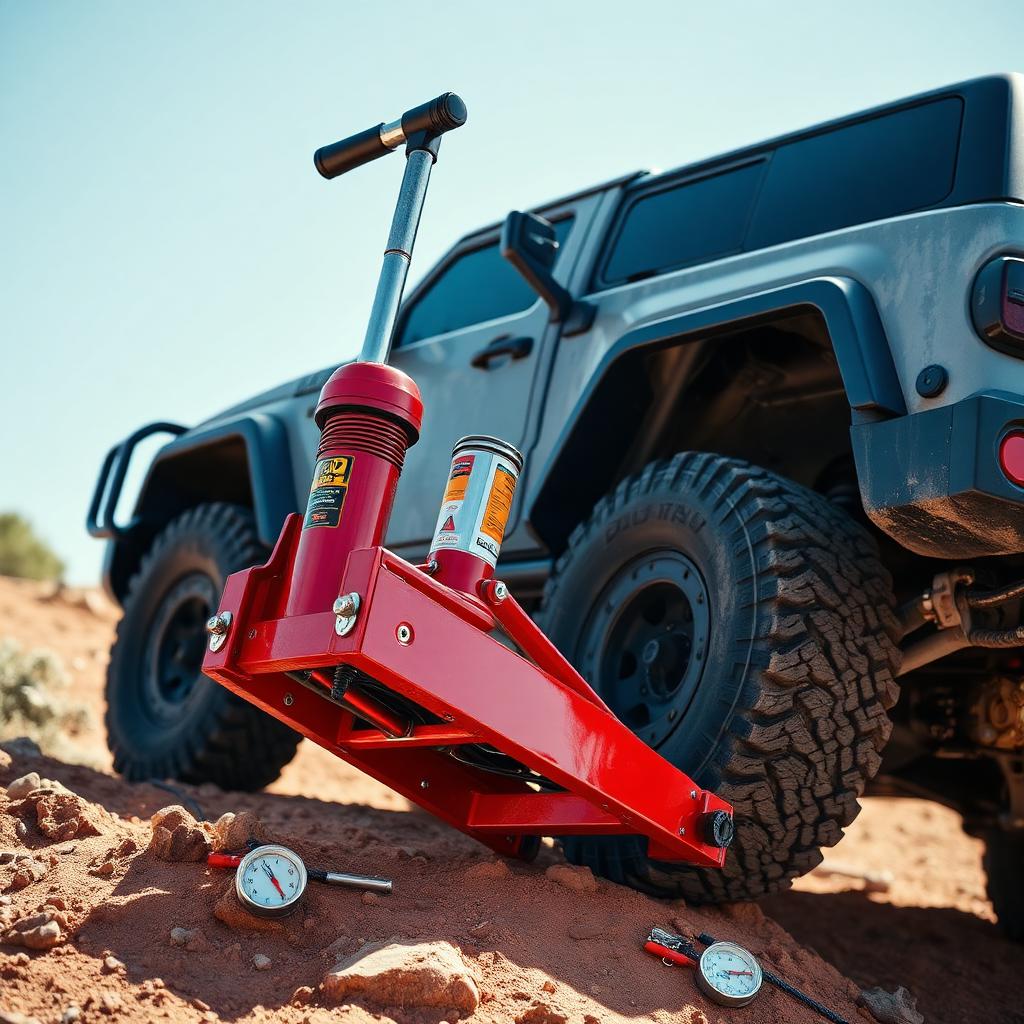
To use a Hi-Lift jack safely, only lift from rigid steel points like rock sliders or heavy off-road bumpers, place a wide base plate under the foot to stabilize soft ground, wrap both hands around the handle at all times, and stand to the side (never in the handle's sweep path) especially when lowering. The steel handle can strike hard enough to fracture a jaw or break a hand.
Why the Hi-Lift is dangerous
A farm jack uses a cast-iron climbing pin system with zero mechanical damping. Once loaded, the entire vehicle's weight is held by two small pins that lock into holes in the steel spine. On lifting, the handle is pulled downward to advance the pins. On lowering, the vehicle's weight transfers directly through the handle.
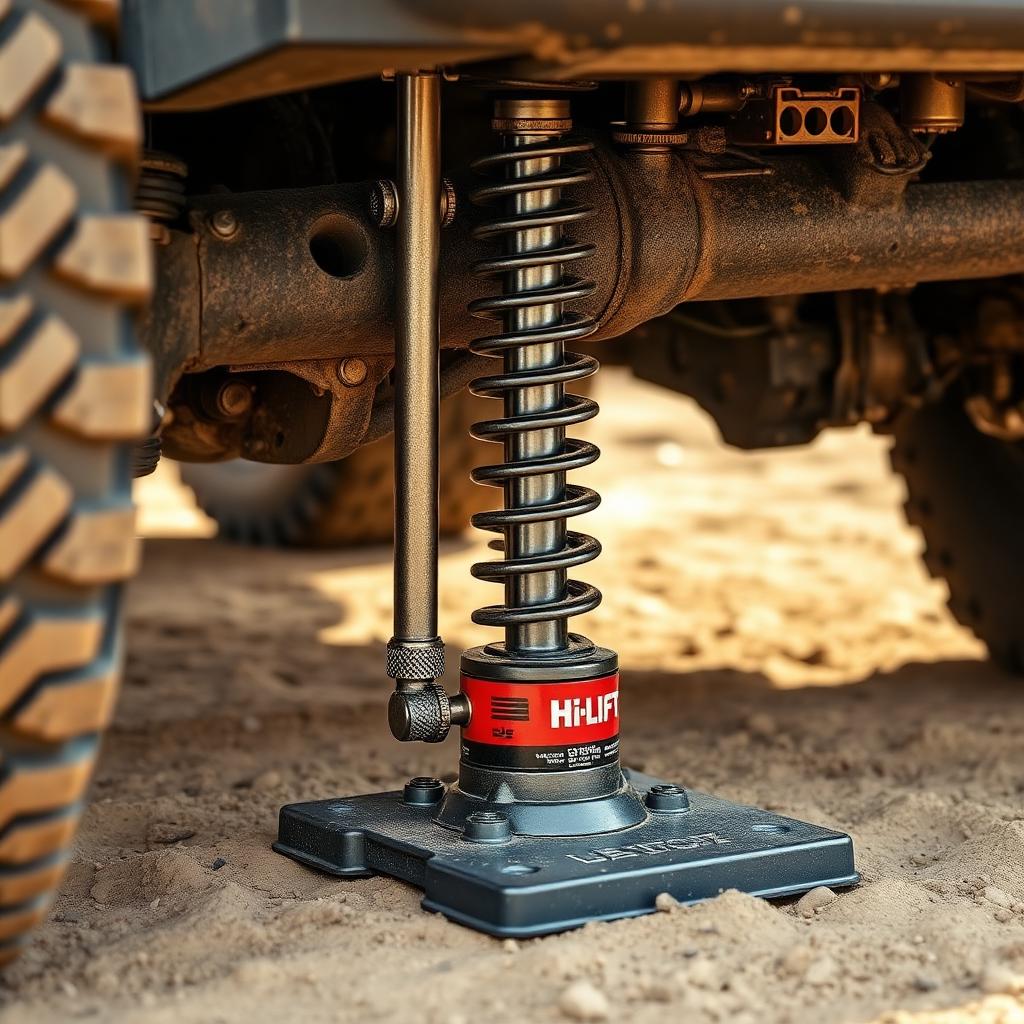
If the operator loses grip while lowering, the handle cycles up and down with hundreds of foot-pounds of energy. Facial and hand injuries from Hi-Lift handles are common enough that manufacturers include explicit warnings on the tool.
Step 1: Confirm a rigid lift point
A Hi-Lift will punch straight through a plastic bumper cover or crumple an aluminum running board. It only works with:
- Steel rock sliders welded or bolted to the frame
- Heavy steel off-road bumpers with dedicated jacking notches
- The tire itself using a Lift-Mate accessory (grips the wheel)
- Bolt-on Hi-Lift jack points designed for the vehicle
Any factory unibody SUV, crossover, or lifted truck without armor is not a Hi-Lift candidate.
Step 2: Stabilize the base
The stock jack foot is a narrow steel rectangle. On dirt, mud, gravel, or sand it pushes into the ground unevenly and tips. Always place a wide base plate under the foot. Purpose-built plastic Hi-Lift base plates cost about $25 and spread the load across roughly 200 square inches. A flat piece of hardwood or plywood works in a pinch.
Chock the wheels on the opposite end of the vehicle before lifting so it cannot roll off the jack.
Step 3: Lifting mechanics
- Flip the reversing lever up (lifting position).
- Stand to the side of the jack spine, not directly in front of the handle sweep.
- Wrap both hands firmly around the handle grip.
- Lower the handle smoothly to the bottom of its stroke. Listen for a click as the climbing pin locks into the next hole.
- Raise the handle back to the top and repeat.
Step 4: Lowering mechanics (the high-risk step)
Flip the reversing lever down. From this point on, the truck's weight tries to slam the handle upward every time I begin a stroke.
- Never take a hand off the handle. If I lose grip, the handle cycles up and down uncontrollably.
- Wrap both hands tightly and guide the handle through its full downward stroke.
- Keep my face and chest completely out of the handle's arc. My chin is at handle height on many vehicles. That is the worst injury zone.
Common Hi-Lift mistakes
| Mistake | Consequence | Correct approach |
|---|---|---|
| Jacking on soft ground with no base plate | Jack tips, vehicle falls | Wide plastic base or hardwood pad |
| Leaning over the handle | Handle strikes face on unload | Stand to the side of the spine |
| One-hand grip while lowering | Handle guillotine cycle | Two-hand death grip every stroke |
| Lifting from plastic bumper | Bumper crushes, vehicle drops | Only steel armor or Lift-Mate |
| Working under a Hi-Lifted vehicle | Jack tips easily, no redundancy | Add a jack stand before crawling under |
Beyond lifting: other Hi-Lift uses
Winching / clamping
With a chain attachment kit, a Hi-Lift becomes a manual come-along winch capable of 5,000 lb pulls. Slow, but powerful.
Spreader / press
The Hi-Lift can spread bent bodywork, straighten frames, and press stuck U-bolts on the trail. Same handle rules apply.
Bead breaker
With the right adapter, a Hi-Lift can break the bead on a tubeless tire for a full patch-plug repair on the trail.
Common questions about Hi-Lift jacks
Is a bottle jack safer?
For simple wheel changes on a firm surface, yes. Hydraulic bottle jacks are lower profile, safer to lower, and less prone to sudden failures. But they cannot lift a lifted 4x4 to change a big tire, and they will not fit rigid rock slider points.
Can I use a Hi-Lift as a jack stand?
No. Never work under a vehicle supported only by a farm jack. Always place a proper jack stand under the frame before going under.
Do exhaust jacks replace Hi-Lifts?
Exhaust bag jacks are safer on soft ground and lift the whole side of a vehicle. They are heavier and more expensive, but many overlanders now carry one instead of a Hi-Lift.
How much weight can a Hi-Lift lift?
Standard 48-inch and 60-inch farm jacks are rated to 7,000 lb. They are strong enough for full-size trucks with lockers and armor.
Bottom line
A Hi-Lift jack rewards mechanical respect and punishes casual use. Lift only from rigid steel points, always use a wide base plate, keep both hands on the handle, and stand to the side of the sweep path especially when lowering. Follow the routine every time and the tool handles even the toughest trail lifts without turning into a hospital trip.