Quick Answer
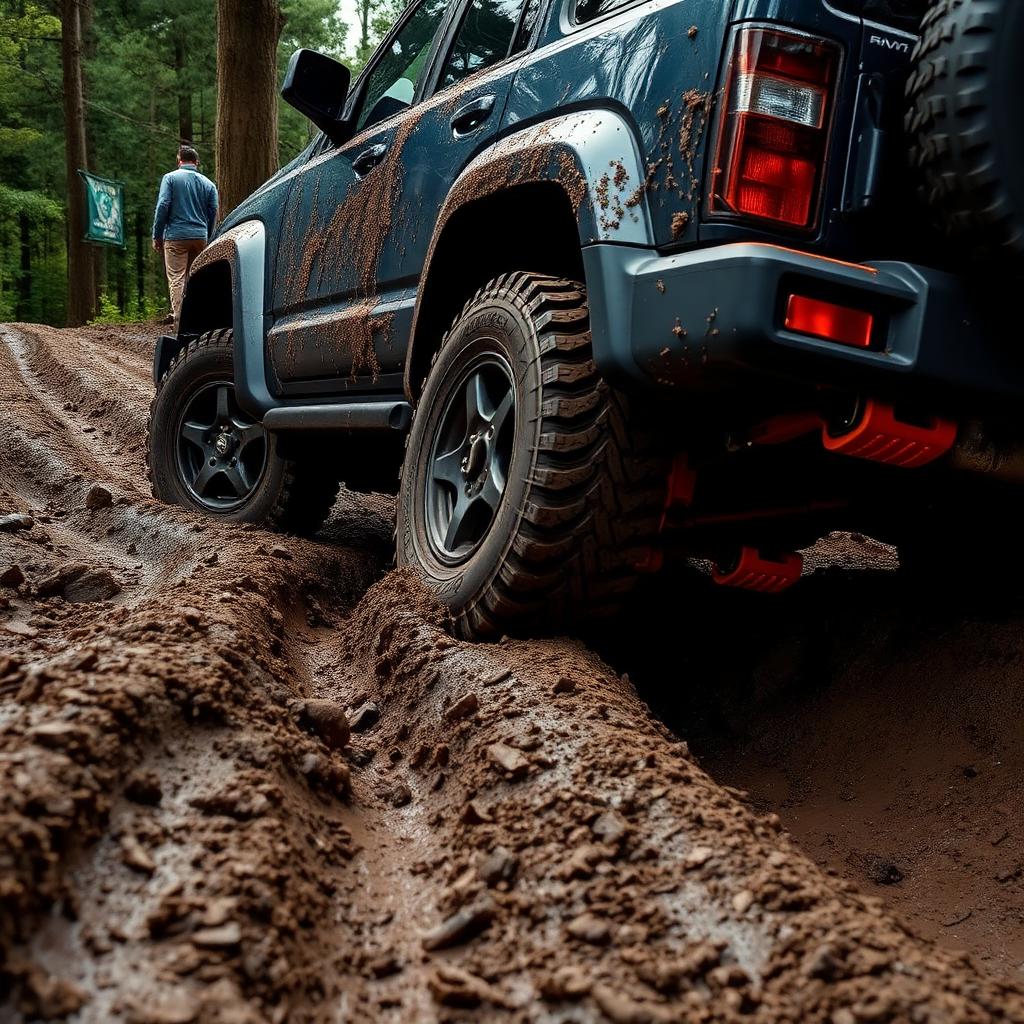
To recover a stuck 4x4 without a winch, use a kinetic snatch strap with a second vehicle for a rolling pull, wedge traction boards under spinning tires for self-recovery in sand and mud, or ratchet a manual come-along puller between a rigid anchor and the stuck frame. In an emergency, a static rope wrapped around a tire can turn the wheel itself into a makeshift winch drum.
None of these methods require any expensive electric hardware.
Method 1: Kinetic snatch strap (best with a buddy)
A kinetic snatch strap is a heavy-duty nylon strap that stretches 20 to 30 percent under load. The stretch stores kinetic energy, and when it snaps back it pulls the stuck vehicle out smoothly without a jarring shock to either frame.
How to run a snatch pull
- Connect the strap between rated frame recovery points on both vehicles using steel D-ring shackles or soft synthetic shackles. Never connect to a tow-ball hitch: they shear and become deadly projectiles.
- Leave a slight sag in the strap (2 to 3 feet) so it has room to accelerate before loading.
- Recovery vehicle drives forward smoothly, building momentum at maybe 5 to 10 mph.
- The strap stretches, snaps back, and yanks the stuck vehicle out.
- The stuck driver assists with light throttle in first gear.
Everyone else stands well clear, at least one and a half strap-lengths away.
Method 2: Traction boards (best solo option)
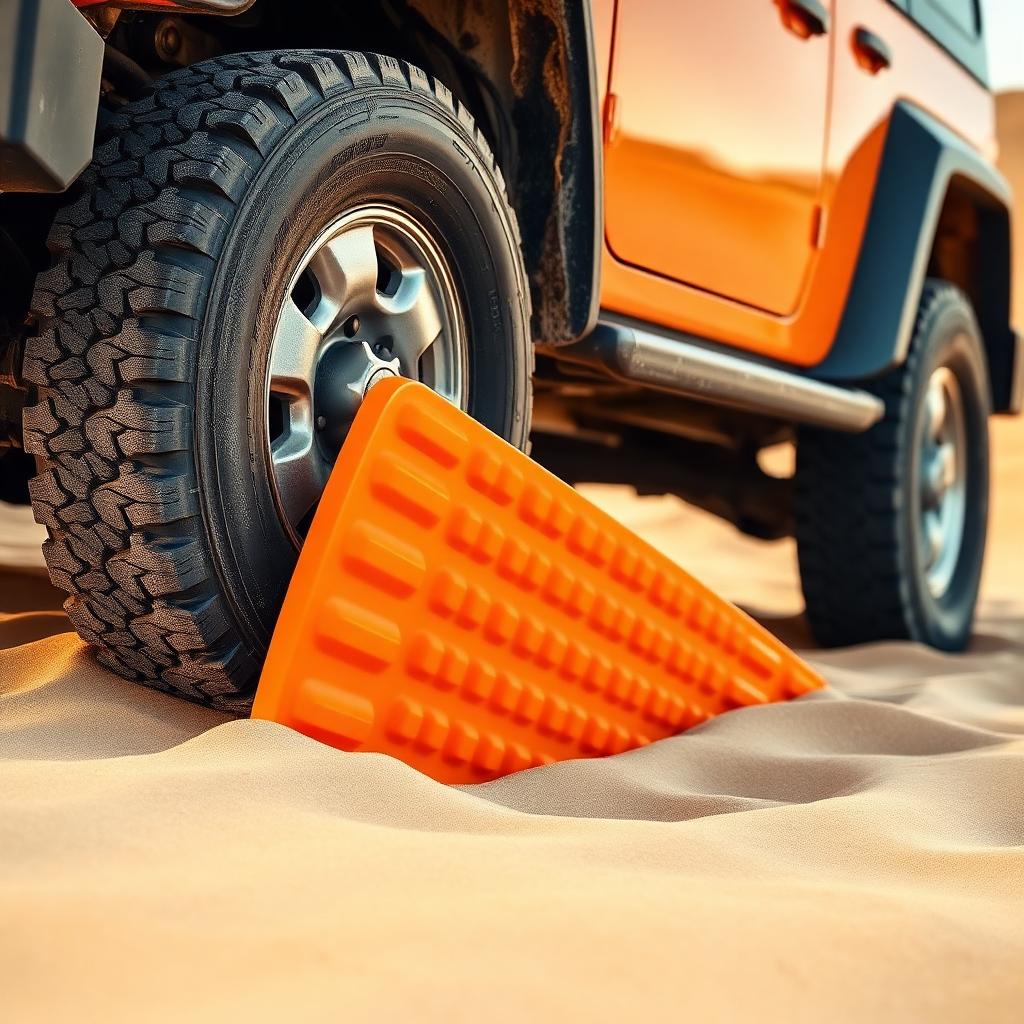
Injection-molded plastic recovery boards like MaxTrax or ActionTrax are the single best solo-recovery tool. They fit in soft sand, mud, and snow and require zero mechanical assistance.
How to use them
- Kill the engine. Clear excess mud, sand, or snow from directly in front of the stuck tires. Some boards include a shovel-nose tip for this.
- Wedge the angled cleated nose of each board firmly under the front edge of the stuck tires at roughly a 45-degree angle.
- Shift into 4-Low. Keep steering wheel straight.
- Apply very light, smooth throttle. The tire tread engages the cleats and walks up onto the board and out.
Do not spin the tires. Excessive wheel speed on plastic boards melts the cleats off and destroys them.
Method 3: Manual come-along puller
A 4-ton hand come-along ratchets a steel cable inch by inch using human muscle. It weighs about 15 pounds, costs $60, and lives in the trunk taking up almost no space.
How to run it
- Wrap a tree-saver strap around a solid anchor ahead of the vehicle.
- Connect the come-along between the tree strap and the vehicle's frame tow hook with rated shackles.
- Ratchet the lever back and forth. Each full stroke pulls the cable in by a few inches.
- The driver assists with very light throttle.
Slow, tiring, but it works when nothing else is available and requires no electrical power.
Method 4: Emergency tire-winch (last resort)
If I have zero recovery gear except a heavy static rope, I can turn the stuck tire itself into a winch drum.
- Locate a solid anchor tree directly in front of the stuck tire.
- Thread one end of the rope through an open spoke hole and tie it tightly to the wheel or axle.
- Wrap the middle of the rope two or three times around the tire tread face.
- Tie the free end to the anchor tree.
- Shift to 4-Low, apply light throttle. As the wheel rotates, it spools the rope around the tire and drags the vehicle forward.
Use extreme caution: the rope can snag brake lines, ABS sensors, or suspension parts. This is a last-ditch technique, not a routine recovery method.
Common questions about no-winch recovery
Can I use a regular tow strap instead of a snatch strap?
No. Static tow straps have no stretch. Pulling on one with momentum sends a violent shock through both frames and can rip mounts off. Only use kinetic-rated snatch straps for a rolling recovery.
How thick should my snatch strap be?
Match the strap to vehicle weight. A 3-inch, 20,000 lb minimum breaking strength strap suits most SUVs and half-ton trucks. Bigger rigs need 4-inch, 30,000 lb straps.
What if there is no tree to anchor to?
A buried spare tire, a Pull-Pal ground anchor, or a very heavy vehicle parked crosswise works. Absent any anchor, come-along and snatch strap methods are dead in the water and traction boards become the only option.
Should I carry all four options?
A basic recovery kit is snatch strap + shackles + traction boards + gloves. That covers 95 percent of situations for under $250. Add a come-along and a Hi-Lift jack for solo overlanding.
Bottom line
An electric winch is nice but not essential. A kinetic snatch strap handles buddy recoveries, traction boards handle solo bogs, a come-along handles anchored pulls without power, and in a true emergency the stuck wheel itself can spool a rope around a tree. Carry the basics, know the routines, and any 4x4 can self-rescue from most trail hazards without spending winch money.