Quick Answer
To plug an off-road tire on the trail, extract the puncture object, ream the hole with a steel T-handle tool, load a sticky rubber plug through the insertion needle, push it in until only about a half-inch loops out, pull the needle straight out, trim the excess, and reinflate to trail pressure. Only plug tread-face punctures. Sidewall punctures need a spare tire.
The plug kit I carry
Cheap plastic gas-station kits do not survive stiff LT tire rubber. I carry a heavy-duty steel kit (ARB Speedy Seal, Safety Seal, or equivalent) with these items:
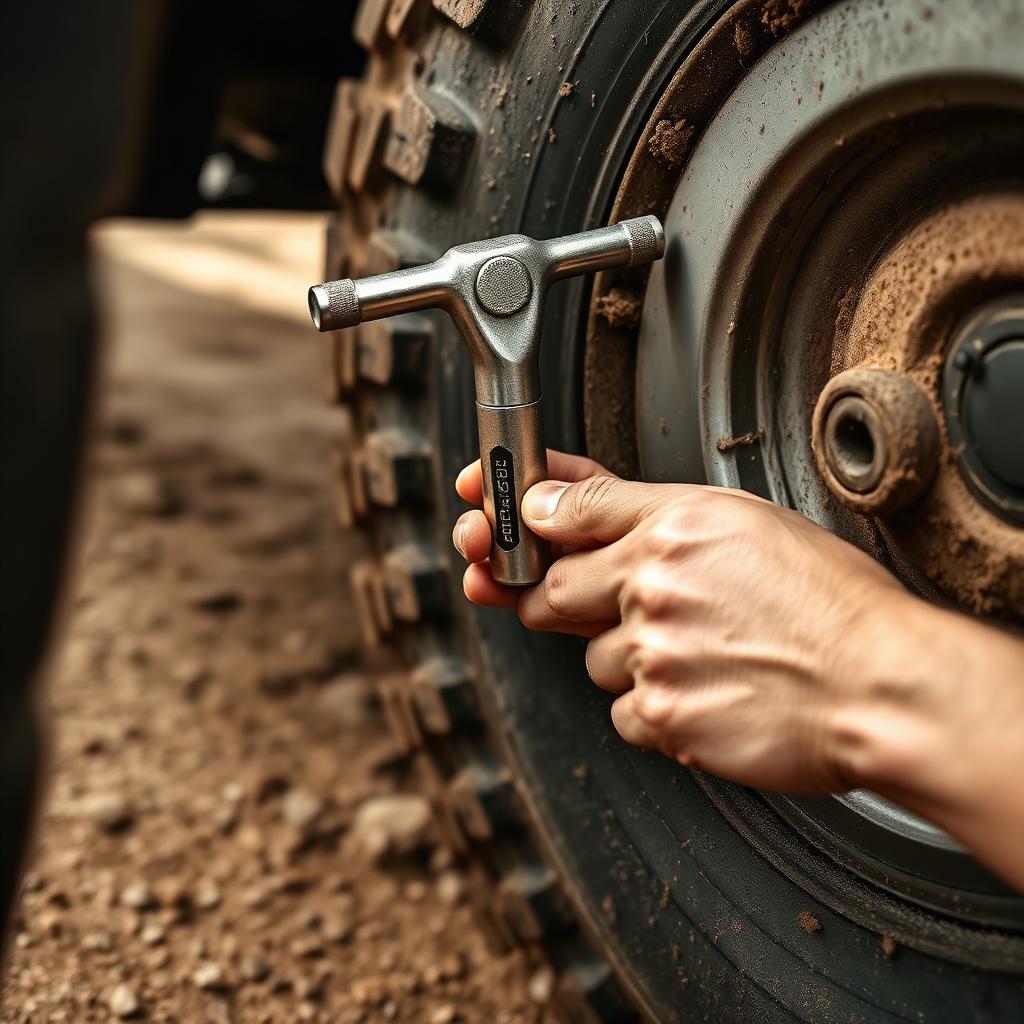
- Steel T-handle reamer
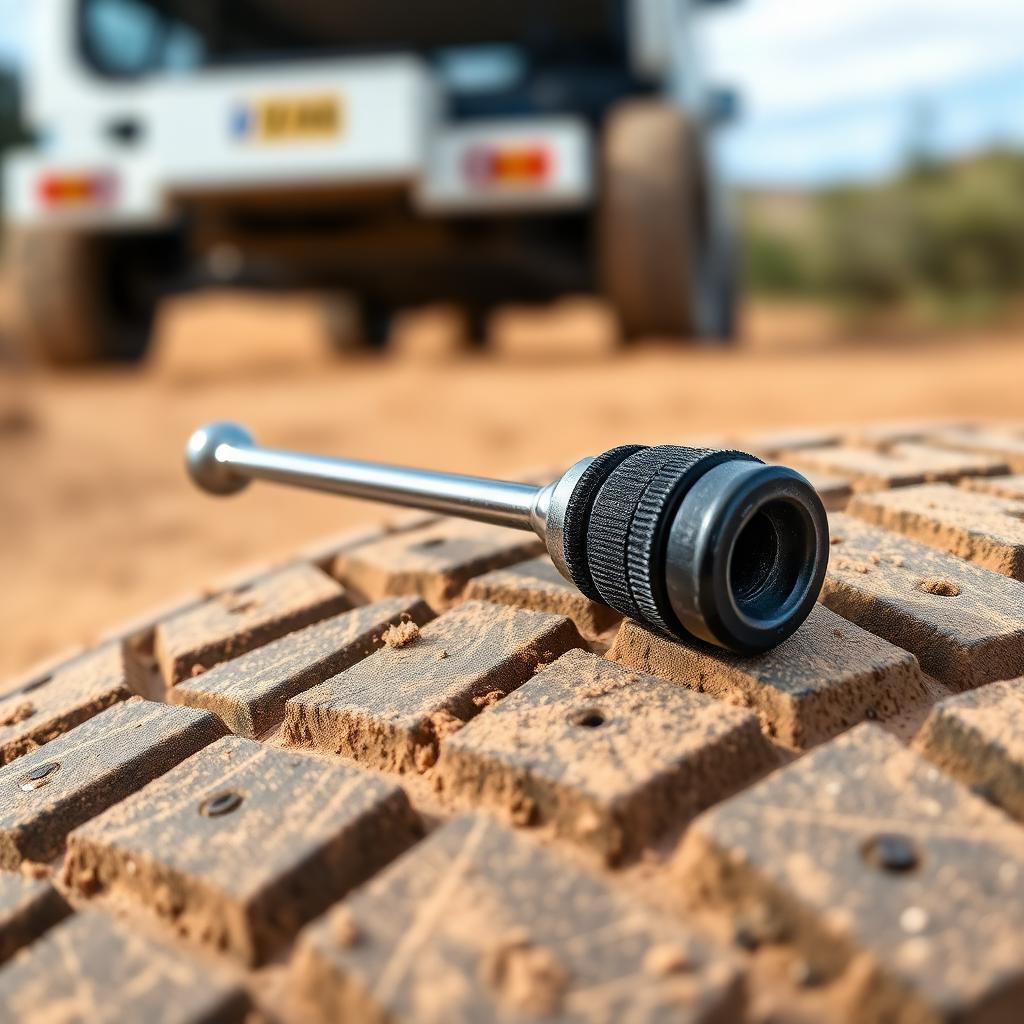
- Steel T-handle insertion needle
- A dozen thick vulcanizing plug strips (bacon strips)
- Rubber cement
- Small pliers and a knife
- A portable 12V compressor
Step 1: Decide if the tire is repairable
Only tread-face punctures are safe to plug for continued use. The Tire Industry Association's repair guidelines exclude the sidewall and shoulder because the flexing area cannot hold a plug reliably.
- Safe zone: flat tread surface between the two shoulder tread rows.
- Danger zone: sidewall and rounded shoulder. A plug here is a limp-home fix only, at walking speed to reach a spare.
Step 2: Extract the puncturing object
Grip the object with pliers and pull it straight out. Note the entry angle. If the object is buried and I cannot grip it (a broken screw head), I ream through it.
Step 3: Ream the hole
Insert the T-handle reamer at the same angle the object entered. Push and pull vigorously while twisting clockwise. The abrasive shaft cleans out jagged steel belts, opens the hole to a uniform diameter, and roughens the inner rubber so the vulcanizing cement bonds. I leave the reamer in the hole until the plug is ready, which keeps air from escaping and holds the passage open.
Step 4: Load and insert the plug
Thread a sticky rubber plug through the eyelet in the insertion needle, centered so equal lengths hang out each side. Coat the plug and needle tip generously with rubber cement (it acts as both a lubricant and a vulcanizer).
Pull the reamer out and immediately push the insertion needle straight into the hole. Push in until roughly two-thirds of the plug is inside the tire, with about a half-inch loop still visible outside.
Step 5: Pull the needle straight out
Do not twist. Pull the T-handle straight back out with a firm, quick motion. The needle's slotted tip releases the plug, leaving it folded and jammed inside the puncture.
Step 6: Trim and reinflate
Cut the exposed plug flush with the tread using a knife or wire cutters. Hook up the 12V compressor and reinflate to trail pressure (15 to 20 psi is fine). Spray or drip soapy water over the plug. Any expanding bubbles mean the seal is leaking, and I insert a second plug alongside the first before airing to full pressure.
How long does a plug last?
A properly installed vulcanizing plug in the tread face is not marketed as a permanent repair, but real-world data shows most last the remaining life of the tire without leaking. Tire Industry Association guidelines call for a plug-patch (installed from inside the dismounted tire) as the only certified permanent fix, so I take the tire to a shop within a few weeks to convert the trail plug to a full patch-plug repair.
Common questions about plugging an off-road tire
Can I plug a run-flat tire?
No. Manufacturers explicitly forbid it. Run-flats have reinforced sidewalls that mask internal damage from driving deflated.
What if the puncture is bigger than a nail?
A single plug seals holes up to about 1/4 inch. For a 3/8 inch gash I insert two plugs together, twisted into a rope. Anything wider than that is a spare-tire job.
Do I need to remove the wheel?
No. The whole point of a T-handle plug kit is repair without dismounting. Only a permanent patch-plug requires the tire to come off the wheel.
Will a plug hold at highway speed?
Yes, in the tread face. Countless overlanders finish long tarmac drives on trail-installed plugs. I still monitor pressure daily until I get the patch-plug converted at a shop.
What if I cannot see the puncture?
Mix a spray bottle of soapy water and pass it slowly over the tread. A puncture reveals itself as a growing bubble stream. On a large tire I sometimes rotate the wheel slowly while spraying so gravity does not fool the test.
How many plug kits should I carry?
One kit with at least 12 plugs. On a group trip that is enough to patch several tires or repair the same tire multiple times. I also carry a spare valve core and a valve-core tool since a torn core dumps a whole tire fast.
Bottom line
Plugging an off-road tire on the trail is a five-minute repair with a steel T-handle kit and a compressor. Ream the hole clean, load a sticky plug, push it two-thirds in, pull the needle straight out, trim, reinflate, and confirm the seal with soapy water. Stick to tread-face punctures and follow up with a shop-installed patch-plug when I get home.