Quick Answer
To overseed a lawn in September, mow it short, rake out thatch, loosen the soil by core aerating or raking, spread seed at the overseeding rate on the bag, and keep the surface moist until the new grass is established.
Late August to mid September is the sweet spot for cool season grasses like tall fescue, Kentucky bluegrass and perennial ryegrass across most of the northern half of the US.
Warm season lawns such as Bermuda, zoysia and St. Augustine are different and are best seeded or repaired in late spring.
Why Early Fall Is the Best Time to Overseed
September combines warm soil with cooler air. Warm soil speeds germination, while cooler days mean less stress on young grass and fewer weeds competing with it.
Seeding early also gives the new grass several weeks to root before the first hard frost. If you wait until late October, many seedlings will not be strong enough to survive winter.
Spring seeding is possible, but young grass then has to face summer heat and the peak season for crabgrass, which is why most lawn experts favor fall.
What You Will Need
- Grass seed suited to your region and light conditions
- A lawn mower
- A dethatching rake or power rake
- A core aerator (rentable) or a sturdy garden rake for small areas
- A broadcast or drop spreader
- A starter fertilizer (optional, follow local rules)
- A hose and sprinkler
Step 1: Choose the Right Seed
Match the seed to your existing lawn and your conditions. Tall fescue handles heat, drought and some shade. Kentucky bluegrass spreads and repairs itself but needs sun and water. Perennial ryegrass germinates fastest and is often mixed in to fill gaps quickly.
Look for certified seed with a high germination rate and a low weed seed percentage on the label. Cheap seed often contains annual ryegrass that dies off after one season.
Step 2: Mow Short and Remove Clippings
Mow lower than usual, around two inches, and bag the clippings. This lets seed reach the soil and lets light reach the seedlings.
Do not scalp the lawn down to bare dirt. The existing grass still needs enough leaf to stay healthy.
Step 3: Dethatch and Loosen the Soil
Seed needs to touch soil to germinate. A layer of thatch, the mat of dead stems on the surface, stops it getting there.
Rake out thatch firmly, then core aerate. Aerating pulls small plugs of soil, relieves compaction and creates pockets where seed settles and roots easily. For small patches, roughing the surface with a garden rake does the job.
Step 4: Spread the Seed
Use the overseeding rate printed on the bag, which is usually lower than the rate for a brand new lawn. More seed is not better, because crowded seedlings compete and grow weak.
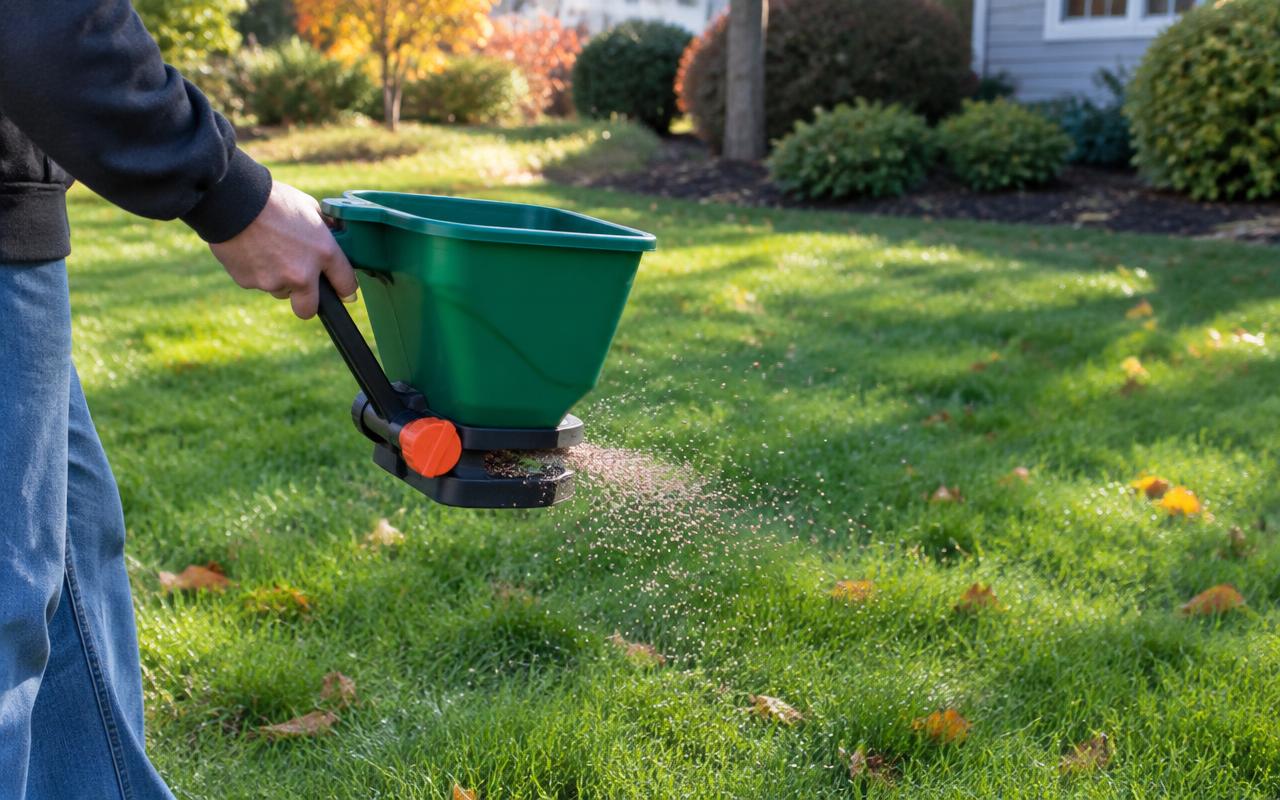
Spread half the seed walking in one direction and the other half at right angles. This gives even coverage without stripes. Lightly rake afterward so the seed sits in the soil, not on top of it.
A thin layer of compost, around a quarter inch, over bare patches helps hold moisture.
Step 5: Feed Lightly
A starter fertilizer helps young roots develop. Many contain phosphorus, which some states and cities restrict, so check local rules or get a soil test first.
Avoid weed and feed products and crabgrass preventers when overseeding. Most pre-emergent herbicides stop grass seed sprouting too.
Step 6: Water Little and Often
This is where most overseeding fails. The top inch of soil must stay moist until the seed germinates.
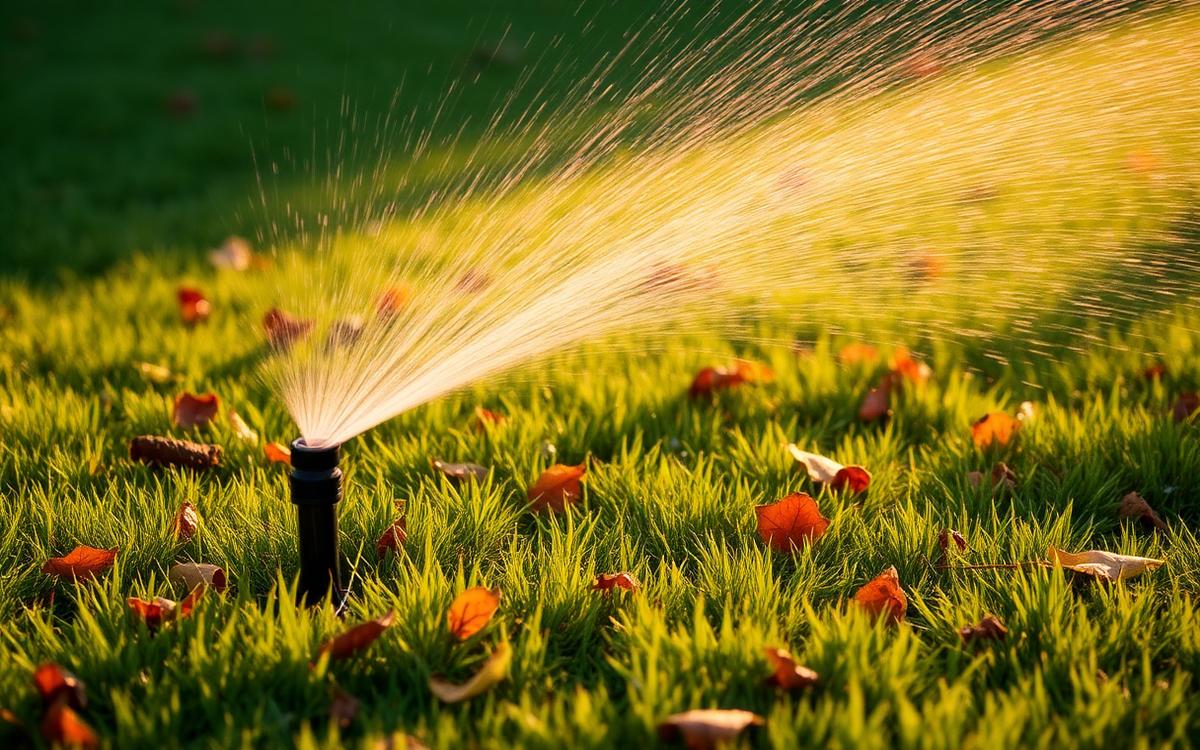
- Water lightly once or twice a day, enough to dampen the surface without puddles.
- In hot, windy weather you may need a third short watering.
- Once seedlings reach about an inch tall, switch to deeper watering every few days to push roots down.
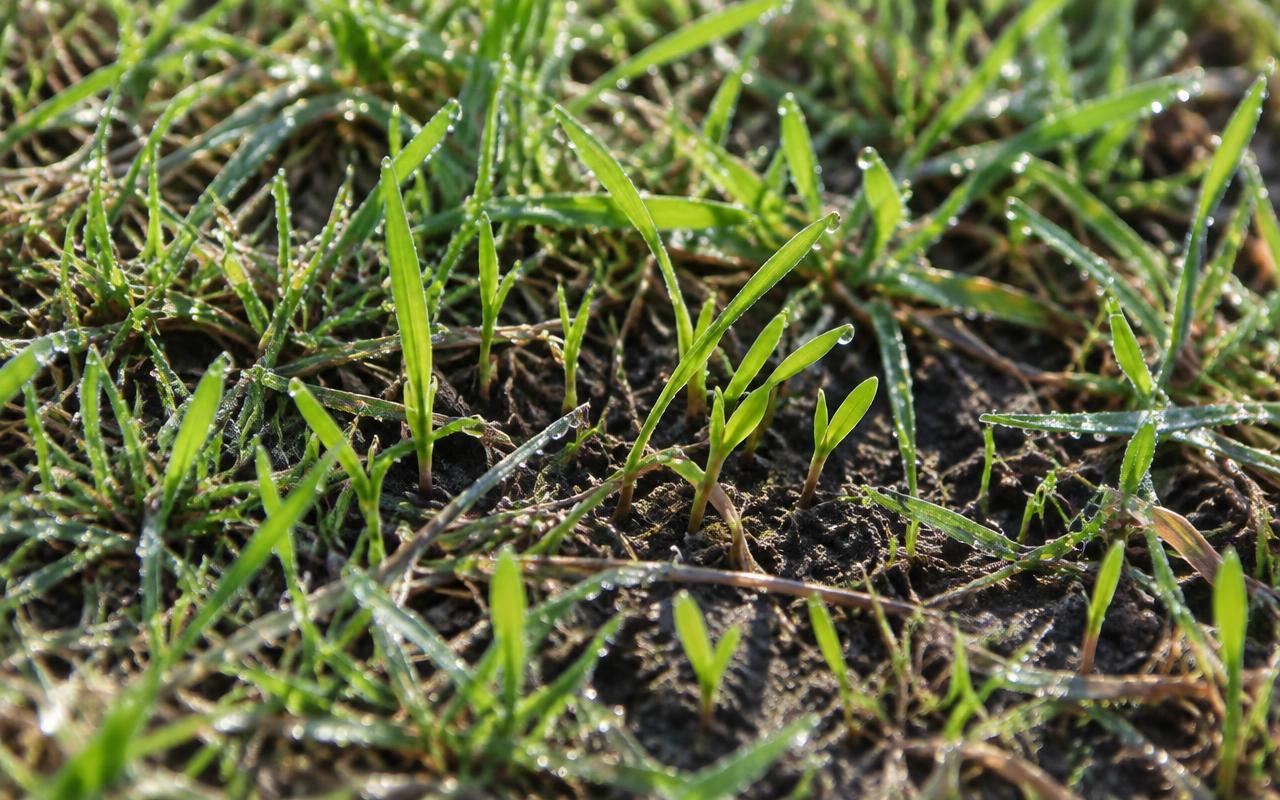
Germination time varies. Perennial ryegrass often appears in five to ten days, tall fescue in about one to two weeks, and Kentucky bluegrass can take two to four weeks. Do not give up on bluegrass too early.
Step 7: Mow and Care for New Grass
Hold off mowing until the new grass reaches around three to four inches, then cut no more than a third of the blade at once. Use a sharp blade so you cut rather than tear the seedlings.
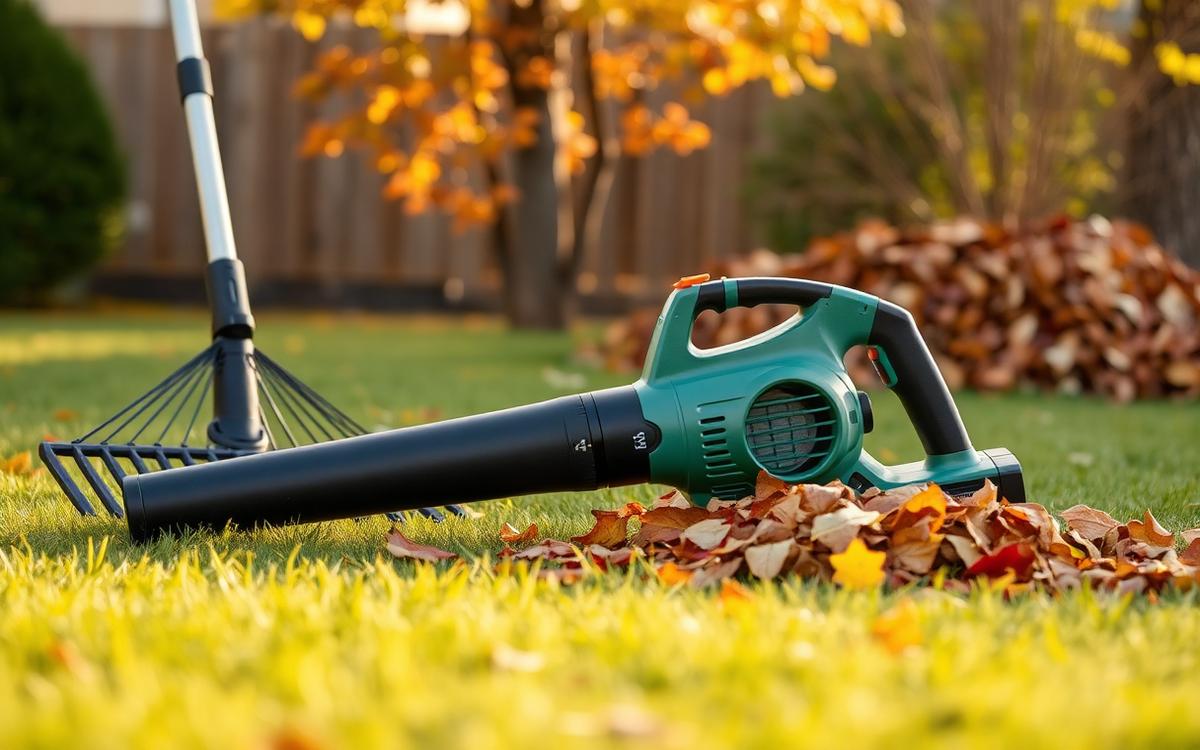
Keep foot traffic, pets and leaf piles off the area for a few weeks. Rake fallen leaves gently or use a mulching mower so they do not smother seedlings.
A fall fertilizer application around six to eight weeks later helps the lawn store energy for winter.
Common Overseeding Mistakes
- Seeding too late in fall, leaving seedlings too weak for winter.
- Throwing seed on top of thatch without loosening the soil.
- Letting the surface dry out during germination.
- Applying crabgrass preventer at the same time.
- Choosing the wrong grass type for shade or sun.
- Mowing new grass before it has rooted.
How Much Does Overseeding Cost?
Doing it yourself is mostly the price of seed plus an aerator rental for a day. Good quality seed for an average suburban lawn is usually the biggest expense, so measure your lawn first and buy only what the bag rate calls for.
Splitting an aerator rental with a neighbor is an easy way to cut the cost, and many neighbors are happy to share since fall is when everyone wants one.
Frequently Asked Questions
Can I just throw grass seed on my lawn?
Some will sprout, but most will dry out or be eaten by birds. Seed needs soil contact, so loosening the surface first gives far better results.
Is it too late to overseed in late September?
In northern states, try to finish by mid September. Further south in the cool season zone, late September or early October can still work.
Should I aerate before overseeding?
Yes, if the soil is compacted. It is one of the most effective ways to improve seed contact.
How long before I can walk on overseeded grass?
Keep traffic light for about four to six weeks, until you have mowed the new grass two or three times.
Bottom Line
Overseed cool season lawns in late August to mid September. Mow short, remove thatch, aerate, spread the right seed at the overseeding rate, skip crabgrass preventers, and keep the soil moist until the new grass fills in.