Quick Answer
To cross water safely in a 4x4, I never enter deeper than my rated wading depth (roughly 19 to 20 inches on a stock crossover, 30 inches on a stock Jeep Wrangler), scout the bottom on foot first, engage 4-Low, then drive in at 3 to 5 mph to push a clean bow wave and hold that steady speed until I exit.
The single biggest risk is hydrolock: water in the intake instantly bends rods and cracks the block.
Know your vehicle's true wading depth
Before my tires touch water, I need to know how deep is too deep. Every 4x4 has a factory rated wading depth published in the owner's manual or spec sheet.
- Stock crossover or car-based SUV: 18 to 20 inches, roughly the axle centerline or the bottom of the doors.
- Stock Jeep Wrangler: 30 inches, roughly the top of the hood line and just below the factory airbox intake.
- Land Rover Defender (2020+): 35.4 inches, thanks to a raised intake and sealed electronics.
- Snorkel-equipped rig: The intake moves to roof height, but low electronics, differential breathers, and interior seals still limit real-world depth.
The hidden killer: differential breather tubes
My front axle, rear axle, transmission, and transfer case all vent through small rubber breather hoses. Plunging hot axles into cold water creates a vacuum that pulls water past the axle seals and turns gear oil into a milkshake. If I know I will cross regularly, I extend the breather tubes up into the engine bay.
Pre-crossing site assessment
Never drive blind into moving water. I stop above the crossing and check three things:
- Walk it. If the crossing is unfamiliar, I take a stick or wading boots and probe the bottom for hidden boulders, deep holes, or soft mud shelves.
- Read the current. If moving water reaches my axle centerline, the current can float and sweep the vehicle. I cross at a slight downstream angle, never straight against a strong current.
- Plan an exit. I identify a solid ramp on the far bank before I commit. A slick, undercut exit will trap me mid-stream even if the entry looked easy.
Driving technique: the bow wave principle
Once I commit, the execution is precise.
- Shift into 4-Low. Manual transmissions go in second gear, automatics go to manual mode in first or second.
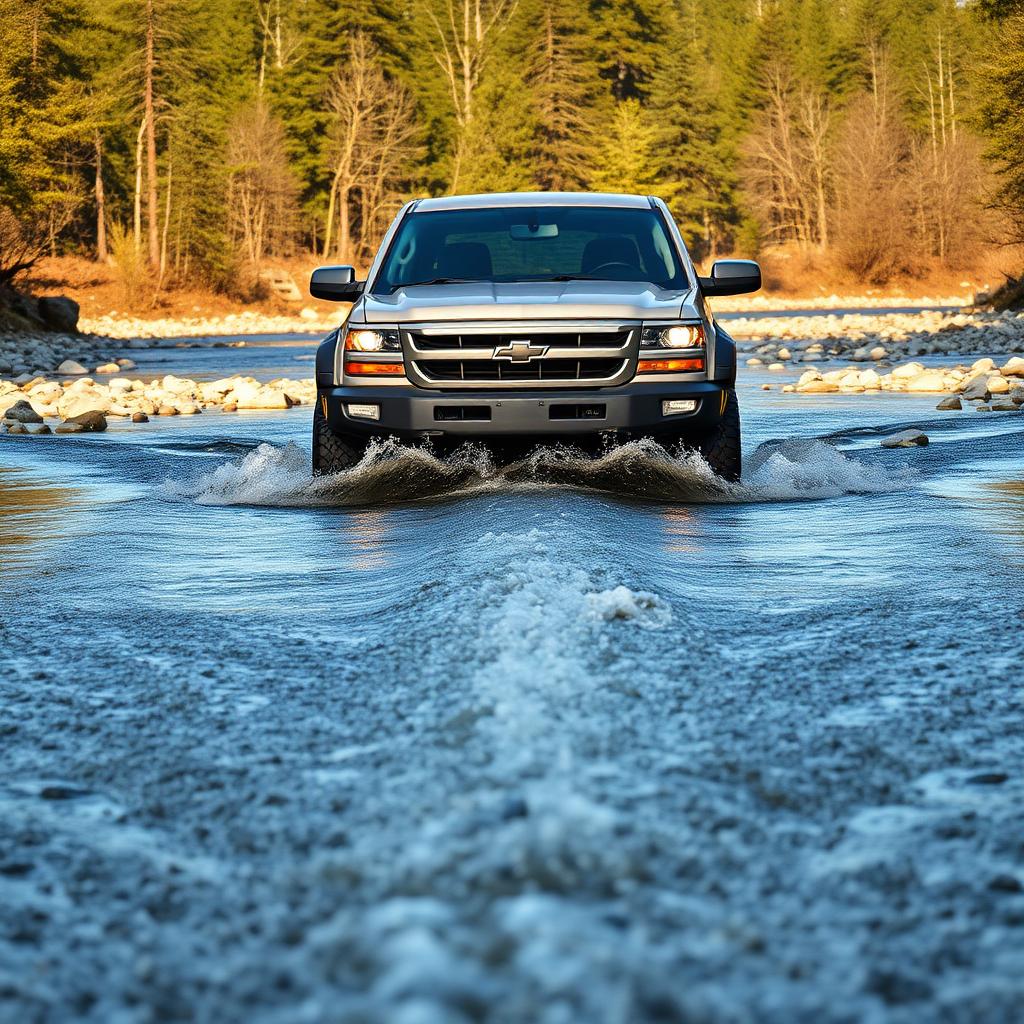
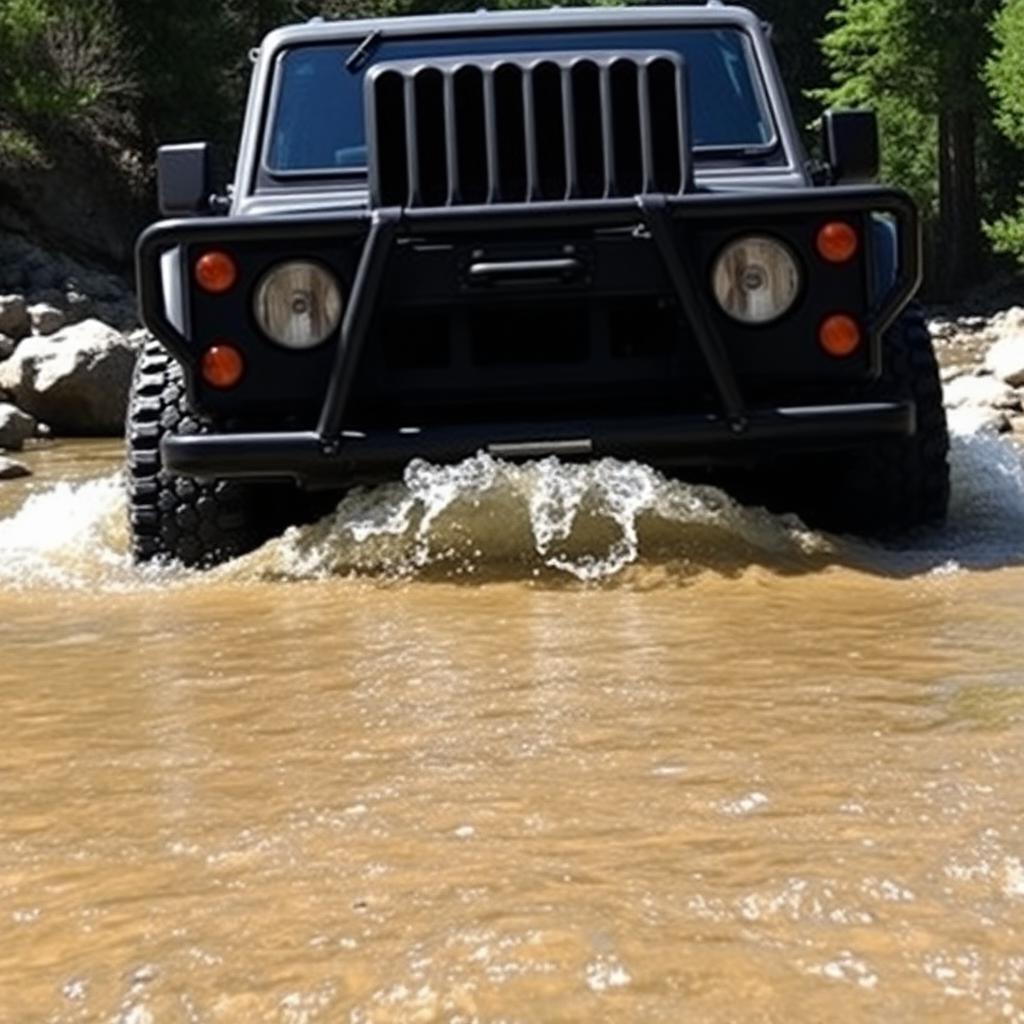
- Enter slowly. I roll in at a walking pace, 3 to 5 mph. Charging in throws a splash canopy straight into the intake.
- Hold the wave. Once submerged, I add just enough throttle to keep a steady bow wave curling ahead of the bumper. Behind that wave sits a low trough where the engine bay is drier than the water level around the tires.
- Do not stop. If I lift off, the bow wave collapses backward across the hood and dumps water on the airbox.
Post-crossing inspection
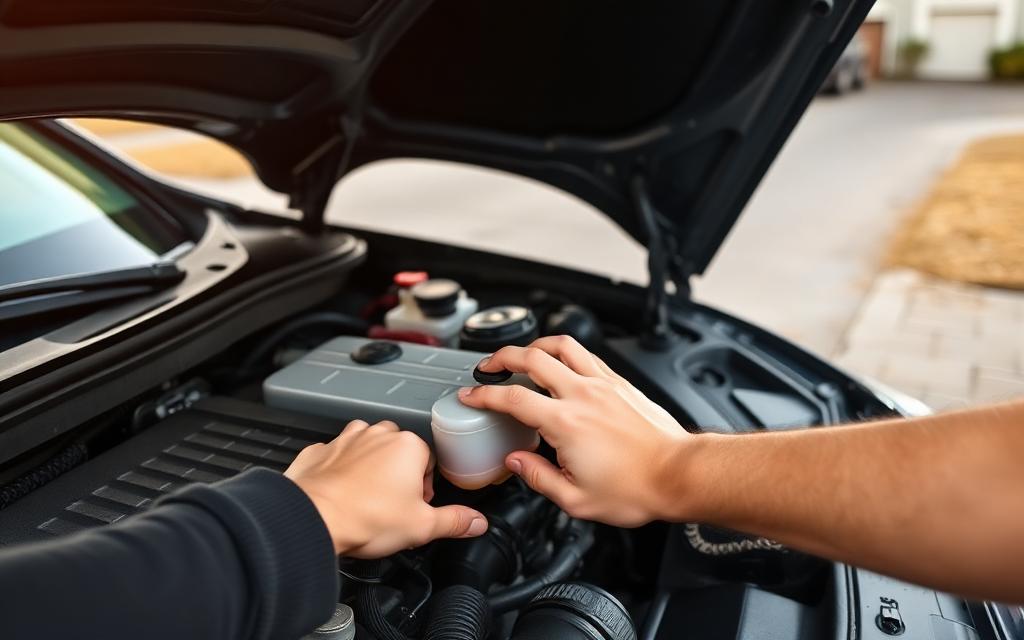
Once I hit dry ground I park on a slight incline and gently pump the brakes at low speed to dry them out. I pop the hood, check that the air filter is dry, and look for water in the airbox drain. If the water was above my axles for more than a few seconds, I inspect diff and transmission fluids at home. Milky fluid means water contamination and an urgent oil change before serious driving.
When to turn around
| Warning sign | My response |
|---|---|
| Water above intake level | Turn around, no exceptions |
| Fast current lifting stones | Wait or find a shallower crossing |
| Cannot see the bottom | Wade it before driving |
| Soft muddy exit bank | Rig recovery gear before entering |
Frequently asked questions about water crossings
What is hydrolock and how do I avoid it?
Hydrolock happens when water enters the engine's intake and fills a cylinder. Because water cannot compress, the piston stops instantly and either bends the connecting rod or cracks the block. The only way to prevent it is to never let the water level reach the airbox intake, which is why knowing the exact intake height on your specific vehicle matters more than any published wading number.
Should I remove the fan belt before crossing?
Old-school advice says yes to stop the mechanical fan from throwing water into the engine. Almost all modern 4x4s use electric fans that are safe in shallow crossings and turn off automatically. If you drive a vintage rig with a viscous mechanical fan and you know you will be doing deep crossings, disconnecting the fan is still a valid pre-crossing step.
What if I stall in the middle of the water?
Do not restart the engine. If water reached the intake, cranking it will hydrolock the engine and destroy it. Get everyone out safely, tow the vehicle straight out onto dry ground, remove the spark plugs, and turn the engine over by hand to clear any water from the cylinders before attempting a real start.
Bottom line
Safe water crossings are calculated, not brave. Know your wading depth, scout the bottom, engage 4-Low, hold a steady bow wave at 3 to 5 mph, and inspect fluids afterward. Follow that sequence and a river becomes a challenging but manageable obstacle instead of a totaled engine.