Quick Answer
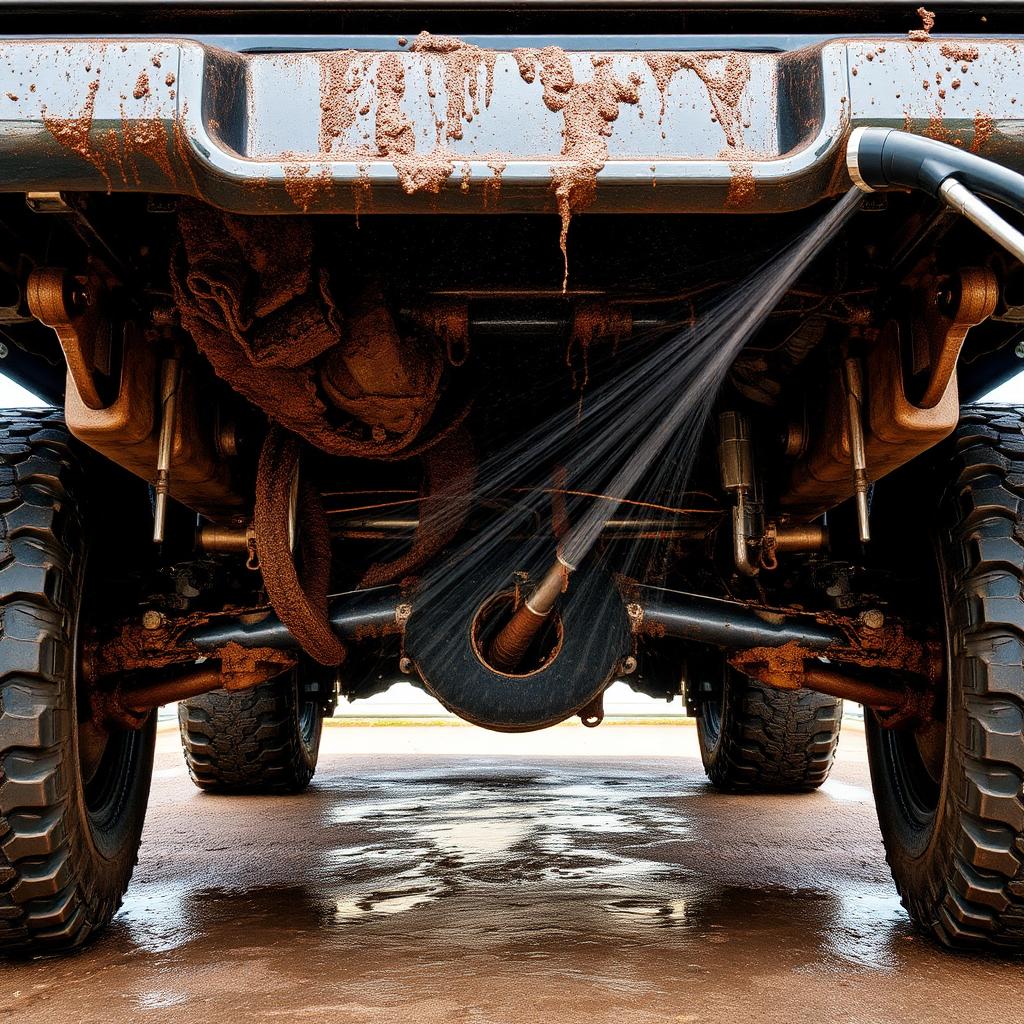
Let the drivetrain cool for 20 to 30 minutes, presoak with a lawn sprinkler for another 20 minutes to soften hardened mud, then pressure wash 12 to 18 inches away from rotating seals and CV boots. Finish by flushing water through any boxed frame rail access holes until it runs clear.
Caked mud holds moisture against steel and rusts a frame from the inside out. Leaving it on is not a badge of honor.
Why "just leave it" is expensive
Trail mud is abrasive, moisture-retaining, and often carries road salts or organic acids. Once it dries against a frame rail or a control arm, it traps water in direct contact with bare steel. That accelerates rust oxidation faster than any road salt spray does.
The three cleaning mistakes I see most
- Blasting rotating seals (CV boots, axle seals) with high pressure, forcing water into bearings.
- Leaving mud packed inside hollow boxed frame rails, where it rusts from the inside.
- Spraying cold water onto a hot differential or brake rotor and warping the metal.
My step-by-step routine
Step 1: cool the drivetrain
Never drive off a trail straight into a wash bay. Differentials, brake rotors, and exhaust components are all above 200°F after a hard crawl. Let the truck sit 20 to 30 minutes before any cold water touches metal.
Step 2: presoak with a sprinkler
Slide an oscillating lawn sprinkler under the belly of the parked vehicle and run it on medium for 20 minutes. That low-pressure water mist softens hardened mud back into slurry without any of the seal-damage risk of a pressure wand.
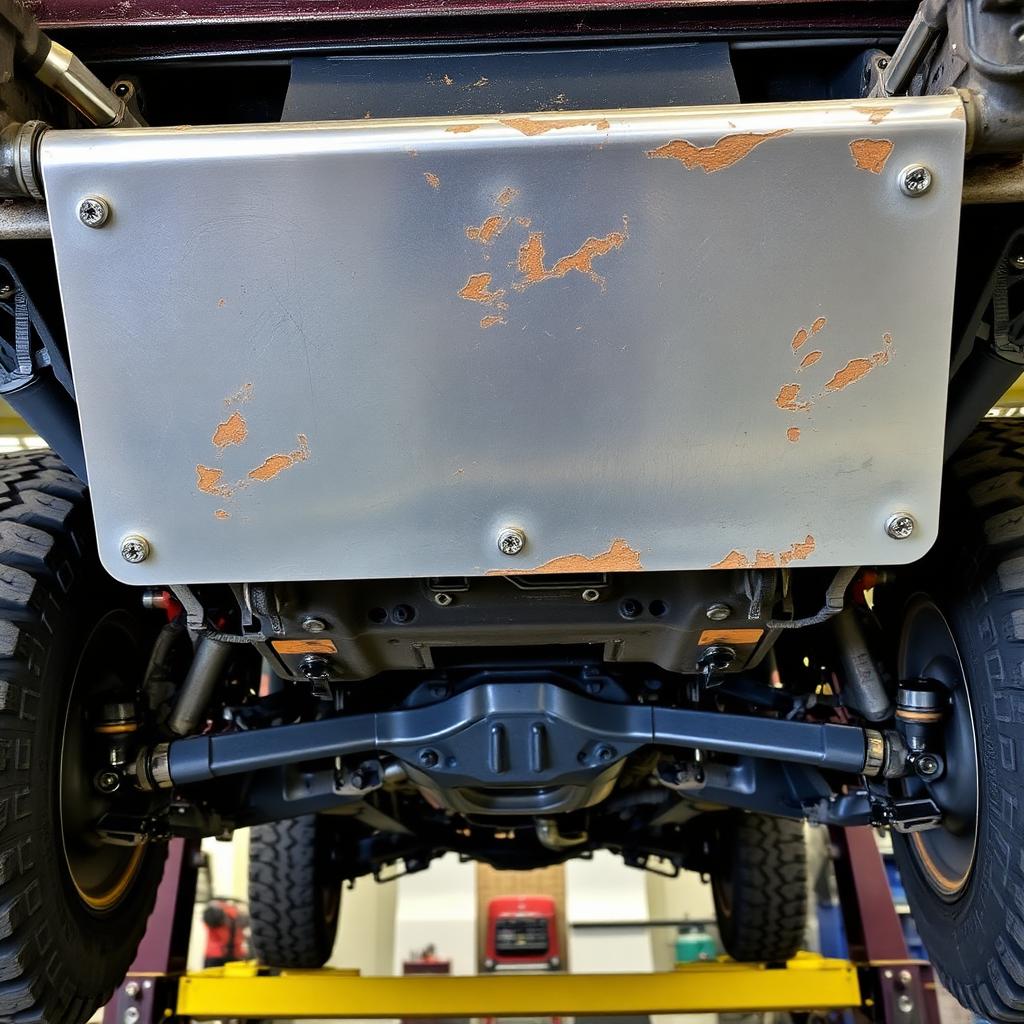
Step 3: targeted pressure washing
Keep the wand 12 to 18 inches away from any surface. Use two zones:
- Direct pressure OK: frame rails, skid plates, crossmembers, raw axle tubes.
- Low pressure only: CV boots, axle seals, steering rack boots, alternator, ABS sensors, wire looms.
Step 4: flush boxed frame rails
Modern trucks use hollow boxed frame rails. Mud gets in through drain holes and never comes out on its own. Insert the hose or wand nozzle into those access holes and flush until the water running out of the bottom drain slits is clear.
Frequently asked questions
Is an automatic drive-through car wash enough?
For a light dust film, yes. For real trail mud, no. Drive-through undercarriage sprayers do not reach into wheel wells, frame rails, or the top of skid plates.
Should I re-lubricate anything after washing?
Yes. After every deep wash, hit grease zerks (if your rig has them) and spray a light corrosion inhibitor like Fluid Film or ACF-50 onto exposed bolts and bare frame areas.
Can I use a degreaser?
A citrus-based degreaser is fine on skid plates and frame rails. Avoid harsh solvents near rubber bushings, seals, and painted surfaces.
Bottom line
Cool the drivetrain, presoak with a sprinkler, wash smart around seals, and flush the frame rails. Do that after every muddy run and you kill the rust before it starts.
Why cleaning mud from your 4x4 matters
Every serious off-roader eventually asks how to clean mud from a 4x4 properly. Skipping the wash is not just cosmetic laziness. Dried trail mud holds moisture against bare steel for weeks, and that is the fastest known route to a rotted frame rail. Even galvanized frames corrode where the coating has been scraped by rock strikes.
Tools that make the job faster
My preferred setup is a 1,900 to 2,700 psi electric pressure washer with a 25 degree fan nozzle and a 40 degree soap nozzle. That combination is aggressive enough to strip caked dirt from skid plates but gentle enough (at the right distance) to spare seals. A telescoping wand extension turns the job from crawling on gravel into standing upright.
Undercarriage cleaning frequency
After any real trail run I do a full undercarriage wash within 24 hours. In winter, or after a road-salt commute, a weekly quick rinse of the frame rails and suspension is the difference between a truck that lasts 20 years and one that dies of frame rot at 12.
Post-wash rust prevention
After every deep wash I spray exposed frame areas, bare bolts, and skid plate hardware with a corrosion inhibitor. Fluid Film is the traditional pick because it creeps into seams and stays put. Woolwax and Surface Shield are similar. A single $30 can lasts most of a year on a mid-size truck.
What not to do
Do not use a household degreaser or dish soap on suspension bushings, wheel bearings, or CV boots. Do not spray high pressure at the underside of the transmission bell housing (water intrusion into the starter is a real risk). Do not drive off the wash without inspecting for damage you may have exposed by removing the mud layer.