Quick Answer
Balance off-road performance and on-road comfort on three axis: run a hybrid rugged-terrain tire, install digressive-valved shocks (like Bilstein 5100), and keep armor lightweight where you can (aluminum belly skids, steel only where impact is direct).
Do those three things and your daily driver still handles highway lanes while surviving real trails on the weekend.
Why the two goals fight each other
Elite off-road setups want long-travel soft suspension, low-pressure paddle tires, and heavy armor. Elite highway setups want stiff sway bars, high-pressure quiet tires, and low weight. Build too far in either direction and you punish yourself for half your driving.
Axis 1: hybrid rugged-terrain tires
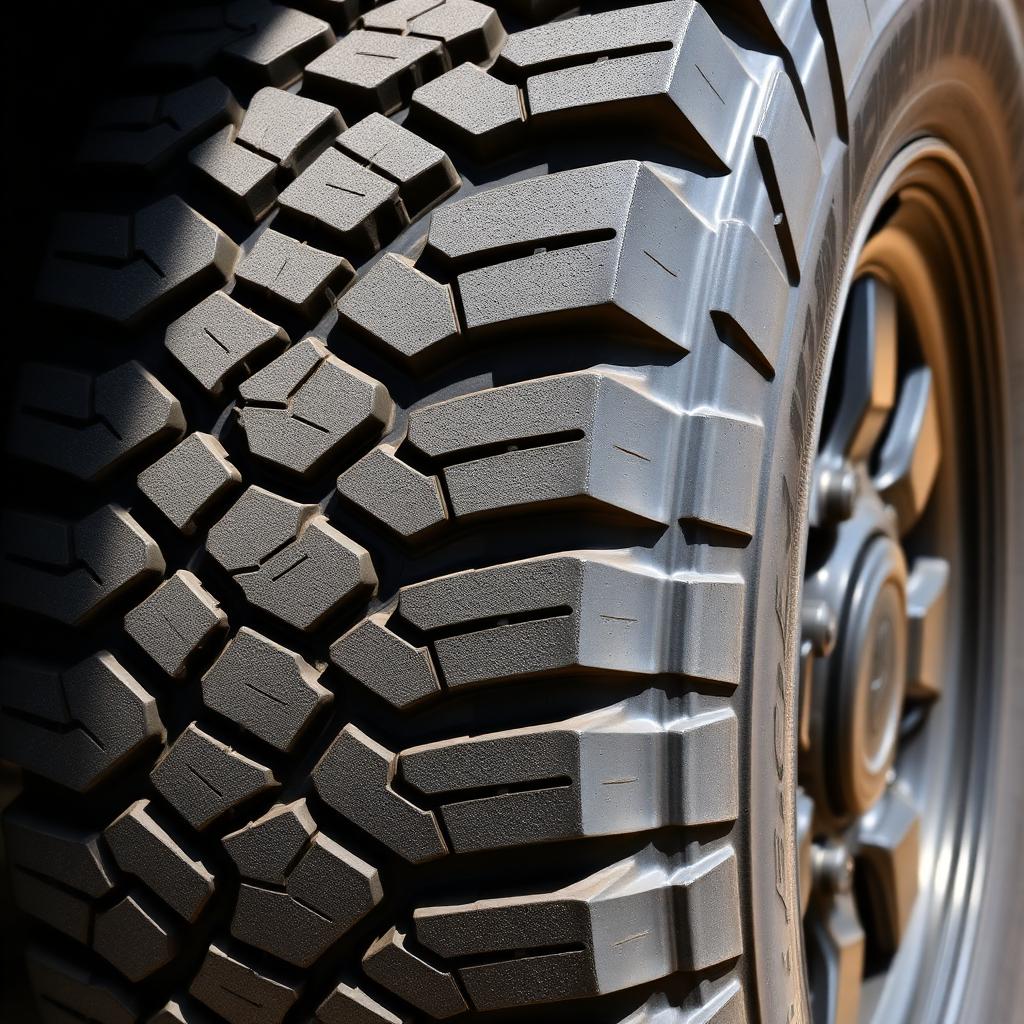
A pure M/T is loud and wears fast. A pure A/T looks "not serious" to some builders. Hybrid rugged-terrain tires (Nitto Ridge Grappler, Toyo Open Country R/T, Falken Wildpeak R/T) split the difference: tightly packed center blocks for quiet highway tracking, aggressive mud-terrain style shoulder lugs for trail bite. You get roughly 90% of an M/T's trail grip with roughly 90% of an A/T's road manners.
Axis 2: digressive shock valving
Shock valving matters more than lift height on a daily driver.
Digressive (Bilstein 5100, Fox 2.0 IFP)
Firm at slow speeds, soft at high speeds. On the highway they feel almost sports-car controlled: no boat-like body roll, no nose-dive under braking. On trail impacts the valves cycle open and absorb sharp hits. This is the correct choice for a truck that lives on pavement 90% of the time.
Progressive (King, Fox 2.5 Bypass)
Soft at slow speeds, firm at high speeds. Amazing for desert racing and rock crawling flex. Slightly floaty on freeway lane changes and much more expensive.
Axis 3: strategic armor weight
Every pound of steel you bolt on hurts fuel economy and stiffens the suspension. Pick materials by role:
| Armor area | Best material | Why |
|---|---|---|
| Belly skid plates | 1/4 in aluminum | 50% lighter, still stops rock hits |
| Rock sliders | DOM steel | Take direct pivot loads, aluminum can shear |
| Bumpers | Aluminum or hybrid | Nose weight sags steering geometry |
Frequently asked questions
Do I need a rear anti-sway bar disconnect?
Only if you crawl real rocks. On a daily driver the sway bar is what keeps the rig planted through highway curves. A front electronic disconnect (like the Rubicon has) is the ideal compromise.
Will 33 inch hybrid tires kill my mpg?
Expect a 1 to 3 mpg drop moving from stock to 33 inch R/Ts. Add a re-gear if you go bigger than that or highway driving gets sluggish.
What tire pressure should I run on a hybrid tire daily?
Follow the door placard for load-adjusted psi. Most half-ton trucks land around 35 psi front and rear for daily driving with 33s.
Bottom line
Tires, shocks, weight. Pick a hybrid tire, install digressive shocks, and mix aluminum skids with steel sliders. That combination gives you a rig that is quiet and controlled Monday through Friday and capable on Saturday.
The order I would build a dual-purpose 4x4 in
If I were starting from a stock daily-driver 4x4 today, my build order would be: tires first, shocks second, sliders third, skid plates fourth, and everything else after. Tires and shocks alone are 80% of the on-road versus off-road balance. Every other mod is fine-tuning.
What a properly balanced rig feels like
A well-balanced dual-purpose 4x4 does not feel like a truck at all on the highway. It tracks straight, brakes flat, corners predictably, and rides quieter than stock because the aftermarket shocks control secondary body motions better than the OEM parts they replaced. Then on Saturday morning at the trailhead you air down to 20 psi and the rig transforms into a genuine trail rig.
What NOT to add to a dual-purpose rig
Roof racks loaded with heavy gear (rooftop tents on a daily driver rarely make sense). Steel front bumpers with winches on a truck that never uses the winch. Snorkels on a truck that never crosses water above 6 inches. Every heavy accessory kills fuel economy every mile of your commute for a capability you use twice a year.
The maintenance cost of dual-purpose builds
Expect to service a dual-purpose rig at severe-duty intervals (see our related severe-duty maintenance article) even if you drive it mostly on pavement. The combination of larger tires, stiffer suspension, and heavier steering loads accelerates wear on wheel bearings, ball joints, and steering linkages compared to a stock truck.
Real-world commute test after each upgrade
After every suspension or tire upgrade I do a 30 mile mixed-driving test: 10 miles of freeway, 10 miles of city stop-and-go, and 10 miles of winding backroad. If any of the three feels worse than stock, I know the mod is out of balance and I revisit the setup. That test loop keeps a dual-purpose build honest and prevents scope creep from silently ruining the daily driving experience.