Quick Answer
To air down off-road safely, use a rapid deflator with a built-in gauge or a set of preset brass caps like Staun. Drop pressures to 15 to 18 psi for most trails, keep speeds under 20 mph while aired down, avoid hard cornering, and always air back up with a 12V compressor before returning to pavement.
Poking a screwdriver into the valve stem works but is slow, imprecise, and hard on the valve core.
Tools I use to air down
1. Automatic preset deflators (Staun style)
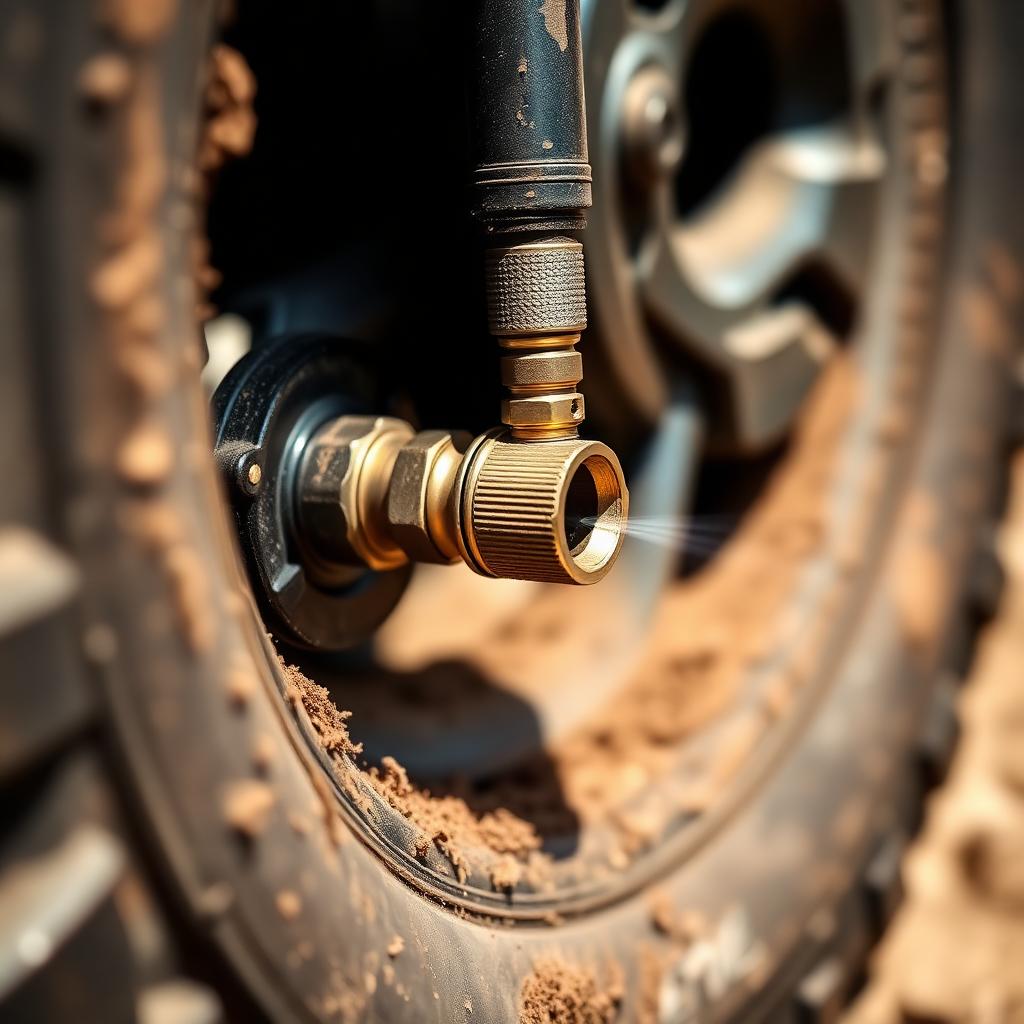
These brass caps screw onto the valve stems and open a spring-loaded valve. I calibrate them once at home to my target pressure (usually 15 psi). On the trail I twist all four onto the valves, walk away, and they self-close the moment the tire hits target. Zero attention required.
2. Rapid core-removal deflator (ARB E-Z Deflator style)
The tool unscrews the Schrader valve core while keeping it captive inside the housing. Air escapes at maximum flow (30 seconds for a 35-inch tire), and a built-in gauge shows real-time pressure. When I hit target I screw the core back in and remove the tool. Best pick if I change targets often (25 psi for a fire road day, 12 psi for sand).
3. Emergency backup: valve-core key
A small brass tool that unscrews the entire valve core to dump air fast. Requires care not to lose the core in the dirt.
Step-by-step airing down
Step 1: Clean the valve stem
Trail dust caked on the valve stem can score the O-rings inside a deflator tool and cause slow leaks later. I blow the tip off or wipe it clean with a rag.
Step 2: Thread the tool on straight
Cross-threading a deflator strips the delicate brass. I hand-thread it and stop the second it feels wrong.
Step 3: Extract the core (rapid tool) or engage the preset spring (auto cap)
With a rapid deflator I slide the inner rod forward until it seats on the core notches, then twist counter-clockwise until it stops. The core is now trapped inside the housing. Preset caps just screw on and start hissing.
Step 4: Monitor the gauge and stop at target
On a rapid deflator I slide the outer collar forward to close the flow and check the gauge. Slide back to keep purging. Preset caps close themselves when the internal spring balances the target pressure.
Step 5: Reinstall the core and pack up
Turn the inner rod clockwise to thread the core snugly back into the stem. Unthread the tool from the valve. Confirm no continuous hiss (a soapy-water drip test on the valve confirms a seal). Move to the next tire.
Safety rules while aired down
Keep speed under 20 mph on the trail
Sidewall flex generates heat, and heat cooks a casing. At 15 psi on the trail I stay in low range and low gears. On flat approaches I bump back up to 25 psi before I speed up.
Avoid hard cornering below 12 psi
The bead sits inside the wheel rim held only by internal air pressure. Under a sharp turn at single-digit pressures, the tire can pop off the rim in a fraction of a second. Beadlock wheels are the only fix, and they are overkill for daily trail work above 12 psi.
Air back up before pavement
A 12V compressor that flows 4-6 CFM will refill a set of 33-inch tires from 15 to 32 psi in about 10 to 15 minutes. Anything smaller struggles and overheats.
Common questions about airing down off-road
Does airing down damage the tire?
Not at safe speeds. Damage comes from combining low pressure with high speed or aggressive steering. Keep it slow and the tire is fine.
Do I need beadlock wheels?
Only if I regularly run below 12 psi. Above that, standard wheels hold the bead reliably on modern LT tires.
Will the TPMS warning damage anything?
No. It is a dashboard warning only. It clears the moment I air back up.
What compressor size do I need?
For 31-inch tires, a small $80 unit works. For 35-inch tires I want a real ARB or Viair twin-cylinder unit rated at 4-6 CFM. Anything less turns the airing-up step into a 45-minute chore.
Should I air down all four tires equally?
Yes, in most cases. Uneven pressures create unpredictable handling and can pull the truck to one side. The only exception is a heavily loaded rear axle (overland build with a full drawer system and rooftop tent), where I might carry a couple extra psi in the rear.
What is the lowest pressure I should ever run?
On a standard non-beadlock wheel, 10 psi is the practical floor for slow speed. Below that the risk of unseating a bead climbs fast. Beadlock wheels change the math and let me safely run 5 psi or less.
Bottom line
Airing down safely is a five-minute mechanical routine with the right tools. Use a rapid deflator or preset brass caps, drop to 15 to 18 psi for trail work, stay under 20 mph while aired down, and always air back up before hitting pavement. Do it right and I get a smoother ride, better traction, and no risk of throwing a bead on the trail.