Quick Answer
Fill a basin with cool water (under 30°C / 86°F), add a capful of pH-neutral wool wash like Eucalan or Woolite Delicates, turn the sweater inside out and let it soak for 15 minutes. Press the suds through with your hands, never wring or twist.
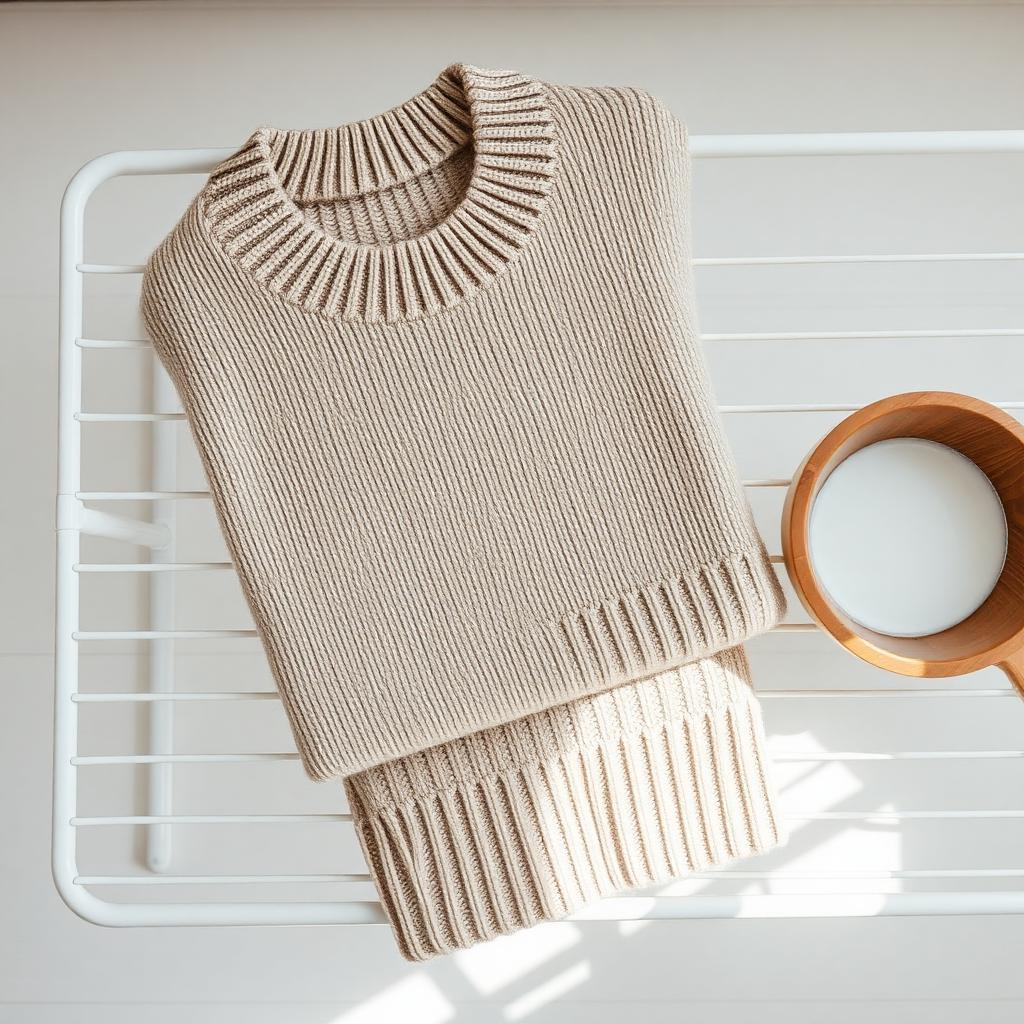
Drain, gently squeeze out water, then roll the sweater up inside a dry towel like a burrito to absorb moisture. Lay it flat on a mesh rack or dry towel and reshape it. Never hang wool to dry. That single mistake is what stretches the shoulders out of shape.
Why wool shrinks (and why you only get one shot to avoid it)
Wool fibres are covered in microscopic scales that overlap like roof tiles. When you combine three things, heat, alkaline detergent, and mechanical agitation, those scales swell, open up, and ratchet together permanently. The technical term is felting, and once it happens it cannot be reversed. The sweater is now a child-sized version of itself.
A standard washing machine cycle delivers all three triggers at once. Even a "wool" or "delicate" cycle on most machines spins fast enough to risk felting on cashmere and fine merino. Hand washing is genuinely the safest option for sweaters you care about.
What you need before you start
- A clean sink, basin, or plastic tub large enough to lay the sweater flat under water
- A bottle of pH-neutral wool wash such as Eucalan, Soak, The Laundress Wool and Cashmere Shampoo, or Woolite Delicates
- A large dry bath towel (white if you have one, so dye does not transfer)
- A flat drying rack or a second clean towel on the floor
Skip regular laundry detergent entirely. Most are too alkaline and strip the natural lanolin oils that keep wool soft and water-repellent.
Step one: the cool soak
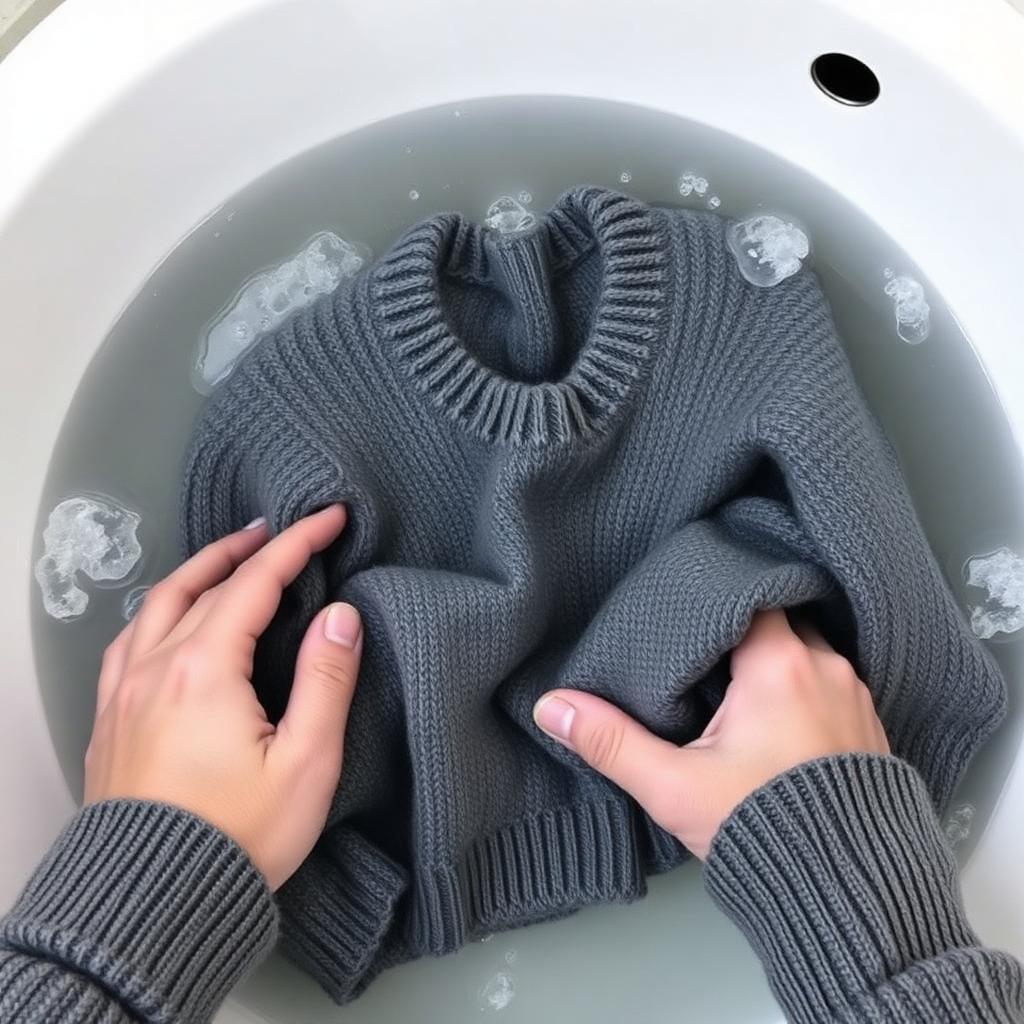
Fill the basin with cool water. Stick a thumb in: it should feel cooler than your hand, never warm. Add a capful of wool wash and swirl. Turn the sweater inside out to protect the visible knit face from friction, then submerge it fully and press gently to push the soapy water through the fibres.
Let it sit undisturbed for 15 minutes. The wool wash does the cleaning chemically, not mechanically. You do not need to scrub.
Step two: gentle compression, never wringing
When the soak is done, pull the plug. With the sweater still in the empty basin, press it flat against the bottom with your palms to push out the soapy water. Refill with clean cool water if you used a non-rinse wool wash skip this; if you used Woolite or similar, rinse twice in clean cool water of the same temperature.
Wet wool fibres lose about a third of their dry strength. If you lift a saturated sweater by the shoulders, gravity will stretch the arms and neck out permanently. Always support the full weight from underneath with both hands.
Step three: the towel burrito
- Lay a large dry bath towel flat on a table or the floor.
- Spread the damp sweater on top in roughly its natural shape.
- Roll the towel up tightly from one end with the sweater inside, like a sleeping bag.
- Press firmly along the roll, or stand on it with bare feet for a minute.
The towel will wick the bulk of the water out without distorting the knit. Unroll, and the sweater should be damp rather than dripping.
Step four: flat dry, reshape, walk away
Lay the sweater on a mesh drying rack or a fresh dry towel. Reshape the cuffs, hem and shoulders gently with your fingers so it sits in its true outline. Flip it once after a few hours so both sides get airflow.
Keep it away from direct sunlight, radiators and tumble dryers. Heat is what shrinks wool. A cool, shady room with good airflow is ideal, even if it takes 24 to 48 hours to dry fully.
And never, ever hang a wet wool sweater on a hanger. The water weight pulls the shoulders down into permanent points and the body grows an extra two inches no laundering can fix.
What to do if it already shrunk
If a sweater has already felted there is no real fix, but a mildly shrunk piece can sometimes be coaxed back. Soak it in cool water with a tablespoon of baby shampoo or hair conditioner for ten minutes. The conditioner softens the fibres just enough to let you stretch the sweater gently while it is wet. Pin it to the correct dimensions on a towel and let it dry. This works on a sweater that lost an inch, not one that came out doll-sized.
Frequently asked questions
Can I machine wash on wool cycle?
Some front-loaders have a true wool programme that uses cool water and a very slow rocking motion. If the manual specifically says "wool-safe" with a sub-30°C wash and a slow spin (under 600 rpm), it is usually fine for everyday merino. For expensive cashmere, hand wash regardless of what the dial promises.
How often should I wash a wool sweater?
Far less than you think. Merino and cashmere are naturally antibacterial and odour-resistant. Most pieces only need washing every 5 to 10 wears, or when visibly dirty. Airing the sweater overnight after each wear refreshes it without water.
Can I tumble dry on low?
No. Even the lowest tumble dryer setting delivers heat plus mechanical agitation, which is exactly the felting recipe you want to avoid. Always flat dry.
What about dry cleaning?
Reserve it for tailored knitwear or pieces with linings and structured shoulders. For everyday sweaters, cool hand wash is gentler than the perchloroethylene solvents used in most dry cleaning.
The takeaway
Wool shrinks because of heat, agitation, and harsh detergent. Use cool water and a pH-neutral wool wash, soak rather than scrub, roll in a towel to extract moisture, and dry flat. Follow that routine and a good merino or cashmere sweater will last for a decade without losing its shape.