Quick Answer
Shake the can hard for ten seconds, hold it 8 to 10 inches away from your scalp, and spray in short bursts directly at your roots in small sections. Wait two full minutes for the starches to absorb oil, then massage with your fingertips and brush through. That waiting step is the part most people skip and it is the difference between fresh hair and a white cast.
Use dry shampoo on day two or three of hair, never on day one when there is no oil to absorb. Spend a full shampoo wash on it at least every three days so the residue does not build up and irritate your scalp.
What dry shampoo actually does
Dry shampoo is not a cleanser. It does not remove dirt, sweat, or product. It is a starch (usually rice, corn, or tapioca) suspended in a propellant. When you spray, the starch coats your roots, absorbs the natural sebum oil your scalp produces, and is then brushed out along with the oil.
That is why dry shampoo only works on hair that is already oily. On clean hair there is nothing for the starch to soak up, and you get instant chalky residue.
Step by step: how to use it without the chalky cast
- Shake hard. The propellant separates from the powder when the can sits. Ten seconds of shaking before each spray mixes them back so you get fine even particles instead of clumps.
- Section your hair. Lift a one inch section from the crown, then move along the front hairline, the temples, and the part. Spraying through dense hair only covers the surface and wastes product.
- Keep the right distance. Hold the nozzle 8 to 10 inches (roughly the length of an open hand and wrist) from the scalp. Closer than 6 inches concentrates powder in a single white patch.
- Use short bursts. One half second pulse per section is enough. Long sprays oversaturate one spot.
- Wait two minutes. Do not touch your hair. The starches need time to bond with oil. This step is the entire secret to invisible application.
- Massage with fingertips. Use the pads of your fingers to gently rub the product into the roots in small circles. The starch should disappear into the hair.
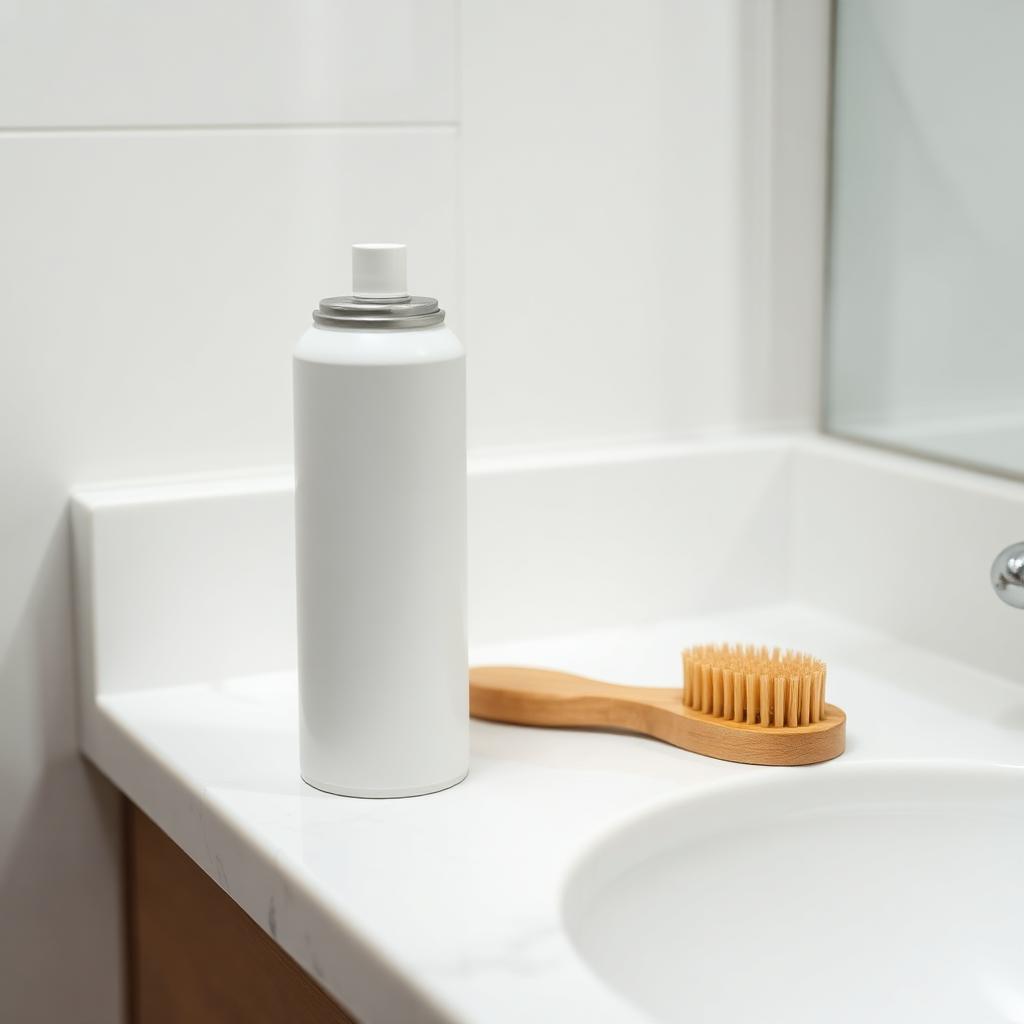
- Brush through. A boar bristle brush from roots to tips redistributes natural oils and removes any visible residue.
Common mistakes that ruin the result
- Skipping the shake. Without it you spray pure powder.
- Spraying too close. A two inch puff puts a visible white patch on your part that takes forever to blend.
- Touching the hair right away. Rubbing before the starch absorbs oil just smears it on the surface and rubs it onto your hands and forehead.
- Using it on clean hair. There is no oil to soak up, so it sits on top.
- Spraying on lengths and ends. Dry shampoo only targets oily roots. On the lengths it adds texture, dulls shine, and tangles.
- Using it instead of washing for a week. Buildup leads to scalp irritation, clogged follicles, and in rare cases temporary hair shedding.
How to apply on dark hair without a white cast
Dark hair shows residue more, so pick a tinted version (most major brands sell a brunette or dark formula with cocoa or charcoal pigment). Apply with the lights off if you can, then check the mirror after the two minute wait.
- Spray underneath the top layer of hair so any leftover residue stays hidden.
- Keep the can moving rather than holding it on one spot.
- If you see white at the roots, brush again with a wet brush (just damp, not soaking).
How to apply on fine or oily hair
Fine hair gets weighed down by overuse. Oily scalps need a bit more product but more spread out.
- Use half the amount you think you need. Fine hair only needs a single quick burst per section.
- Focus on the crown and around the face, the two areas that look greasy first.
- Tip your head upside down and spray underneath for instant volume at the roots.
Aerosol vs powder vs paste
| Format | Best for | Trade off |
|---|---|---|
| Aerosol spray | Quick all over use, fine hair | Inhaling propellant, harder to control on dark hair |
| Loose powder | Precise spot treatment, color matched options | Messier, requires a brush to apply |
| Paste or cream | Travel safe, no aerosol | Slower to apply, can clump |
How often is too often?
Most dermatologists recommend a real shampoo wash at least every three days when you rely on dry shampoo in between. Used daily for weeks, dry shampoo residue traps oil and dead skin in the follicle and can trigger scalp acne, flaking, or itchiness.
A simple rule: if you can see white at the roots an hour after applying, you used too much. If your scalp itches, wash your hair tonight.
What to look for on the label
- Rice or corn starch as the main absorber. Both are gentle and effective.
- No drying alcohols high in the list. Denatured alcohol near the top means a stiff, dehydrated finish.
- Light fragrance or fragrance free. Heavy scents are the most common cause of headaches and contact allergy.
- A tinted version if your hair is dark, red, or grey.
FAQs
Can dry shampoo cause hair loss?
Not directly. Used in moderation it is safe. Daily use with no real shampoo wash can clog follicles and lead to inflammation, which in extreme cases triggers temporary shedding. Wash properly every few days and you will be fine.
Is dry shampoo bad for color treated hair?
No, in fact it is recommended because washing color treated hair too often fades the color. Use a sulfate free wash on real shampoo days.
Can I use dry shampoo overnight?
Yes. Apply before bed, let it absorb overnight, then brush out in the morning for next day volume and refreshed roots.
Why does my hair feel sticky after dry shampoo?
You used too much, the product has a paste base, or you skipped the brush out. Brush firmly with a boar bristle brush and try less next time.
The takeaway
Shake, hold the can 8 to 10 inches away, spray short bursts at the roots only, wait two full minutes, massage, then brush. Use it on second day hair, not clean hair, and wash properly every three days at most. Do that and dry shampoo earns its place as the fastest hair refresh in your routine.