Quick Answer
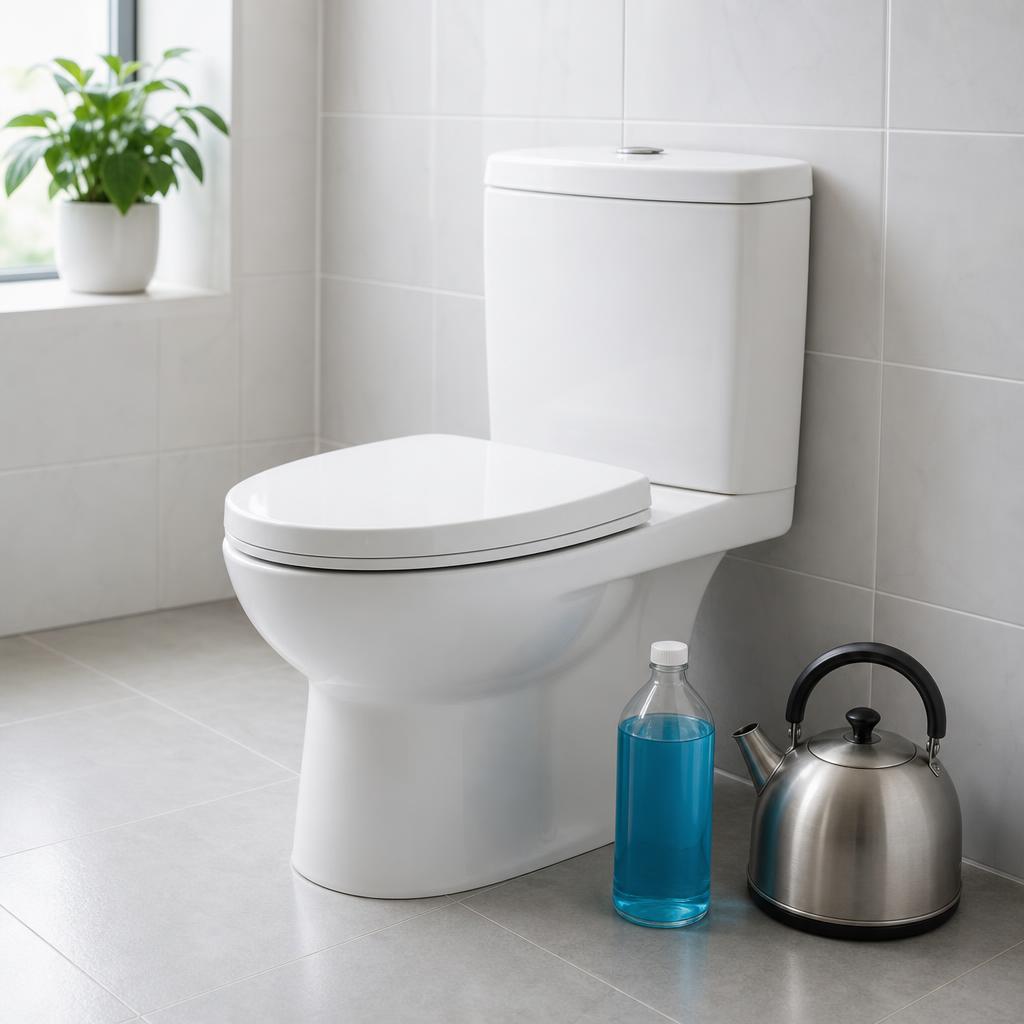
Do not flush again. Squirt about half a cup of dish soap into the bowl and let it sink down to the clog for 15 to 20 minutes. Then pour a kettle of hot (not boiling) water from waist height into the centre of the bowl in one steady stream. The soap lubricates the blockage and the water pressure pushes it through.
If that does not work, try a baking soda and vinegar fizz, or a wire coat hanger straightened out and wrapped in a cloth at the tip. Call a plumber if the water level is rising or if there is a sewage smell coming from other drains.
First: do not flush again
If the bowl is already full and the water is not draining, the worst thing you can do is press the flush handle a second time. The tank dumps another two gallons into a bowl that is already at capacity, and you get an overflow onto the bathroom floor.
Lift the tank lid and push the rubber flapper down to seal the inlet, or close the shut-off valve behind the toilet. That isolates the bowl while you work.
Method 1: dish soap and hot water (works for most clogs)
Standard organic clogs (toilet paper, waste, the occasional flushable wipe) get stuck because of friction against the curved porcelain trapway. Dish soap is a surfactant. It coats the clog and the trap with a slippery film that breaks that grip.
- Squirt about half a cup of regular dish soap directly into the bowl. Dawn or Fairy works well because it is concentrated and dense.
- Wait 15 to 20 minutes. The soap is heavier than water, so it sinks down through the standing water and pools around the clog.
- While you wait, fill a kettle or a large pot with about a gallon of hot water. Heat it to hot bathwater temperature, around 60 to 70°C. Do not let it boil.
Why not boiling water?
The porcelain in a toilet bowl is rated for hot water but not for thermal shock. Dumping water at 100°C into a cool bowl can crack the porcelain and turn a clog into a flooded bathroom and a new toilet bill. Hot tap water or water just off the boil for a minute or two is the safe upper limit.
Step three: pour from a height
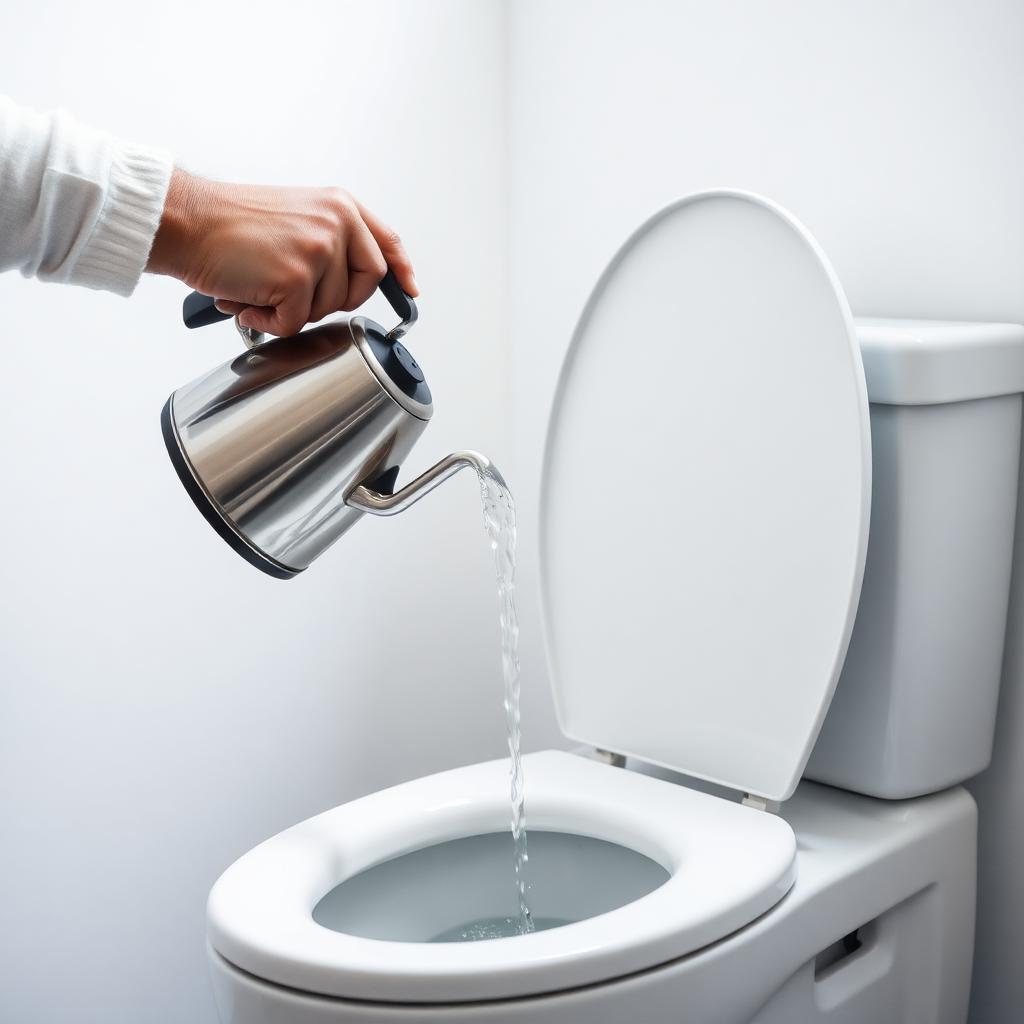
Stand up. Hold the kettle or pot about 2 to 3 feet above the bowl. Pour the hot water in a steady continuous stream straight into the centre of the drain hole. The combination of heat (which softens fats and paper) and the gravitational pressure of the falling water usually clears the clog within seconds. You will often hear a satisfying gurgle as the water level drops.
If the water level stays high, wait another 10 minutes and repeat with a fresh kettle of hot water. Two cycles clears the vast majority of household clogs.
Method 2: baking soda and vinegar
If the soap method does not work, try the fizz reaction. Pour a cup of baking soda into the bowl, followed slowly by 2 cups of white vinegar. It will foam vigorously. Let it sit for 30 minutes, then pour in hot water as in the previous method. The fizz helps dislodge softer blockages and the acid eats through soap scum or mineral buildup that might be narrowing the trap.
Skip this if you have already poured chemical drain cleaner into the bowl. Mixing chemistries can produce dangerous fumes.
Method 3: the coat hanger snake
For stubborn clogs you can reach physically, straighten a wire coat hanger, leaving a small hook at one end. Wrap the hook tightly in a strip of cloth or duct tape so the bare wire cannot scratch the porcelain.
Feed the wire into the drain hole and gently push and twist to break up the blockage. Do not force it. If you meet hard resistance and cannot move past it, you are likely hitting a foreign object (a kid's toy, a toothbrush) that needs a proper auger to retrieve.
When to stop and call a plumber
Call a professional if:
- The water level keeps rising even when you stop adding to it
- You hear gurgling from other drains in the house (a sign the main sewer line is blocked, not just the toilet)
- There is a sewage smell coming from sinks or showers
- You have already tried two methods and the clog will not budge
- You suspect a non-organic object is lodged in the trap
An auger or motorised snake in trained hands clears almost any clog in 10 minutes. Trying to force it yourself with too much pressure can crack the bowl or push the blockage further into the home plumbing.
Prevention
Most home clogs come from too much toilet paper at once, "flushable" wipes (which are not actually flushable in any meaningful sense), and feminine hygiene products. Keep a small bin in the bathroom for wipes and sanitary products, and remind household members that toilet paper is the only thing that should go down the toilet.
Frequently asked questions
Can I use shampoo instead of dish soap?
In a pinch, yes. Any surfactant will lubricate the trap. Dish soap is denser and more concentrated, so it sinks faster and reaches the clog. Shampoo and liquid hand soap need 5 to 10 more minutes to do the same job.
Does the bottled "drain unclogger" stuff work?
Most chemical drain cleaners (Drano, Liquid Plumr) are designed for sinks and showers, not toilets. They can damage the wax ring seal under the toilet base and corrode older pipes. Skip them and use a snake or auger instead.
What about an "Epsom salt" trick I saw on TikTok?
Epsom salt reacts with water and dissolves some soap-scum buildup, but it does almost nothing for a real organic clog. The dish soap and hot water method is more reliable and uses things you already own.
How do I stop the bowl overflowing while I work?
Lift the tank lid and push the rubber flapper down to seal the inlet, or close the silver shut-off valve on the wall behind the toilet. Either move stops the tank from refilling and overflowing if you accidentally bump the flush handle.
The takeaway
For a standard clog, dish soap plus hot (not boiling) water poured from waist height fixes the problem in under 30 minutes. Skip the second flush, give the soap time to sink, and let gravity and surfactant chemistry do the work. If two attempts fail or the water is still rising, call a plumber before you flood the bathroom.