Quick Answer
Indoor orchids like the popular phalaenopsis thrive on bright indirect light, watering once every 7 to 10 days, ambient humidity between 40 and 70 percent, daytime temperatures of 70 to 85 degrees Fahrenheit, and a chunky bark potting mix with excellent drainage. The most common kill switch is overwatering, which suffocates the roots and triggers root rot.
Water only when the bark looks dry and the roots have shifted from green to silvery white. Let the pot drain completely and never let it sit in a tray of water.
Once the flowers drop, a slight nighttime temperature drop triggers a new flower spike in 4 to 6 weeks.
Understand the epiphytic root system
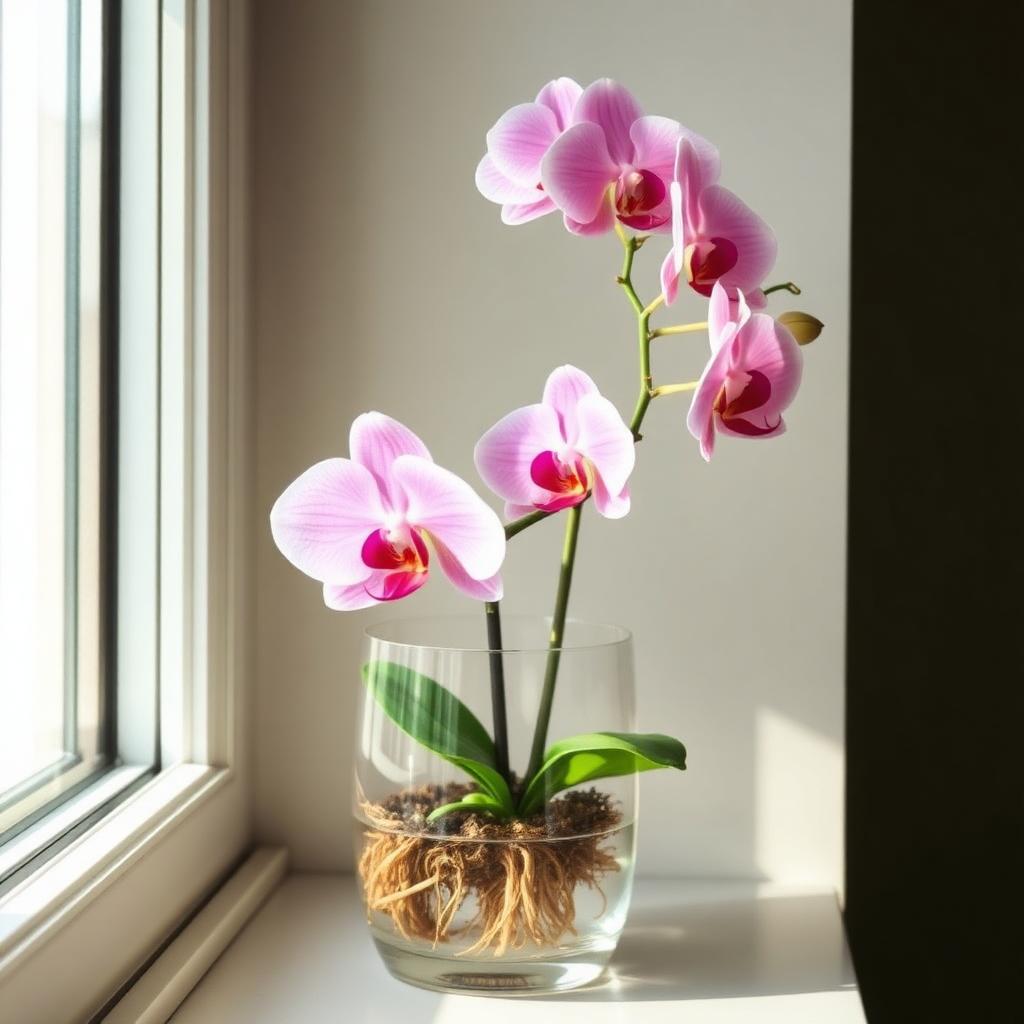
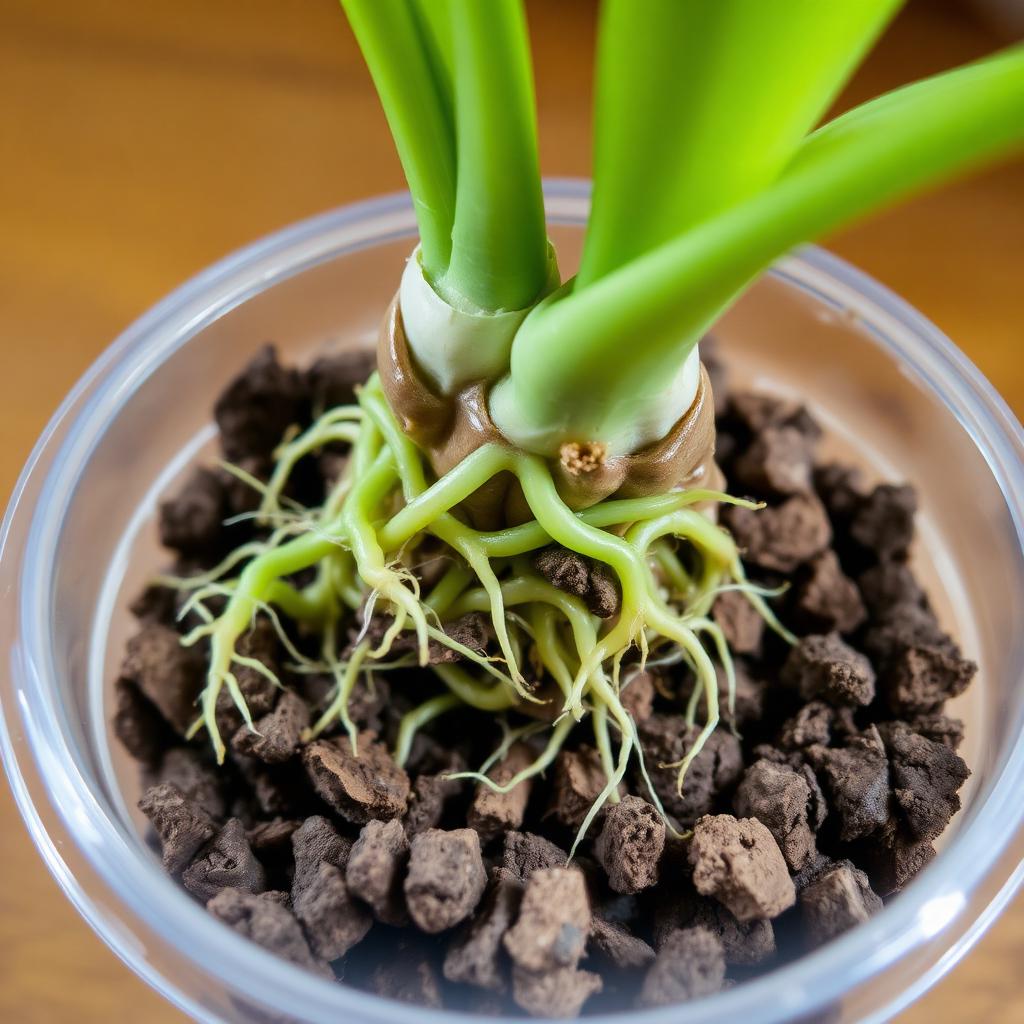
In nature, most indoor orchids grow anchored to tree bark with their roots fully exposed to air. They are not soil plants. The thick aerial roots are covered in a spongy tissue called velamen that absorbs water and oxygen straight from humid air.
Velamen colors signal hydration:
- Silver or white roots: velamen is dry, time to water.
- Vibrant green roots: velamen is saturated, hold off.
- Mushy brown roots: rotting, prune immediately.
Standard potting soil suffocates these roots within weeks. Always use orchid bark mix.
Light placement
Bright indirect light is the goal. An east facing window is ideal because it gets gentle morning sun. South or west facing windows usually need a sheer curtain to filter the harsh afternoon rays that scorch leaves.
Leaf color is the simplest light meter. Bright lime green leaves mean the light level is right. Dark forest green leaves mean too little light, which is why the plant has not rebloomed. Yellow or reddish leaves mean too much light and a possible sunburn.
The soak and drain watering method
Skip the ice cube trick. Orchids are tropical plants and the temperature shock damages root tissue.
- Carry the inner grower pot to the sink.
- Run lukewarm water through the bark for about 60 seconds until everything looks saturated.
- Let the pot sit in the sink for 15 minutes so every drop drains out.
- Return the inner pot to its decorative outer cachepot.
If you find pooled water in the cachepot, pour it out. Trapped moisture under the pot is the leading cause of root rot.
Humidity that mimics the rainforest
Most homes sit around 30 percent humidity, especially in winter when central heating dries the air. Orchids do best between 40 and 70 percent.
- Pebble tray: set the pot on a tray of pebbles with shallow water below the pot base. Evaporation raises local humidity without wetting the roots.
- Group plants together: houseplants release moisture from their leaves, so clustering raises the microclimate humidity.
- Cool mist humidifier: the most reliable solution in a dry climate or winter heating season.
- Avoid misting the flowers: water droplets on petals cause spotting.
Temperature
Day temperatures of 70 to 85 degrees Fahrenheit and night drops of 10 to 15 degrees cooler match the orchid's natural cycle. Keep them away from cold drafty windows in winter and from heating or air conditioning vents in any season. A windowsill that drops below 55 degrees overnight is too cold for most phalaenopsis.
Feed lightly
The bark medium holds very few nutrients. A balanced orchid fertilizer applied weakly is the right cadence. Most growers use the "weakly weekly" approach: dilute a balanced 20 20 20 fertilizer to one quarter strength and use it with every other watering. Flush the pot with plain water once a month to clear built up salts.
How to trigger a rebloom
Once the flowers drop, the plant enters a resting phase. To encourage a fresh spike:
- Cut the old spike just above the second visible node from the base using sanitized pruning shears.
- Move the plant to a room where the nighttime temperature drops to 55 to 65 degrees Fahrenheit for 4 to 6 weeks.
- Continue watering and feeding as usual.
- The temperature shift mimics autumn and signals the plant to push a new flower spike.
A new spike typically appears within 4 to 6 weeks, with full blooms 2 to 3 months after that.
Repotting
Repot every 2 to 3 years, ideally just after blooming. Soak the old bark to loosen it, slide the plant out, and trim any soft brown roots back to healthy tissue with sterile scissors. Replace with fresh orchid bark and a slightly larger clear pot. Clear pots let you watch root color, which is the simplest signal for the next watering.
The takeaway
Bright indirect light, soak and drain watering once a week, 40 to 70 percent humidity, and a chunky bark mix in a clear pot. Watch root color instead of guessing about water. A 4 to 6 week stretch of cooler nights after the flowers drop reliably triggers a rebloom. Get these few rules right and a phalaenopsis can flower for decades in the same home.
Frequently asked questions
Why did my orchid drop all its flowers at once?
Flowers naturally drop after 2 to 3 months. Sudden drop often follows a temperature shock, draft, or move to a new spot. Stabilize conditions and a new spike usually follows.
Should I cut the entire flower spike off after blooming?
For phalaenopsis, cut just above the second node to encourage a secondary spike. If the entire stem turns brown and dry, cut it off at the base.
What does an orchid air root climbing out of the pot mean?
It is normal. Aerial roots seek air and humidity. Do not bury them in bark. Mist them occasionally if humidity is low.
Can I grow orchids in water only?
Some growers use semi hydroponic methods with inert media like leca clay pebbles. Pure water culture is possible but advanced and not recommended for beginners.