Quick Answer
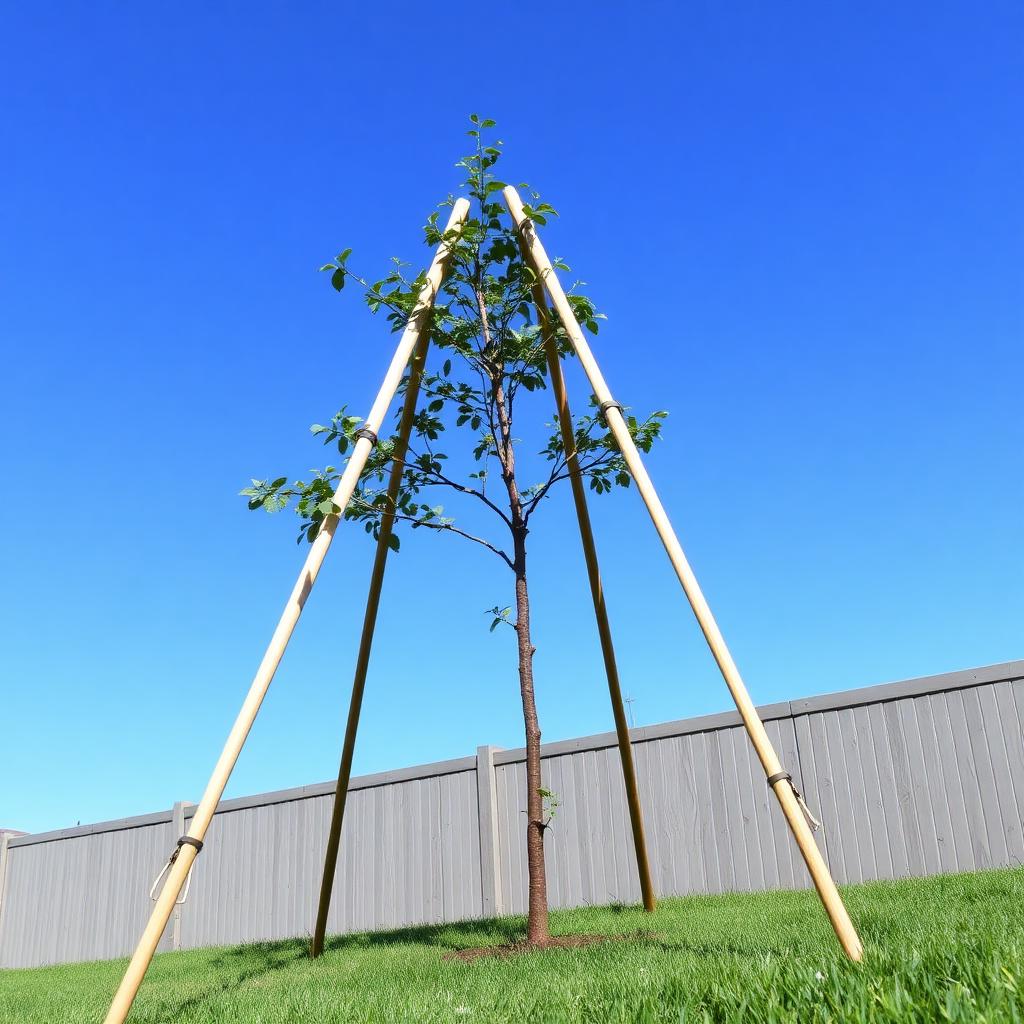
To straighten a leaning young tree, soak the root zone, drive three stakes in a triangle 2 to 3 feet from the trunk, and tie soft canvas straps from the stakes to the trunk at the lowest functional branch. Leave 1 to 2 inches of sway slack so the trunk can flex.
Never wrap bare wire or rope directly on the bark because it will girdle the tree. Remove the entire stake system after one full growing season.
When a Tree Actually Needs Straightening
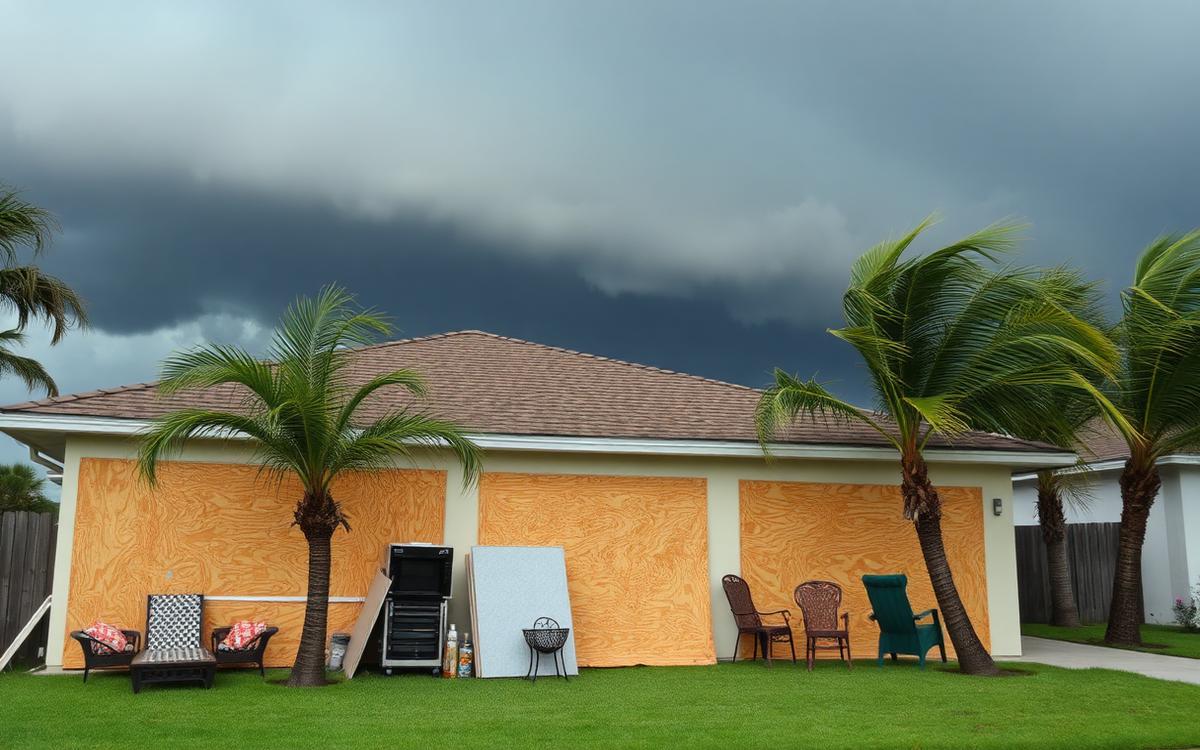
Storms, soft soil, poor planting, or one sided wind can leave a young tree leaning. If you catch it within the first two or three years and the lean is more than about 15 degrees off vertical, intervention is worth it. Established trees with woody bark and deep roots usually cannot and should not be forced upright.
Severely toppled trees with exposed roots may be saved if the root ball is mostly intact and the work happens within 24 hours of the damage.
Step 1: Water the Root Zone
Soak the soil around the entire root zone the day before you work. Wet soil flexes and lets the root ball pivot without snapping fine feeder roots.
Dry compacted soil resists movement and tears the root system. Watering is the cheapest insurance you can buy on this project.
Step 2: Set Three Stakes in a Triangle
Drive three stakes into firm ground in a triangle pattern 2 to 3 feet from the trunk. Heavy duty steel T posts or sturdy 5 foot wooden stakes both work.
Angle each stake slightly away from the tree so the tension lines pull cleanly downward. A single stake on one side creates uneven strain and often makes the lean worse.
Step 3: Protect the Bark With Wide Straps
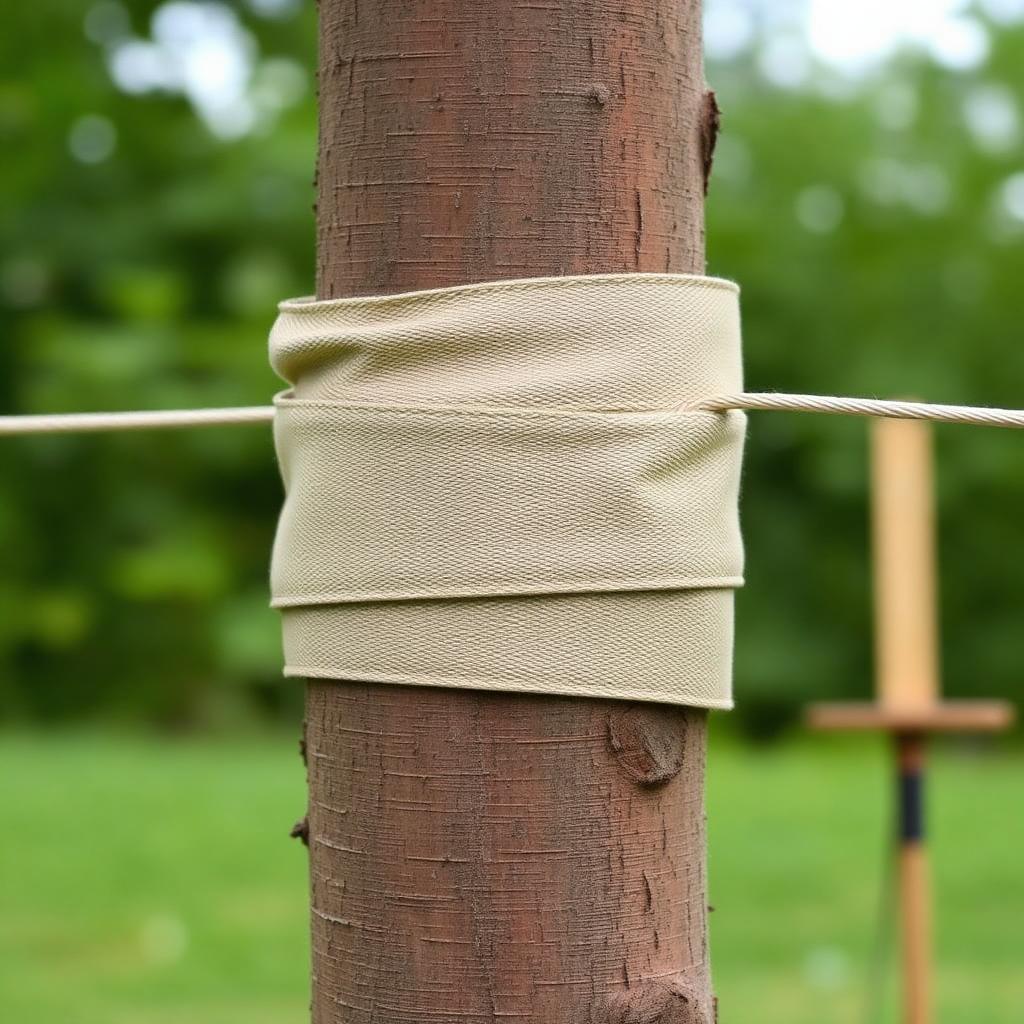
Tree bark is alive and easy to damage. Bare wire, twine, or rope quickly cuts through the cambium layer that moves water and sugar between the leaves and roots. Once girdled, the tree dies above the cut.
Always feed the tension lines through wide protective sleeves. The two industry standards are flat canvas tree straps sold at any garden center and short sections of heavy rubber garden hose. Wrap the strap around the trunk at the lowest point that still lets you pull the trunk upright, usually just below the lowest branch crotch.
Step 4: Tie With Dynamic Slack
Run a length of high strength nylon guy wire or arbor tie from each strap to its matching stake. Pull each line tight enough to bring the tree to vertical, then back off slightly.
Leave 1 to 2 inches of slack so the trunk can sway in the wind. Movement triggers a biological response called thigmomorphogenesis, where the tree produces hormones that thicken the trunk and expand the root system. Rigid staking creates a weak tree that flops the moment the stakes come out.
Step 5: Mulch and Monitor
Spread a 2 to 3 inch ring of mulch around the trunk without piling it against the bark. Mulch holds moisture, stabilizes soil temperature, and protects fresh roots.
Inspect the system every month. Loosen straps if they start to dig into bark and adjust tension after heavy rain that softens the soil.
Step 6: Remove the Stakes After One Season
Leave the stake system in place for exactly one full growing season. Most young trees are firmly anchored within 12 months and need to be released. Trees left staked for years grow weak and tip over the moment the support is removed.
Cut the lines, pull the straps gently from the trunk, and remove the stakes. If the tree still leans noticeably, accept the slight lean rather than re staking. Many crooked young trees finish straightening themselves over the next two or three years as the canopy grows.
The Takeaway: What Not to Do
- Never wrap bare wire, rope, twine, or zip ties directly on bark.
- Never leave stakes in place for more than one growing season.
- Do not try to straighten a tree that has been leaning for years. Mature trees compensate internally and forcing them upright damages roots and trunk.
- Do not stake on the day you plant unless the tree truly cannot stand. Some movement during establishment is healthy.
Done right, this is a weekend project that saves a young tree and sets it up to become a strong structural specimen for the next several decades.