Quick Answer
Squeaky shoes come from friction. The fix depends on the source: dust talcum powder or cornstarch under the insole for sneakers, condition leather tongues with saddle soap or balm for dress shoes, scuff slick outsoles with fine sandpaper for grippy traction, and fully dry wet linings with newspaper to silence trapped moisture squelching.
Most squeaks are gone in under 10 minutes once you find the right friction point.
Why shoes squeak in the first place
That rhythmic, embarrassing squeak with every step has exactly one cause: two materials rubbing or air being squeezed through a damp pocket. Fixing it permanently means thinking like a mechanical engineer. Once you isolate the friction point and apply the right barrier, the noise stops instantly.
Quick repair matrix
| Squeak location | Root cause | Fix |
|---|---|---|
| Inside the footbed | Insole rubbing on midsole | Powder under the insole |
| Rubber outsole on floor | Smooth bottom too slick | Scuff with fine sandpaper |
| Upper or tongue | Dry leather rubbing | Saddle soap or leather balm |
| Internal lining | Trapped moisture | Stuff with newspaper, dry 24 hours |
1. The hidden culprit: friction under the insole
The single most common squeak source sits out of sight directly under your foot. With each step, your body weight presses the soft insole against the rigid plastic or cardboard midsole, trapping air and creating a high-pitched squeak.
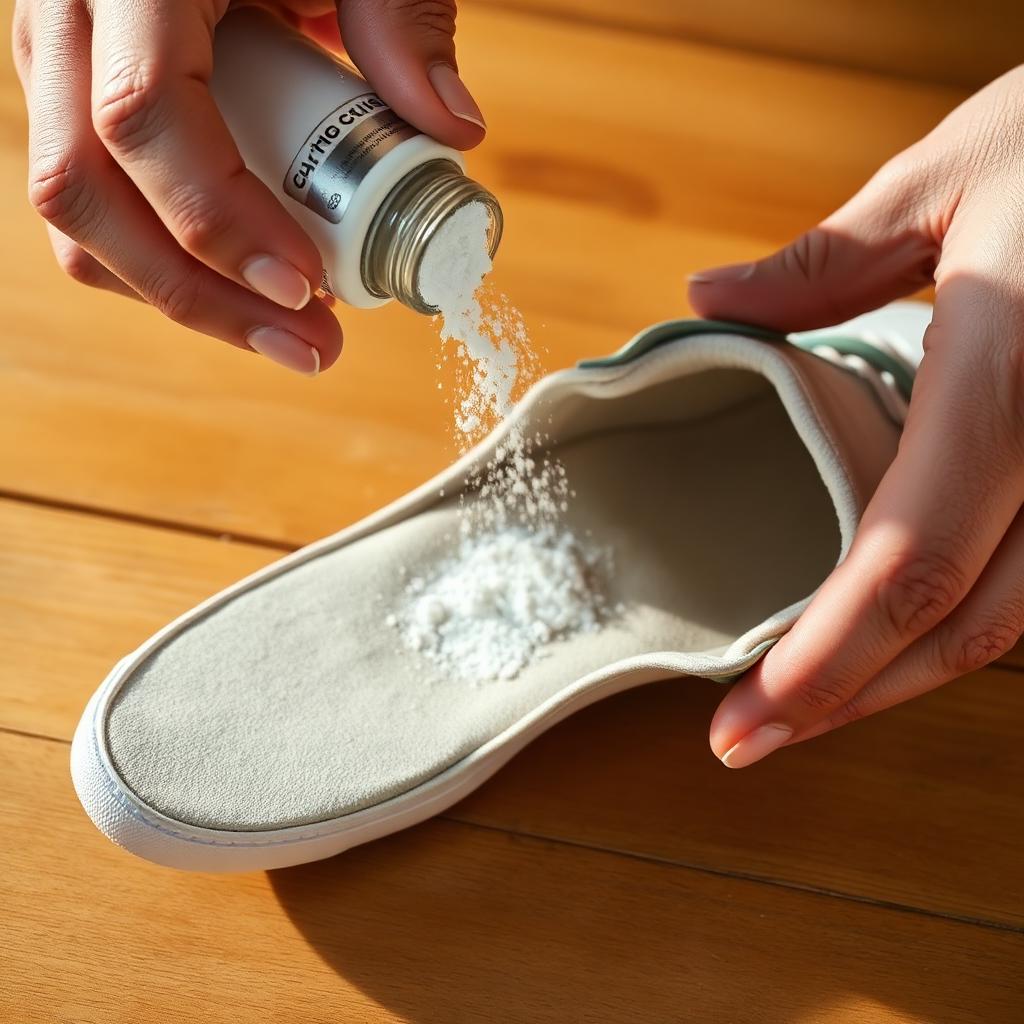
The fix is simple. Pull the removable insole out, sprinkle a generous, even layer of talcum powder, cornstarch, or baking soda into the empty interior, then press the insole back into place. The powder works as a microscopic dry lubricant and kills the friction immediately. Reapply every few months if the squeak ever creeps back.
2. Trapped internal moisture
If your shoes got caught in a rainstorm or soaked through during a sweaty workout, water can settle deep inside the fabric layers. As air is squeezed through those damp pockets, the result is a wet squelching squeak that no powder will fix until the shoe is dry.
Pull the insoles, stuff the interiors tightly with crumpled, unprinted newspaper or packing paper, and leave the shoes in a warm well-ventilated room for 24 hours. The paper pulls deep moisture out of the lining. Slide a scented dryer sheet under each insole when you put them back in to absorb micro-moisture and neutralize odors.
3. External outsole friction
If shoes only squeak on slick interior floors like polished hardwood, marble, or showroom tile, the outsole is the issue. New rubber soles can be almost glassy smooth, and that smoothness grabs at hard floors with a sharp rubber chirp.
Take a sheet of fine-grit sandpaper (around 120 to 220 grit) and gently scuff the smoothest patches on the bottom of the shoe. You only need to introduce a light texture, not strip the tread. The micro-roughness kills the high-pitched rubber-on-stone friction without affecting the look from above.
4. Leather tongues and uppers
On dress shoes and leather boots, the tongue rubbing against the laced upper creates a quieter, slower creak with every flex of the ankle. Dry leather is much louder than conditioned leather.
Massage a small amount of saddle soap, mink oil, or premium leather conditioner into the tongue, the area around the eyelets, and the inner ankle collar. Let it sit for 10 minutes, then buff with a soft cloth. The leather softens, the fibers slide instead of grabbing, and the creak disappears.
5. When the squeak is mechanical and permanent
If none of the above fixes work, the squeak might be coming from a separated midsole. Pick up the shoe and try to flex the rubber bottom away from the upper. If you see a gap opening and closing as you press, the factory adhesive has failed and air is being pumped in and out of the void.
A bead of waterproof shoe-repair glue (Shoe Goo or a similar urethane product) squeezed into the gap and clamped overnight with painter's tape often saves the shoe. Persistent squeaks on expensive footwear are worth a visit to a cobbler, who can re-glue or stitch the sole back to the upper for a fraction of the replacement cost.
Takeaway
Squeaky shoes never need to be tossed out. Diagnose the friction point, apply the right material (powder, sandpaper, leather balm, or newsprint), and a 10-minute fix in your kitchen will silence the noise for months at a time.