Quick Answer
Disconnect the spark plug wire and tip the mower with the air filter side up. Remove the central blade bolt with a socket wrench, then file the 30-degree cutting bevel with a 10-inch mill bastard file, pushing in one direction only until a clean bright edge forms. Balance the blade on a cone balancer or a nail in the wall, file metal from the heavy side until it hangs level, then reinstall.
Sharpen at the start of every mowing season and after any time the blade hits a rock.
Why a sharp blade matters
A dull mower blade does not slice grass cleanly. It rips and shreds the top of every blade, leaving a frayed wound that browns within hours. From across the yard, your lawn looks hazy and yellow even when it has just been cut. The torn tissue also invites fungal diseases like brown patch and dollar spot.
A sharp blade slices each grass blade with a single clean cut, the tip stays green, and the lawn recovers in a day.
What you need
| Item | Why |
|---|---|
| Socket wrench with breaker bar | Loosen the center blade bolt |
| 10-inch mill bastard file (or angle grinder with flap disc) | Sharpen the cutting bevel |
| Heavy leather work gloves | Hand protection |
| Safety glasses | Eye protection from metal filings |
| Cone blade balancer (or a nail driven into a wall) | Verify balance |
| Bench vise | Hold the blade steady |
Step 1: Disconnect the spark plug (non-negotiable)
Before any part of your hand goes under the mower deck, locate the spark plug at the front of the engine, grasp the thick rubber boot, and pull the spark plug wire fully off the terminal. This cuts the ignition circuit so the engine cannot accidentally start when you rotate the blade.
Once disconnected, empty the gas tank or tip the mower so the carburetor and air filter side stays up. Tipping the wrong way dumps oil into the cylinder and is a real pain to clean up.
Step 2: Remove the blade
Wedge a scrap block of 2x4 between the blade and the inside of the mower deck so it cannot spin. Use a socket and breaker bar on the central retaining bolt and turn counter-clockwise. The bolt can be tight after a season of use, and the breaker bar gives you the leverage to crack it loose without rounding the head.
Before lifting the blade off, take a photo or note which side faces down. Many blades are stamped Grass Side or This Side Down on the face that points at the lawn. Reinstalling upside down will cut nothing.
Step 3: File the bevel
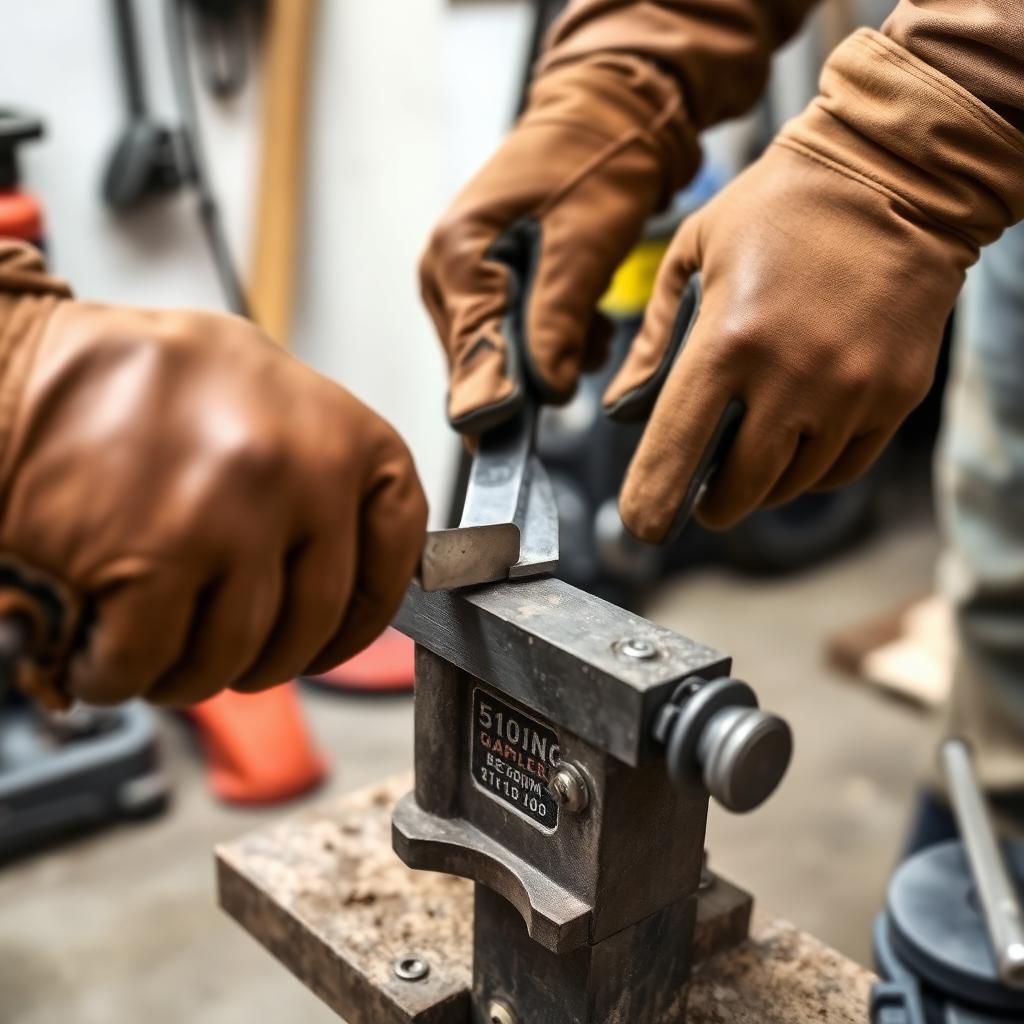
Clamp the blade in a bench vise with the cutting edge facing up. Look closely at the angled cutting edge: there is a specific factory bevel, typically around 30 degrees. Match that angle with your file.
- Place the mill bastard file flat against the bevel.
- Push the file across the metal in one long smooth stroke away from your body.
- Lift the file off, return to the start, and push again.
- Repeat 20 to 30 strokes per side until a bright clean edge appears.
Never saw the file back and forth: doing so destroys the file's cutting teeth in seconds. Sharpen until the edge feels as sharp as a butter knife, not razor sharp. A too-thin edge chips and rolls the moment it hits a stick or pinecone.
Step 4: Balance the blade
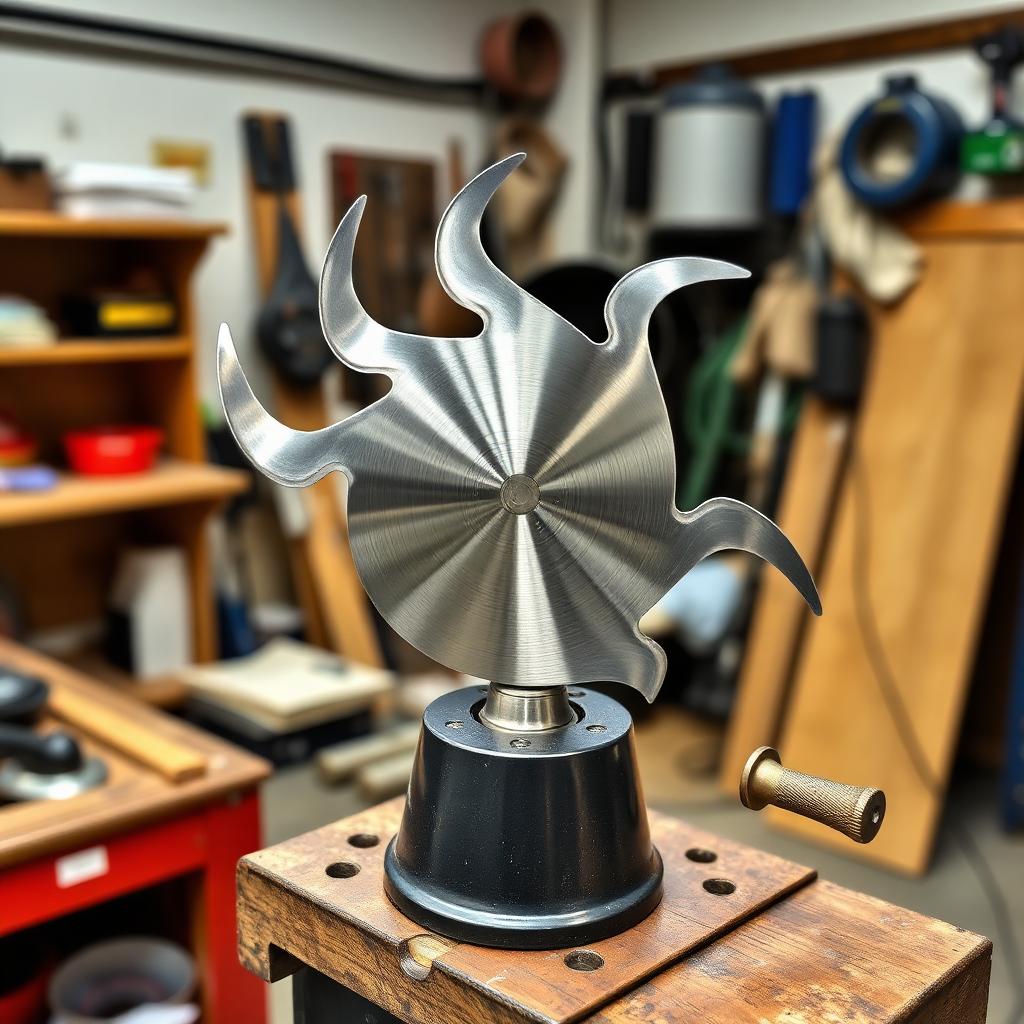
An unbalanced blade spinning at roughly 3,000 RPM creates intense vibration that destroys the engine crankshaft bearings over a single season. Balance is not optional.
Set the center mounting hole of the blade onto a dedicated cone balancer, or hang it on a nail driven horizontally into a wall stud. If both ends sit level in the air, the blade is balanced. If one side dips toward the floor, that side is heavier. Clamp the blade back into the vise and file a little more metal off the non-cutting back edge of the heavy side. Re-check on the balancer. Repeat until it hangs perfectly level.
Step 5: Reinstall and reconnect
Place the blade back on the spindle with the correct side facing the grass. Thread the bolt by hand to avoid cross-threading, then tighten with the socket wrench. Torque specs vary by mower (often around 35 to 45 ft-lbs), so check your owner's manual if you have a torque wrench.
Push the spark plug boot firmly back onto the terminal. Refill the gas tank if you emptied it. Start the mower in an open spot and listen for any unusual vibration before driving it onto the lawn.
How often to sharpen
Once at the start of every mowing season, again at the midpoint of the season for heavy users, and immediately after any time the blade strikes a root, rock, or fence post. Keep a spare blade in the garage so you can swap and sharpen the old one at your leisure without missing a mowing window.
Takeaway
Sharpening a mower blade is a 30-minute job that pays off in a green, healthy, fungus-resistant lawn. Disconnect the plug, file the factory bevel, balance the blade, and torque it back on. Your grass and your engine bearings will both thank you.