Quick Answer
Try on the garment with the right shoes, pin to the length you want, then trim leaving roughly an inch of seam allowance. Fold the raw edge under twice, press it flat with a hot iron, and either hand-stitch with a blind catch stitch for invisible results or run a straight machine stitch close to the fold for sturdy everyday hems.
The thread, needle, and stitch type need to match the fabric. Denim wants a heavy needle and a straight stitch. Knits need a twin needle or a narrow zigzag so the hem stretches. Silk and chiffon are happiest with a tiny rolled hem done by hand.
Choose the right hem for your fabric
Most home-sewing problems come from picking the wrong hem style. Heavy woven cotton like denim is forgiving and loves a classic double-fold finish. Lightweight silk wants a narrow rolled hem so the fabric is not weighed down. Tailored wool trousers should always get a hand-sewn blind hem because nobody wants visible stitching across the leg of a suit. Stretchy jersey needs an elastic stitch, not a straight one, or the threads will snap the first time you pull the shirt over your head.
If you are not sure, do a test on a scrap piece of the same fabric. A two-minute test stitch saves an hour of unpicking later.
Step one: measure and pin to the length you want
Put the garment on while wearing the shoes you plan to pair with it. Heels and flats produce very different hemlines. Ask someone to pin the fabric upward at the length you want, going around the full hem rather than only at the front.
Take the garment off and lay it flat. Measure down from the new pin line and add your seam allowance: usually one inch for everyday clothes, one and a half inches for a more formal weight. Trim away the extra fabric with sharp shears. Dull scissors crush the edge and cause fraying.
Step two: press, press, press
Pressing is the secret that separates a home hem from a tailor hem. Fold the raw edge up by half an inch and iron a sharp crease. Fold up again to your final hemline, hiding the raw edge inside, and press hard with steam. The crease should be so crisp you could almost stitch it without pins.
For knits, drop the iron temperature and press without steam, because heavy moisture can stretch knit fibres out of shape. For silk, slip a thin pressing cloth between the iron and the fabric.
Step three (hand option): the blind catch stitch
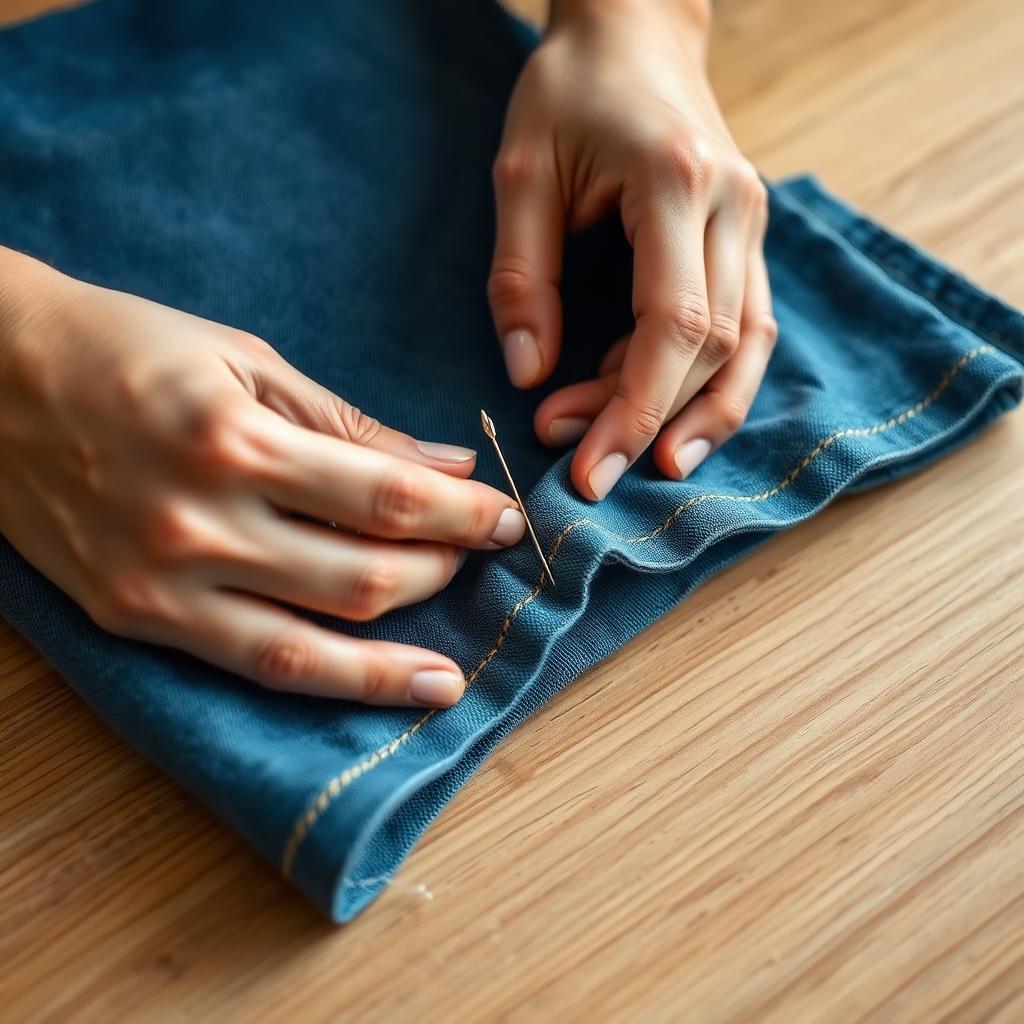
The blind catch stitch is what tailors use on dress pants, skirts, and lined jackets. It is invisible from the outside because the needle only catches one or two threads of the main fabric.
- Thread a hand needle with a single strand of matching thread and tie a small knot.
- Hide the knot inside the folded inner flap of the hem so it never shows.
- Working from right to left, take a small horizontal bite through the upper edge of the hem flap.
- Move a quarter inch to the left and catch one or two threads of the main garment, no more.
- Loop back into the hem flap. The stitches form a gentle zigzag on the inside.
Never pull tight. A dimple on the front of the fabric is the classic sign you have caught too many threads or yanked too hard. Stitch loosely and the hem will sit flat.
Step three (machine option): straight stitch or twin needle
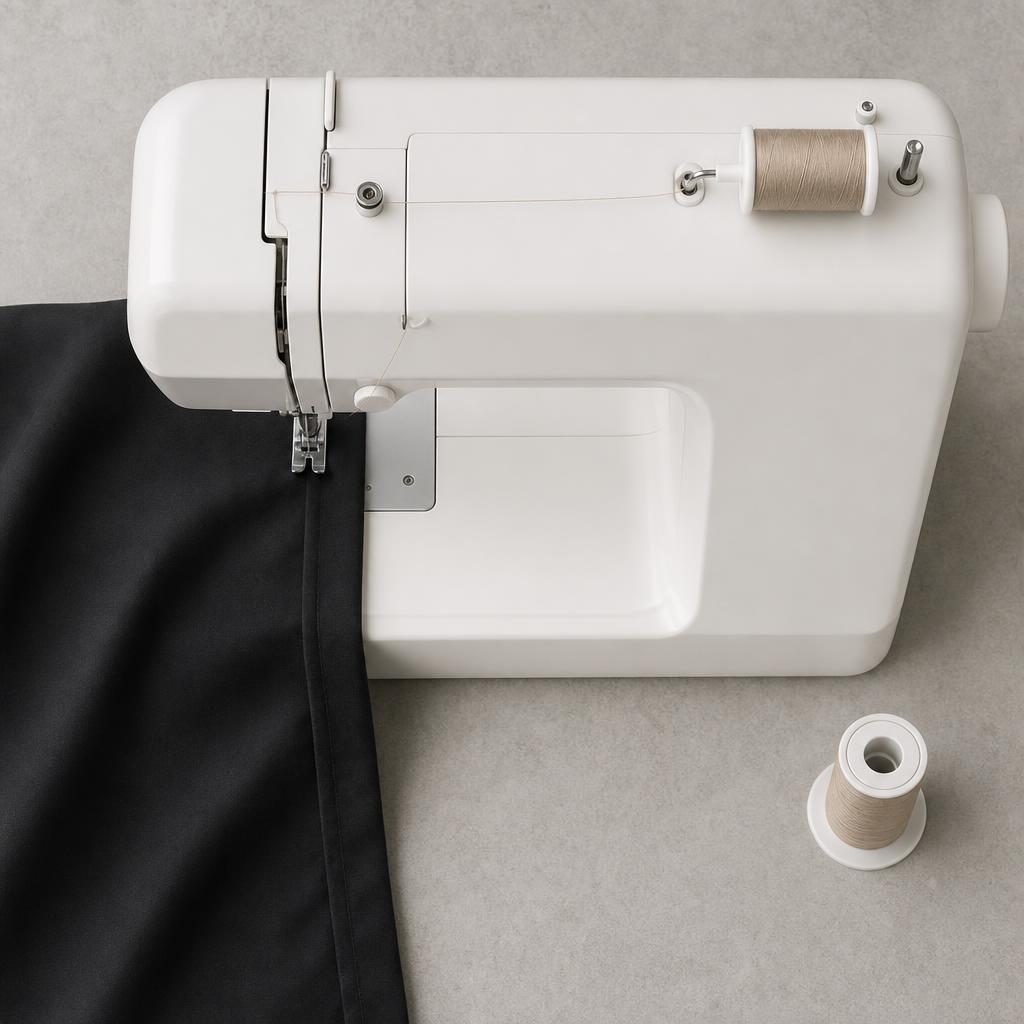
For most wovens, set your machine to a straight stitch at length 3.0mm and sew about a quarter inch from the folded edge, on the right side of the fabric so the stitch line is even and visible. Backstitch at the start and end to lock the seam.
Denim needs a size 90/14 or 100/16 jeans needle and a stronger top thread so the needle can punch through thick seam crossings without breaking. Slow down at those bulky points and turn the wheel by hand if needed.
For knits and jersey, install a twin needle or switch to a narrow zigzag (width 1.5, length 2.5). The double row of stitches looks just like the coverstitch on shop-bought t-shirts and lets the hem stretch instead of popping.
Common mistakes and easy fixes
Puckering usually means the tension is off or the fabric is being pulled. Loosen the top tension a notch and let the machine feed the fabric naturally. Skipped stitches almost always mean a dull or wrong-sized needle. Change it. A new needle costs less than a coffee.
If the hem ripples, you stretched the fabric while sewing. Cut your losses, unpick the line, press it flat again, and resew slowly with the fabric supported on the table behind the machine.
Frequently asked questions
How much fabric do I cut off for a hem?
Mark your final length, then leave an extra inch of seam allowance for a single fold or 1.5 inches for a clean double fold. For wide-leg trousers or heavy curtains, allow 2 inches so the hem has enough weight to hang straight.
Iron-on hem tape, is it any good?
It works for emergencies (a hem coming loose at the office) and on lightweight fabrics that will not be washed often. On denim or heavy cotton, fusible tape lasts about 5 washes before separating. Stitching always outlasts glue.
Do I really need a different needle for jeans?
Yes. A standard universal 80/12 needle deflects against thick denim seam intersections and snaps. A 90/14 jeans needle has a stronger shaft and a sharper point that punches cleanly through layered selvedge.
Should I match thread to fabric or to topstitch colour?
For an invisible hem, match the dominant fabric colour as closely as possible. For visible jean hems, match the original orange-gold topstitch thread on the rest of the garment so the repair blends in.
The takeaway
A good hem is built before you sew. Measure carefully, fold and press until the crease is sharp, then pick the stitch your fabric actually wants. A hand catch stitch hides on formal wear, a straight machine stitch handles denim and cotton, and a twin needle keeps knits flexible. Do those three things and the finish will look like it came from a tailor.