Quick Answer
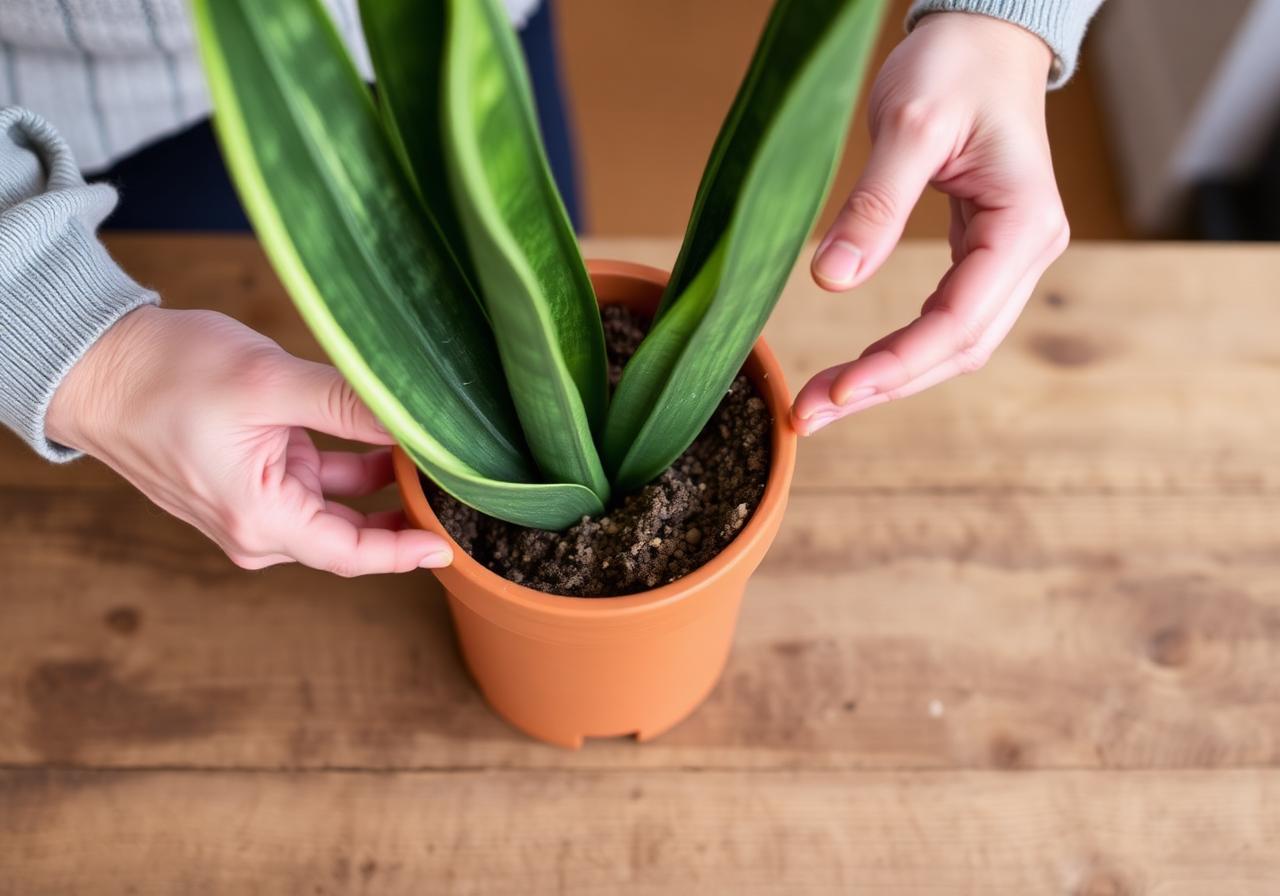
Repot a snake plant only when its rhizomes visibly crack the pot or the roots circle the bottom (usually every 2 to 3 years). Move it up by just one pot size, use a gritty mix of 50 percent potting soil, 30 percent perlite, and 20 percent coarse sand, and keep the crown of the leaves 1 inch below the rim.
Do not water for at least 7 days after repotting. The roots need time to callus over the tiny tears caused by handling. Watering immediately drives bacteria into those wounds and triggers root rot.
Unglazed terracotta pots with drainage holes are ideal because they wick moisture out of the gritty mix.
When does a snake plant actually need a new pot?
Snake plants (Dracaena trifasciata, formerly Sansevieria) grow extremely slowly and prefer a tight pot. Repot only when one or more of these signs appear:
- The rhizomes are pushing the pot out of shape or cracking it.
- Roots are circling the bottom and emerging from drainage holes.
- Water now runs straight through the pot without soaking in.
- The plant has not produced a new leaf for 2 full growing seasons.
If none of those apply, leave the plant alone. Repotting a content snake plant just to upgrade the pot is a fast way to set it back a year.
Choose the right pot
Move up by exactly 1 size, usually 2 inches wider in diameter than the old pot. Jumping straight to a much bigger pot surrounds the roots with damp soil that they cannot reach for weeks, and that soil stays soggy long enough to rot the rhizomes.
Unglazed terracotta is the gold standard for snake plants because the porous clay wicks moisture out of the soil. Plastic and glazed ceramic work fine if you are diligent about watering schedule, but the safety margin is smaller.
Drainage holes are not optional. Snake plants in pots without drainage almost always die within a year.
Mix the soil
Snake plants need an open, gritty mix that drains within seconds. A simple recipe:
- 50 percent quality potting soil.
- 30 percent perlite.
- 20 percent coarse sand or fine grit.
You can also use a bagged cactus and succulent mix amended with an extra handful of perlite. Avoid moisture retentive mixes labelled for tropicals.
Slide, do not yank
Lay the pot on its side. Squeeze the sides of a plastic pot or run a butter knife around the inside of a terracotta pot to break the seal between the soil and the wall. Slide the entire root mass out.
Never pull on the leaves to extract the plant. The leaves snap straight off the rhizome crown, and a snake plant cannot regrow a broken leaf.
Audit the rhizomes
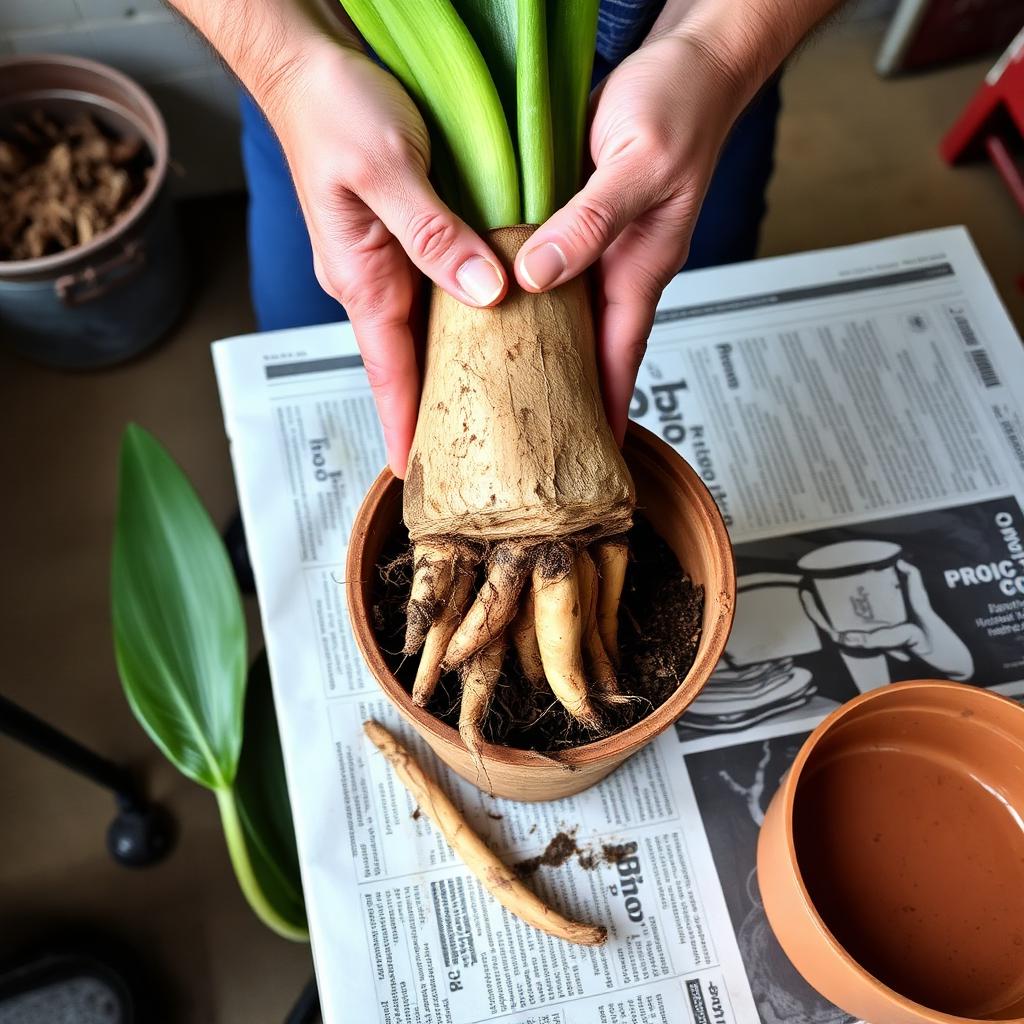
Brush off the old soil and look at the underground rhizomes (the fat, potato shaped storage organs the leaves grow from). Healthy rhizomes are firm and pale orange or white. Mushy, brown, or foul smelling sections are rot.
Use a sterilised knife to slice off any rotten sections. Cut back to clean white tissue and let those cut surfaces air dry for an hour before potting.
While you have the plant out, this is also the perfect time to divide it. A clump with multiple rhizome bases can be split into 2 or 3 new plants with a sharp knife between the rhizomes.
Repot with the crown shallow
- Fill the bottom third of the new pot with the gritty mix.
- Centre the snake plant on top. The point where green leaves meet the rhizome should sit 1 inch below the rim of the pot.
- Backfill with mix, firming gently as you go to stabilise the top heavy leaves.
- Stop at the same depth the plant sat in its old pot. Burying the leaf bases traps moisture and causes the crown to rot.
The 7 day dry fast
This is the rule most people skip. Do not water for 7 to 10 days after repotting. The repotting process always creates microscopic tears in the root hairs, and those wounds need time to callus over.
If you water immediately, soil bacteria and fungi enter the open root tissue and trigger rot. After a week, give the plant a deep, thorough soak until water runs out the drainage holes, then return to your normal schedule.
Post repot care
| Window | What to do |
|---|---|
| Days 1 to 7 | No water. Bright indirect light. No fertiliser. |
| Days 8 to 14 | One deep soak. Drain fully. |
| Weeks 3 to 6 | Normal watering: when soil is bone dry. |
| Month 2 onward | Resume diluted fertiliser if in growing season. |
Common repotting mistakes
- Jumping up 2 or 3 pot sizes.
- Using standard moisture retentive potting soil.
- Burying the leaf bases too deep.
- Watering on day one.
- Leaving rotten rhizomes in the new pot.
Frequently asked questions
How often should I repot a snake plant?
Every 2 to 3 years, or only when the rhizomes are visibly outgrowing the pot.
Can I repot a snake plant in winter?
Spring or early summer is best, when the plant is actively growing. Winter repotting works but recovery is slower.
Why are my snake plant leaves drooping after repotting?
Usually transplant shock. Hold the dry fast for a full week, then water and let the plant recover for 4 to 6 weeks before judging.
Should I water a snake plant before or after repotting?
Neither immediately. Water the day before to soften the old soil if needed, then wait at least 7 days after repotting before the next soak.