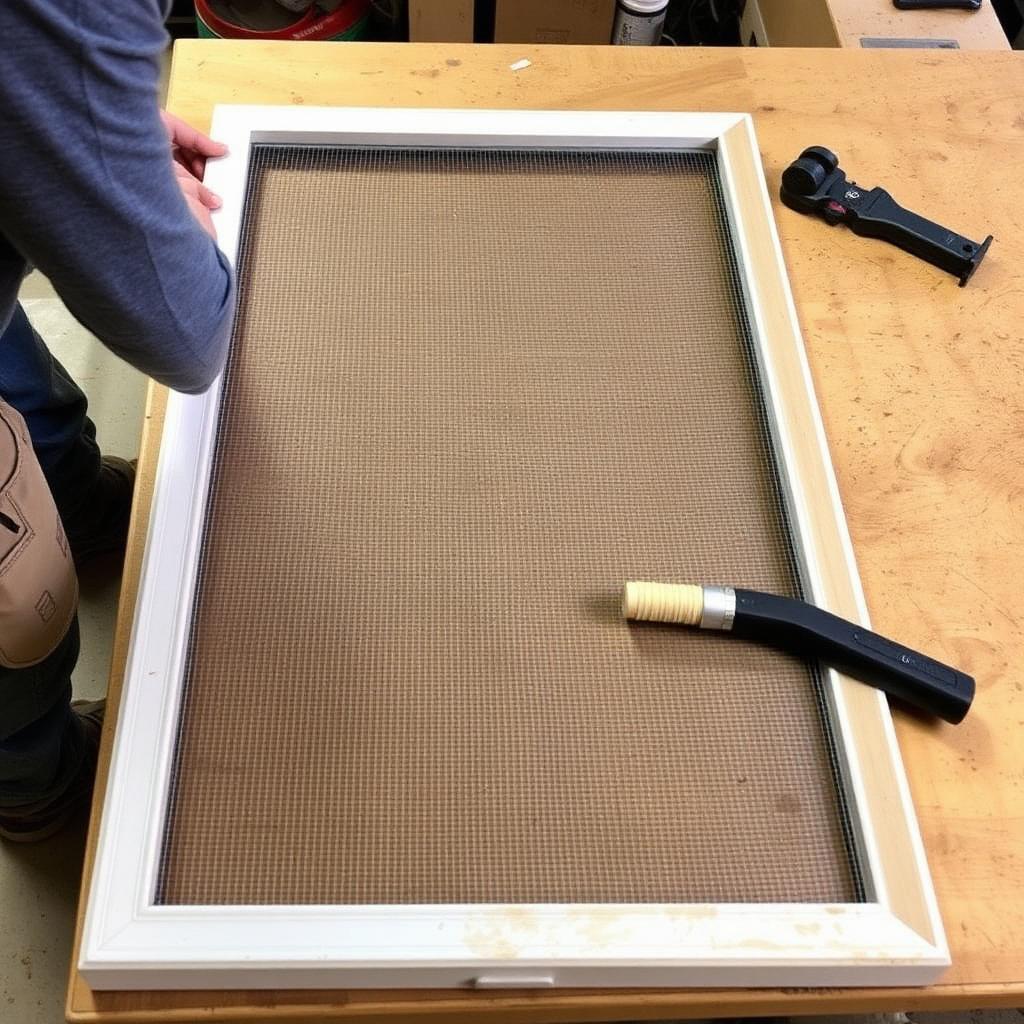
Quick Answer
To repair a torn screen door, take the door off its hinges, pry the old rubber spline out of the channel running around the frame, lift away the damaged mesh, lay fresh fiberglass or aluminium mesh over the frame, press it into the channel with a spline roller tool along with new rubber spline, and trim the excess with a sharp utility knife. The whole job takes 30 to 60 minutes, costs 15 to 35 dollars in materials and needs no specialist skills.
What you will need
- A roll of replacement screen mesh sized to your frame (most rolls are 36 inches wide and 25 feet long).
- Replacement rubber spline cord, matched to the diameter of your old spline (most home doors use 0.140 or 0.160 inch; bring the old spline to the hardware store to match).
- A double ended spline roller tool (convex wheel on one end, concave on the other), 5 to 10 dollars.
- A sharp utility knife with a fresh blade.
- A flathead screwdriver or awl to pry out the old spline.
- Scissors.
- A couple of large spring clamps or heavy books to hold the mesh flat.
- Optional: a screen door corner repair kit if any corners are split.
Choose the right mesh
- Fiberglass mesh: the most popular. Flexible, easy to install, will not dent, available in charcoal (best visibility from inside) or grey.
- Aluminium mesh: tougher and longer lasting, but creases permanently if bent. Better for high traffic doors that take knocks.
- Pet resistant or pet screen: seven times stronger than standard fiberglass; ideal if a dog or cat regularly leans on the door.
- Solar screen: denser weave that blocks 70 to 90 percent of solar heat. Reduces visibility slightly.
- No see um: very fine weave that keeps out small biting insects like sand flies.
Step by step replacement
Step 1: take the door off and lay it flat
Lift the screen door off its hinges (most lift straight off a pin hinge; sliding doors come out of the track when you raise them to the top stop). Lay it on a flat workbench, tabletop or a couple of saw horses. A clean flat surface makes everything easier.
Step 2: remove the old spline
The spline is the thin rubber cord pressed into the channel around the inside of the frame. Find the seam where it meets itself, lift the end with a flathead screwdriver, and pull it out. It usually comes free in one continuous loop. If the spline is old and brittle and breaks in pieces, that is fine. Throw it away once it is fully out and pull off the damaged mesh.
Step 3: clean the channel
Vacuum or brush out any debris, dead insects or accumulated dust from the spline channel. A clean channel grips the new spline far better.
Step 4: lay the new mesh
Roll out the new screen mesh over the entire frame so it overlaps the edge by at least one inch on all four sides. Smooth flat. Clip or weight the corners so the mesh does not shift while you work.
Tip: align the threads of the mesh parallel to the frame edges. A mesh laid on a diagonal will pull crookedly when you roll it in.
Step 5: roll the spline into one short side first
Start at one of the short sides of the frame. Lay a length of new spline along the channel. Using the convex wheel of the roller tool, press the spline (and the mesh under it) down into the channel using slow, firm strokes. Work from one end to the other.
Step 6: continue around all four sides
Move to the long side, then the next, then the last short side. Pull the mesh hand tight (not tight enough to bow the frame) as you go. The rolled spline holds the mesh tension automatically.
Step 7: handle the corners
At each corner, push the spline into the corner with the screwdriver tip and continue around. Some installers cut the spline at each corner and start a fresh piece; others run one continuous cord around all four sides. Either works.
Step 8: trim the excess mesh
Once all four sides are rolled in, use a fresh utility knife blade to trim the excess mesh. Lay the blade flat at a slight outward angle just past the spline and slice along the outer edge of the spline. A new blade leaves a clean edge; a dull blade tears.
Step 9: rehang and test
Lift the door back onto its hinges or into the track. Open and close a few times. The mesh should be drum tight, with no visible sag, and the door should glide as before.
How to patch a small tear instead of full replacement
If the tear is the size of a coin and the rest of the screen is fine, skip the full replacement. Cut a patch of matching mesh about 1 inch larger than the tear on all sides. Apply a thin bead of clear silicone or screen patch adhesive around the patch edges and press into place. Let cure 24 hours. Hardware stores also sell self adhesive screen patches in 3 inch squares that take 30 seconds to apply.
Fixing a sagging frame
Aluminium screen door frames can warp or split at the corners. Corner repair kits (small L shaped brackets that slide into the hollow frame) restore alignment in 10 minutes. Remove the corner spline access, fit the bracket, replace the spline.
Common mistakes
- Pulling the mesh too tight. The frame bows inward and the screen pops out within weeks. Hand tight is enough.
- Using the wrong spline size. Too small and the mesh stays loose; too large and the spline will not fit the channel. Match exactly.
- Cutting the mesh before rolling it in. Trim only after every side is rolled. Trimming first leaves you with no margin if the mesh shifts.
- Using a dull utility blade. A clean cut along the spline is the difference between a professional finish and a frayed mess.
FAQs
Can I replace the screen without removing the door?
Yes for sliding screen doors that come out of the track (lift them out). Hinged screen doors are much easier to work on flat; spend the two extra minutes to remove them.
What spline size do I need?
Bring a 4 inch piece of the old spline to the hardware store and ask for an exact match. The wrong diameter is the single most common DIY mistake.
How long should a new screen last?
Fiberglass mesh in moderate weather lasts 10 to 15 years. UV intense climates shorten that to 5 to 8 years. Aluminium lasts indefinitely if the frame stays straight.
The takeaway
Screen door repair is one of the most satisfying small DIY jobs. With a 10 dollar roller tool, the right mesh and a fresh utility blade, you can pull a torn screen and reinstall a crisp new one before lunch. Skip the 100 dollar handyman call and learn the process once; the same skill applies to every window screen in the house.