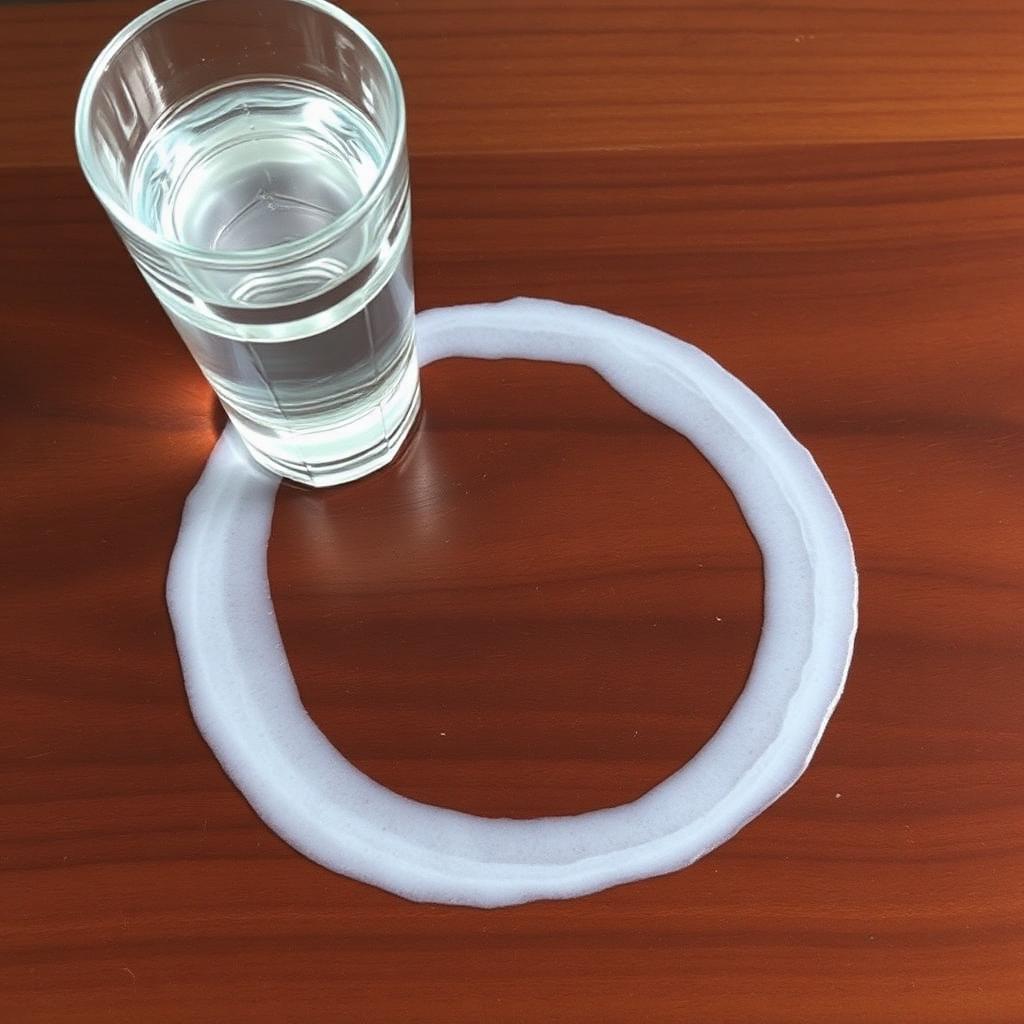
Quick Answer
A white water ring on wood is trapped moisture inside the finish (usually wax, shellac or lacquer), not damage to the wood itself. The fastest reliable fix is a dry household iron on its lowest setting, run over a clean dry cotton towel placed on the stain for ten to twenty seconds at a time. The heat opens the finish and the moisture evaporates back out.
A dark black or grey stain is the opposite. That moisture has passed through the finish into the bare wood and reacted with the tannins. It cannot be ironed out and needs sanding plus an oxalic acid wood bleach to lift.
First, diagnose what kind of stain you have
Two minutes of diagnosis saves an hour of wrong-method effort.
- White, cloudy or milky ring. Water trapped inside the surface finish. Almost always reversible at home. Use heat or oil.
- Dull, sticky, slightly tacky patch. Surface film, often a mix of moisture and dust. Lifts with a baking soda paste.
- Black or dark grey stain. Water has penetrated the finish into the raw wood and oxidised with iron and tannins. Needs sanding plus oxalic acid bleach, then refinishing.
The iron-on-towel method for white rings
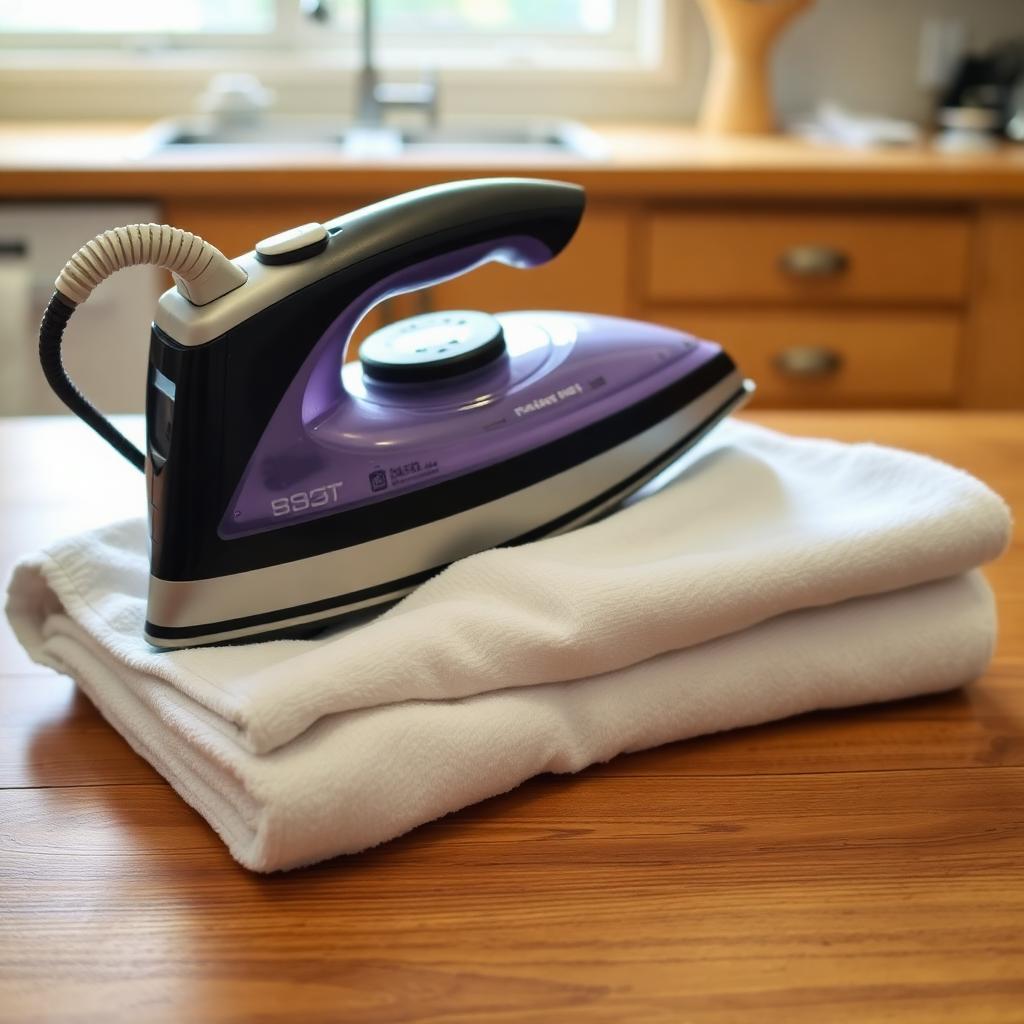
This method is endorsed by Bob Vila, This Old House and most furniture restorers because it works on the most common cause (steam from a hot mug or a sweating cold glass setting into a wax or shellac finish).
- Empty the water reservoir of a household clothes iron completely. The steam function must be off. Adding steam to a water stain makes it worse.
- Set the iron to its lowest heat. Cotton or low synthetic is fine. Anything hotter risks scorching the finish.
- Lay a clean, dry 100 percent cotton t-shirt or thin towel flat over the stain. The towel buffers the heat.
- Place the iron on the towel directly over the stain for ten seconds. Lift, check, and repeat in ten-second passes. Most rings vanish in two to four passes.
- Buff the spot with a soft cloth and a thin layer of furniture wax or lemon oil to even out the sheen.
If the stain is on a delicate antique or a high-gloss French-polished surface, skip the iron and call a restorer. The heat-and-towel trick is for ordinary wax, shellac and modern polyurethane finishes.
The oil method (no iron required)
For small white spots, oil alone often works without heat. Mayonnaise, petroleum jelly or a dab of olive oil applied to the ring and left overnight slowly displaces the trapped moisture. Wipe clean in the morning and buff. This is the gentlest option and the safest on antiques.
A 50:50 paste of non-gel white toothpaste and baking soda also works on stubborn white rings by very lightly polishing the top of the finish. Apply with a soft cloth, rub gently along the grain, wipe with a damp cloth, dry, then rewax. Stop the moment the cloud disappears; over-polishing will dull the finish.
What to do with a black stain
A black stain means the water reached the raw wood and the iron in the water reacted with tannins to form a dark iron tannate. No surface trick will reach it. The repair sequence:
- Sand the area lightly with 220-grit paper to remove the existing finish over the stain only.
- Mix oxalic acid crystals (sold as wood bleach by Klean-Strip and others) with warm water per the label. Brush onto the stain with a synthetic-bristle brush. Let dry; the black should fade significantly.
- Neutralise with a wipe of water plus a teaspoon of baking soda. Let dry fully.
- Lightly sand again with 320-grit. Apply a matching stain, then two thin coats of polyurethane or wax to match the surrounding sheen.
Wear gloves and eye protection. Oxalic acid is harsh on skin and very harsh on eyes. Work in a ventilated room.
How to prevent the next stain
- Coasters under every glass. Felt or cork, not silicone (silicone can trap moisture against the finish for hours).
- Trivets under any hot dish or mug.
- Refresh furniture wax or oil every six months on tables you use daily; a freshly waxed surface sheds water far better than a dry one.
- Wipe spills within minutes. Most rings form because a drink sat for hours, not because the drink existed at all.
Common mistakes to avoid
- Using the steam setting. Adds moisture instead of removing it. Always dry iron only.
- Heat without a buffer. Placing a hot iron directly on the finish almost guarantees scorching.
- Using a hairdryer for long periods. The constant airflow can drive moisture deeper instead of pulling it out. The iron-and-towel combination concentrates heat far more efficiently.
- Sanding a white ring. White rings live in the finish. Sanding removes the finish, exposes raw wood, and turns an easy fix into a refinishing job.
The takeaway
White rings are easy. A dry iron, a cotton towel, four short passes on the lowest setting and the stain is gone. Dark stains are slow and worth a careful sanding-plus-oxalic-acid repair. Either way, coasters and a six-monthly wax pass make the next stain extremely unlikely.