Quick Answer
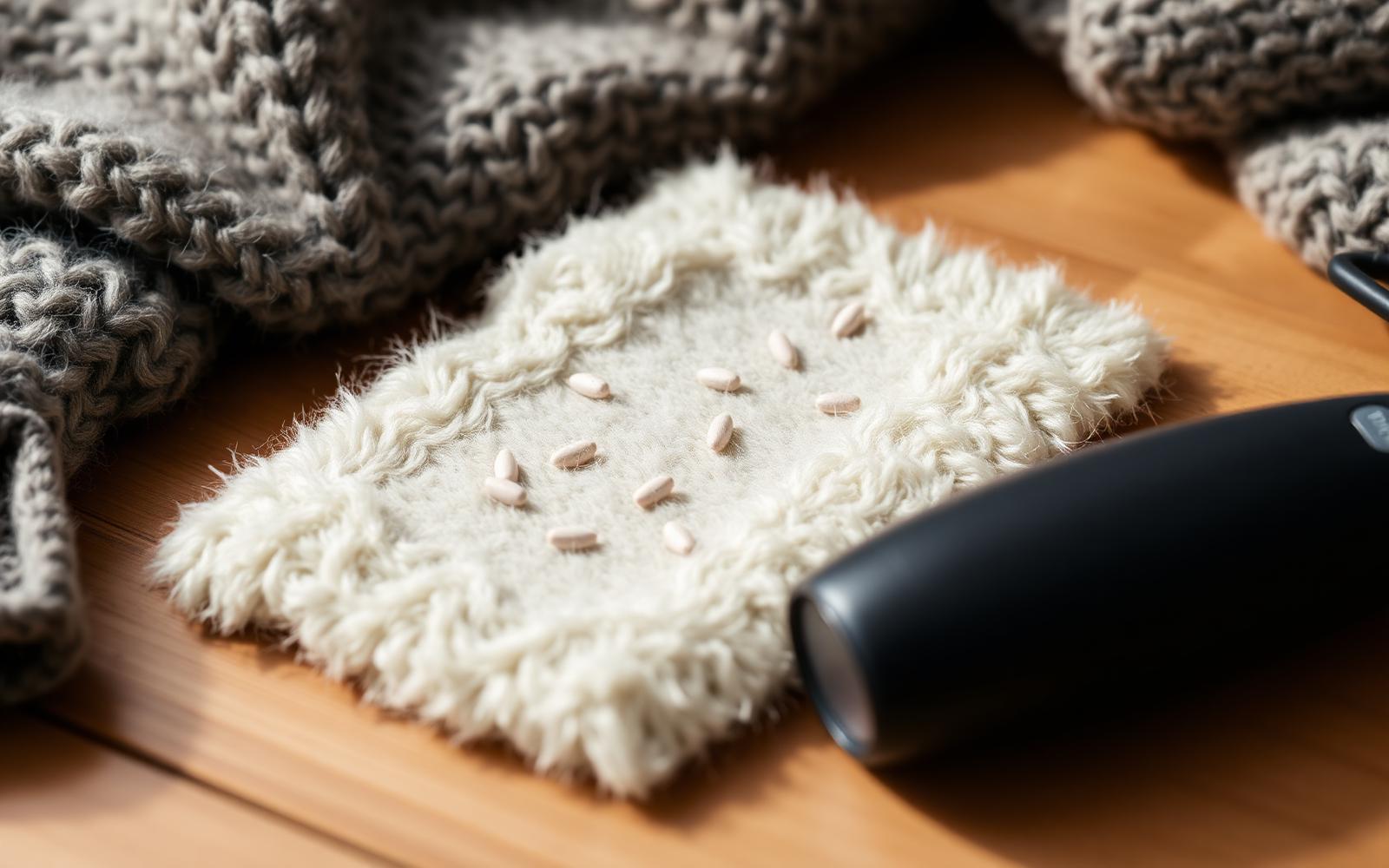
The fastest safe way to remove pilling from clothes is a battery powered fabric shaver. The motorised blade sits behind a perforated guard, so it clips raised pills at the surface without snagging the yarn below. For delicate knits like cashmere or fine merino, swap the shaver for a wooden sweater comb or a porous pumice stone and pull in one direction only.
Pilling is caused by friction, not defective fabric. Even premium garments will pill if they rub against bag straps, seatbelts, or jacket linings. Once you understand that, the fix is half tools and half laundry habits.
Why your clothes pill in the first place
Every yarn is a twist of shorter fibres. As the garment is worn, those shorter fibres work their way to the surface, tangle together, and form the round fuzzballs you see. The process accelerates wherever the fabric rubs against something else: under the arms, around the cuffs, on the seat of trousers, and across the back where a backpack rides.
Cheaper fibres do not always pill more. What matters is the length of the individual fibre (longer is better) and how tightly the yarn is spun. A loosely spun, short staple cotton blend will shed and tangle far more than a tight, long staple wool.
Which fabrics pill the most
- Polyester and nylon blends. The synthetic fibres are strong enough to hold onto pills indefinitely, so the fuzzballs never shed on their own.
- Cashmere and fine merino. The fibres are short and soft, so they migrate to the surface quickly under any friction.
- Cotton or polyester fleeces. A weak fibre mixed with a strong one is the perfect pilling cocktail.
- Acrylic knits. Often used in budget jumpers and beanies, they pill heavily within a few wears.
The four tools that actually work
1. A battery or mains fabric shaver
This is the tool I reach for first. A small motor spins a circular blade behind a metal guard with hundreds of holes. Pills poke through the holes, the blade slices them off, and the loose fuzz falls into a small catch chamber. It is fast, repeatable, and safe for almost every flat woven garment. Hold the fabric taut with one hand and move the shaver in slow overlapping circles. Empty the chamber often, because a full chamber stops the blade from cutting cleanly.
2. A wooden sweater comb
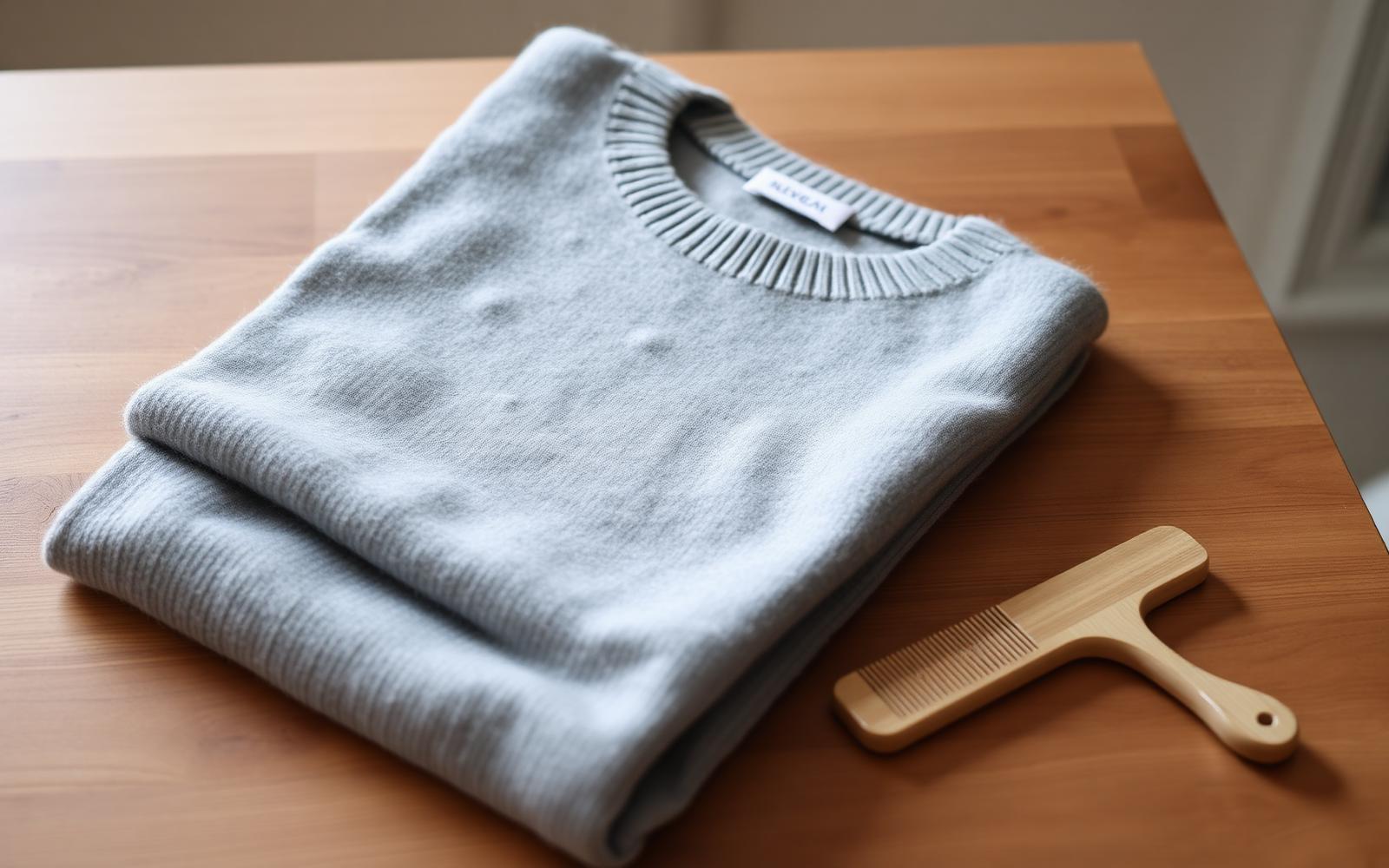
For loose knits, the comb glides over the surface and lifts pills away without cutting into the yarn. Lay the garment completely flat, hold it still, and pull the comb in one direction with light pressure. Never scrub back and forth, that is how you stretch the knit.
3. A pumice sweater stone
A featherweight block of foamed glass, designed specifically for cashmere and fine wool. The porous surface catches loose fibres without snagging. Wipe gently in long strokes. Stop the moment you see actual yarn coming away, that means you have pushed past pilling and into the fabric itself.
4. A safety razor (last resort)
If you have nothing else in the house, a fresh single blade razor will work on cheap acrylic or polyester. Lay the garment flat, hold the razor at a very shallow angle (about 15 degrees), and use short feathery strokes. Do not press. A snagged thread on a knit can run for centimetres in seconds. I would never use a razor on cashmere, silk, or a loose knit.
Laundry habits that stop new pills forming
Tools fix pills you already have. Laundry habits stop new ones forming, which is where most of the long term win is.
- Turn garments inside out. The outer face of the fabric is the one you see, so protect it from the drum and from other clothes inside the wash.
- Wash similar items together. A heavy denim cycle will batter a delicate jumper. Knits should travel with knits, denim with denim.
- Use a gentle or delicate cycle. Less mechanical agitation means fewer broken fibre ends migrating to the surface.
- Cool water, every time. Hot water swells fibres and makes them more prone to surface fuzz.
- Skip the tumble dryer for knits. Air drying flat is the single biggest favour you can do a sweater.
- Try a cellulase enzyme detergent. The enzymes literally trim off loose cellulose fibre ends in cotton and linen, which is why "anti pilling" detergents tend to contain them.
The takeaway
Pilling is not a sign that a garment is finished, it just means the fibres have moved. A fabric shaver for sturdier weaves, a comb or pumice stone for delicate knits, and a few small changes to how you wash and dry will keep your favourite pieces looking newer for years. Treat the tool like a haircut, not a renovation: short sessions, light pressure, stop the moment the surface is even again.