Quick Answer
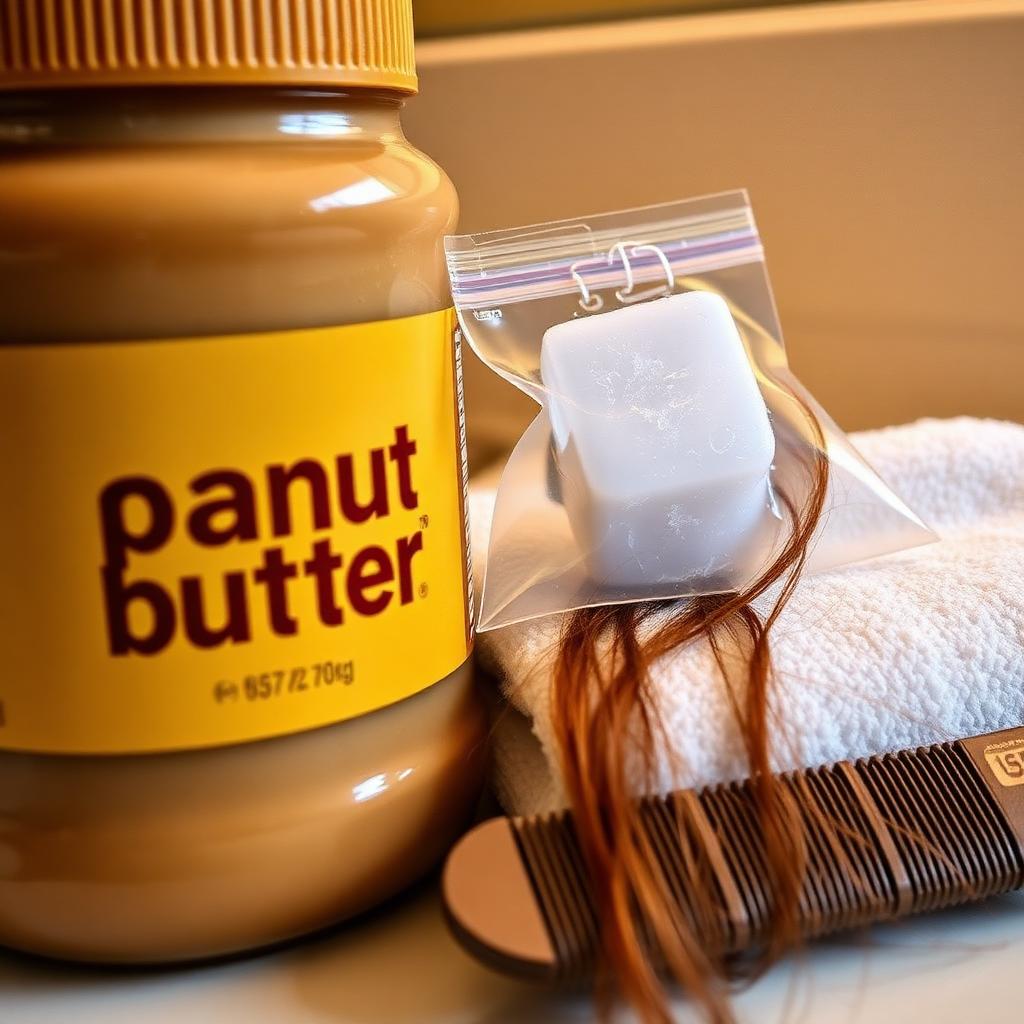
You do not need scissors. The chewing gum base is hydrophobic, which means oils dissolve it. Coat the gum and the hair around it with creamy peanut butter, mayonnaise, olive oil or coconut oil, let it sit for five to ten minutes, then gently work the gum out with your fingers or a wide tooth comb. As an alternative, freeze the gum with an ice cube wrapped in a sandwich bag and crack it off in pieces once it goes hard and brittle.
Why oil works
Chewing gum bases are made from food grade synthetic polymers (polyisobutylene, butyl rubber, polyvinyl acetate) plus softeners. These polymers are non polar; they refuse to mix with water but readily dissolve in oils. Hair is mostly protein and water and is also coated with sebum, which already attracts the gum. Adding a heavy oil weakens the bond between gum and hair, lets the polymer slide off the keratin strand and lets you pull the gum away as a single mass instead of tearing through tangled hair.
Method 1: peanut butter (or mayonnaise)
The classic method. Works because of the high oil content (about 50 percent for peanut butter, 75 percent for mayonnaise).
- Take a heaping tablespoon of creamy peanut butter or mayonnaise. Avoid crunchy varieties because the peanut chunks tangle further.
- Cover the gum completely, working the spread into the hair on all sides.
- Wait five to ten minutes. The longer the better.
- Slide the gum slowly down the hair shaft with your fingers, working from the scalp end outward.
- When the gum reaches the tip, peel it off entirely.
- Wash the hair with a clarifying shampoo to remove the residue.
Method 2: olive oil or coconut oil
Cleaner and easier to wash out than peanut butter. The best choice for fine hair.
- Warm a tablespoon of olive, coconut, baby or argan oil between your palms.
- Saturate the gum and the surrounding hair.
- Wait five minutes. Stretch the gum gently with your fingers; if it feels gummy, wait longer.
- Use a wide tooth comb to glide the gum down and out.
- Shampoo to remove the oil.
Coconut oil is solid at room temperature in cooler climates; warm it in a small bowl of hot water first.
Method 3: the ice cube freeze
Best when the gum is small and on the outer edge of the hair where you can hold ice against it easily. The cold makes the polymer hard and brittle so you can crack it into pieces.
- Put two or three ice cubes in a small zip top bag. The bag stops the hair getting soaked.
- Press the bag against the gum for 10 to 15 minutes. Keep adding ice as the cubes melt.
- Once the gum is solid, tap or twist it gently. Brittle pieces will flake off.
- Repeat as needed for the largest remaining pieces.
- Finish any residue with the oil method above.
Method 4: oil based hair conditioner
If you do not have edible oil handy, a heavy silicone or oil based hair conditioner often works (the kind designed for very dry or curly hair). Coat the gum, wait five minutes, comb out. Bonus: minimal washing needed afterwards.
Method 5: WD-40 (last resort, adults only)
Petroleum based products including WD-40 will dissolve almost any gum quickly. Use only on adult hair, never near the eyes or scalp of children, and follow with a thorough clarifying shampoo. This is genuinely a last resort; food oils are nearly always enough.
What never to use
- Alcohol or hand sanitiser: ineffective on most gum and very drying to hair.
- Acetone or nail polish remover: partially works but is harsh, damages hair colour and irritates skin and eyes.
- Scissors as the first move: save them for true emergencies (gum at the scalp on very short hair where nothing else can reach).
- Hot water alone: warms the gum and can spread it further along the strand.
After the gum is out: clean up
The oil or peanut butter that did the heavy lifting will leave the hair greasy. Wash with a clarifying or anti residue shampoo (something with sulfates is appropriate here; the harshness lifts oil well in a one off use). Repeat if needed and follow with a regular conditioner. For very fine hair, two short washes work better than one long one.
Special situations
Gum stuck on a child's scalp
Stay calm. The ice cube method is safest because it has no risk of allergic reaction (peanut butter is off limits for children with peanut allergies). Work in short five minute sessions with breaks so the child does not get cold.
Gum on eyelashes or eyebrows
Use a clean cotton swab dipped in baby oil or coconut oil. Stroke outward, away from the eye. Never use peanut butter near the eye.
Gum on a beard
Same as scalp hair. Beard oil or coconut oil works particularly well because most beards already use one.
Gum on a pet
Olive or coconut oil is safer than peanut butter (xylitol in some peanut butters is toxic to dogs). For very matted gum on long fur, consult a groomer; they have desensitised clippers.
How to prevent the next incident
- Tie long hair back at the cinema, on planes and anywhere gum is likely to be on a seat.
- Teach kids to throw gum in a bin, not park it under a chair.
- Keep a small jar of coconut oil in the bathroom; it is the most useful single product for gum, sticky hands and chapped lips.
FAQs
Will the gum come out in the next wash if I just leave it?
No. Plain water and standard shampoo do not break the polymer bond. The gum will only tangle more.
What if the gum is matted into a knot?
Soak the entire knot in oil for 15 minutes, then comb very slowly from the tips upward. Patience is the secret.
Does the type of gum matter?
Yes. Sugar free gums with a higher base content are stickier. Bubble gum is the worst because the polymer base is even more elastic. Either way, oil dissolves them all.
The takeaway
A wad of gum in your hair almost never deserves a haircut. Coat with a cooking oil, peanut butter or even hair conditioner, wait a few minutes, and the gum slides off. Keep ice as plan B and skip harsh solvents entirely. The whole rescue takes less time than driving to the salon.